Patmos
Dodecanese

Patmos

Patmos is the sacred island of the Aegean — a place of deep spiritual history, whitewashed villages, crystalline coves and a silence that feels intentional. The fortified Monastery of Saint John dominates Hora like a medieval crown, while Skala offers lively evenings and quiet mornings. If you're looking for Where to Stay in Patmos, the island's small scale means every base is well positioned.

Monastery of St John (UNESCO)

Cave of the Apocalypse

Hora medieval village

Travel Guide

Where to Stay in Patmos

Destination Overview

Patmos

Patmos does not announce itself loudly. It is a small island — one of the northernmost in the Dodecanese — without a major airport, without a casino strip, without the infrastructure of mass tourism. What it has instead is something that increasingly few places can offer: a genuine sense of stillness, one that is not manufactured for visitors but has been here for two thousand years. This is the island where Saint John the Theologian wrote the Book of Revelation. That fact shapes everything — the architecture, the rhythm of daily life, the kind of traveler who comes here, and the kind of experience they find. Patmos attracts people looking for something more than a beach. They find that, and usually more besides. The fortified Monastery of Saint John dominates the hilltop village of Hora like a medieval crown. Below it, Hora's alleys — white walls, bougainvillea, cobblestones worn smooth — are among the most perfectly preserved in the Aegean. Further down, the port of Skala is lively in the evenings and quiet by morning. And around the island, a series of small coves and beaches offer the kind of swimming that requires no adjectives.

Patmos

Why visit Patmos

1

It carries a weight that other islands don't

Patmos is a UNESCO World Heritage Site — not just for one building but for the entire complex of the Monastery, the Cave of the Apocalypse and the medieval settlement of Hora. Walking through it feels different from ordinary sightseeing.

2

It has remained itself

The island's profile as a place of pilgrimage and quiet tourism has kept it from the development pressures that have changed other Greek islands. The architecture is intact. The pace is intact. The atmosphere is intact.

3

The combination of sacred, scenic and aquatic is rare

Few Greek islands offer a UNESCO monastery, a medieval hilltop village, and swimming in remote coves — all within a few kilometres of each other. Patmos does all three without compromise.

Patmos

Best time for Patmos

💡 Secret: Easter in Patmos is one of the most extraordinary religious and cultural events in Greece. The island fills with pilgrims and the ceremonies — especially the midnight Resurrection service at the Monastery — are deeply moving even for non-religious visitors. Book accommodation months in advance if coming for Easter.

Spring (April – early June)

The ideal season: mild temperatures, the island still unhurried, wildflowers on the hillsides, and the sea warming toward swimmable. Easter, if it falls in this window, is unmissable.

June & September

The sweet spot for those who want both beach and quiet. The island has visitors but has not tipped into overcrowding. Sea temperatures are at their best in September.

July & August

Busier — particularly with day-trippers arriving by ferry from nearby islands. Still manageable compared to the Cyclades. Book accommodation early.

Autumn (October – November)

Patmos in autumn is for those who want to think. The tourists have left, the light is golden, the sea is still warm enough to swim, and the Monastery and cave can be visited in genuine contemplation.

Patmos

How to get to Patmos

💡 Secret: The overnight ferry from Piraeus is not just a practical option — it is an experience in itself. You board in the evening, sleep on the water, and arrive in Skala in the morning as the island is waking up.

By ferry from Piraeus

The main route. High-speed ferries take approximately 7–8 hours; conventional overnight ferries take 9–12 hours. Several departures weekly (more frequent in summer). Patmos is a regular stop on the Piraeus–Dodecanese line.

Via Kos or Rhodes (+ ferry)

Flying into Kos (the closest airport, ~3 hours by ferry) or Rhodes (~5 hours) and connecting by ferry is the most common option for those combining Patmos with the wider Dodecanese.

Via Samos (+ short ferry)

Samos airport is approximately 1.5–2 hours by ferry from Patmos. A practical option for those flying from Athens or international connections.

Patmos

Top attractions & experiences

1

Monastery of Saint John the Theologian

The fortified monastery built in 1088 on the hilltop of Hora is the island's defining monument — and one of the most important Christian sites in the world. Its architecture is part fortress, part Byzantine church, part medieval labyrinth. The treasury contains manuscripts, icons and ecclesiastical objects of extraordinary rarity. Secret: Go early in the morning, before the day-trippers arrive by ferry.

2

Cave of the Apocalypse

Halfway between Skala and Hora, the cave where Saint John is said to have received his visions and dictated the Book of Revelation is now a functioning church built into the rock. Secret: Even without religious context, the atmosphere of the cave is unusual — the acoustics, the incense, the layered history — worth experiencing on its own terms.

3

Hora (Chora) of Patmos

The medieval hilltop village surrounding the monastery is, independently of its sacred associations, one of the most beautiful villages in the Aegean. Cube-shaped whitewashed houses, arched passages, bougainvillea cascading over stone walls. Secret: Walk the alleys of Hora after 8pm in summer, when the day-trippers have left and the village returns to the locals.

4

Skala — The Port Village

Patmos's main port is the island's commercial center and social hub. The waterfront fills with life in the evenings; tavernas, cafes, and small shops open onto the harbour. Secret: The morning fish market near the port is worth an early visit. It tells you what to order for lunch.

5

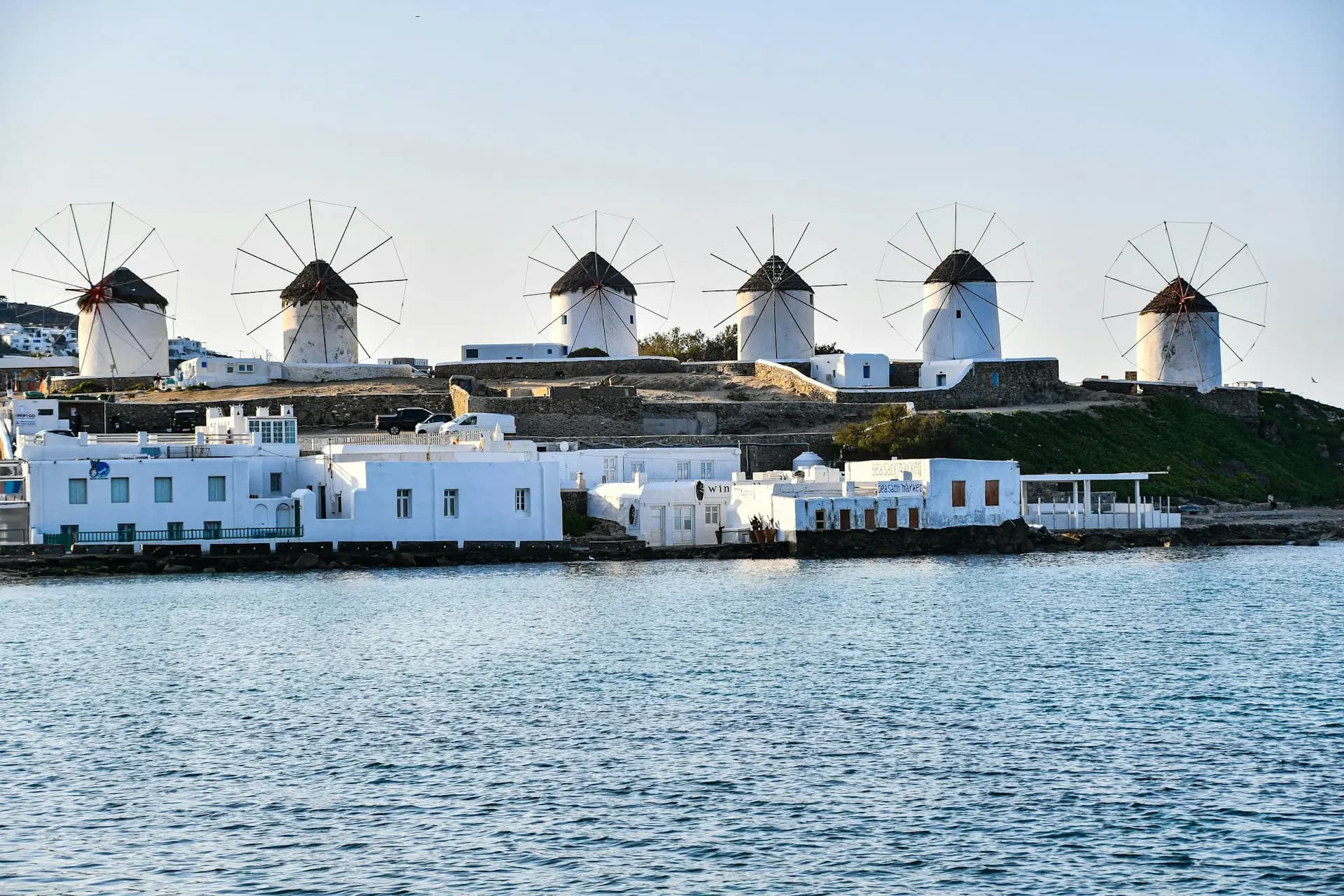
Windmills of Hora

The row of old windmills on the ridge between Hora and the sea frames some of the most photographed views on the island. At sunset, with the monastery above and the Aegean below, it is exactly what it looks like.

6

Kambos Village & Valley

The fertile valley in the northern part of the island is where Patmos keeps its most ordinary daily life — families, farming, local cafes. Secret: The small local tavernas in Kambos serve some of the most honest food on the island, at the most honest prices.

Patmos

Beaches, nearby villages & excursions

💡 Beach secret: Patmos's best beaches are not always the most accessible. Rent a scooter or small boat to reach the island's more remote coves — especially on the western coast.

Psili Ammos

The most celebrated beach on the island — a long arc of fine sand on the southern tip, accessible only by boat or a 40-minute walk. Exactly as beautiful as it sounds. Go by the morning boat; return by the afternoon one.

Grikos Bay

The large bay south of Skala is the island's most developed beach area. The peculiar rock formation called 'Kalikatsou' at the bay's edge is a Patmos landmark. Excellent accommodation options are here, including Patmos Aktis Suites & Spa.

Lambi Beach

A northern beach known for its extraordinary concentration of colored pebbles — deep reds, blacks, greens — that occur naturally here and nowhere else on the island. A geological oddity that is genuinely worth seeing.

Lipsi Island (day trip)

The small island of Lipsi, 40 minutes by ferry from Patmos, is the kind of place that still exists in imagination: a handful of tavernas, a turquoise bay, fewer than 700 permanent residents, and a complete absence of urgency.

Patmos

What to eat (and what to take home)

💡 Food secret: The best meals on Patmos are found not on the waterfront in Skala but in the village tavernas of Hora and Kambos. The view is less postcard-perfect; the cooking is considerably more honest.

Fresh Fish and Octopus

Patmos is a small island with active fishing. Grilled whole fish by the kilo, octopus dried on the line and cooked over charcoal, and marinated anchovies are the register of island seafood. Order what came in that morning.

Pitaroudia (Chickpea Fritters)

A traditional Dodecanese meze — crispy fried chickpea patties, often flavoured with onion, mint and cumin. They appear on almost every local menu and are at their best eaten hot with a glass of cold white wine.

Local Honey and Monastery Products

Patmos honey — from bees working the island's wild herbs and thyme — is dark, dense and aromatic. The monastery produces and sells honey, as well as herbal products. The best souvenir Patmos offers is a jar of local honey and a bottle of olive oil.

Patmos

Practical Tips

Getting Around the Island

Patmos is small — about 34 km² — and manageable with a scooter or small car. Buses run between Skala, the Cave of the Apocalypse, Hora and Kambos. For remote beaches, a small rented boat gives the most freedom.

Monastery Dress Code & Visiting Hours

The Monastery of Saint John requires covered shoulders and knees for entry — both men and women. Visiting hours vary seasonally; confirm locally before the trip.

Island Pace and Expectations

Patmos does not reward rushing. The experience compounds over days: the second morning in Hora is better than the first. Allocate at least three nights, ideally four or five.

Patmos

FAQ

How many days do I need in Patmos?

Three nights is the minimum to feel the island rather than just see it. Four or five nights allows for proper beach days, a day trip to Lipsi, time in Hora at different hours, and unhurried meals.

Is Patmos good for families?

Yes, with caveats. The island suits families who enjoy a mix of culture and beach and are comfortable with a quieter environment. Grikos Bay is the most family-friendly area.

Is Patmos crowded in summer?

July and August bring cruise ship passengers and day-trippers. The crowds are real but short — most arrive in the morning and leave by late afternoon. Patmos in the evening is always itself again.

Is Patmos worth visiting if I'm not religious?

Completely. The Monastery is one of the finest examples of Byzantine and medieval architecture in Greece. Hora is one of the most beautiful villages in the Aegean. The beaches are excellent. The atmosphere is genuinely unlike any other island.