Patras
Peloponnese

Patras

Patras is not an island. It does not have the postcard geometry that drives most Greek travel decisions. What it has is something rarer and more useful: it is a genuine city that functions as the perfect base for one of the richest clusters of destinations in the entire country. Greece's third-largest city sits at the western edge of the Peloponnese, where the Gulf of Patras opens toward the Ionian Sea. If you're looking for Where to Stay in Patras, the city and its surrounding region offer an extraordinary range of options.

Patras Carnival

Ancient Olympia

Delphi day trip

Kalavrita rack railway

Nafpaktos harbour

Messolonghi lagoon

Beaches of Ilia

Travel Guide

Where to Stay in Patras

Beach Guide

Best Beaches in Patras

Activities

Things to Do in Patras

Destination Overview

Patras

Patras is not an island. It does not have the postcard geometry that drives most Greek travel decisions. What it has is something rarer and more useful: it is a genuine city that functions as the perfect base for one of the richest clusters of destinations in the entire country. Greece's third-largest city sits at the western edge of the Peloponnese, where the Gulf of Patras opens toward the Ionian Sea. If you're looking for Where to Stay in Patras, the city and its surrounding region offer an extraordinary range of options.

Patras

Why visit Patras

1

The greatest Carnival in Greece — and one of Europe’s finest

The Patras Carnival is the largest and most elaborate in Greece and ranks consistently among the great Carnival celebrations of Europe alongside Venice, Cologne and Rio. Three weeks of events — masquerade balls, satirical floats, the Children’s Carnival, and the final Grand Parade — transform the entire city. The closing float parade draws hundreds of thousands of people to the seafront. Secret: The masquerade balls that take place in the weeks before the Grand Parade are invitation-accessible and are where the real Carnival culture lives — not the street parade. Ask locally which is happening.

2

The perfect base for ancient, natural and cultural Greece

No other city in Greece offers such immediate access to such a variety of major sites. Ancient Olympia, Delphi, Kalavrita, the monasteries of Mega Spileo and Agia Lavra, the Venetian fortresses of Nafpaktos and Messolonghi, the Aigialeia coast, and the beaches of Ilia — all are within a two-hour drive. Using Patras as a hub for a week-long trip through western Greece and the northern Peloponnese is one of the most efficient and underused strategies in Greek travel.

3

A real Greek city, unfiltered

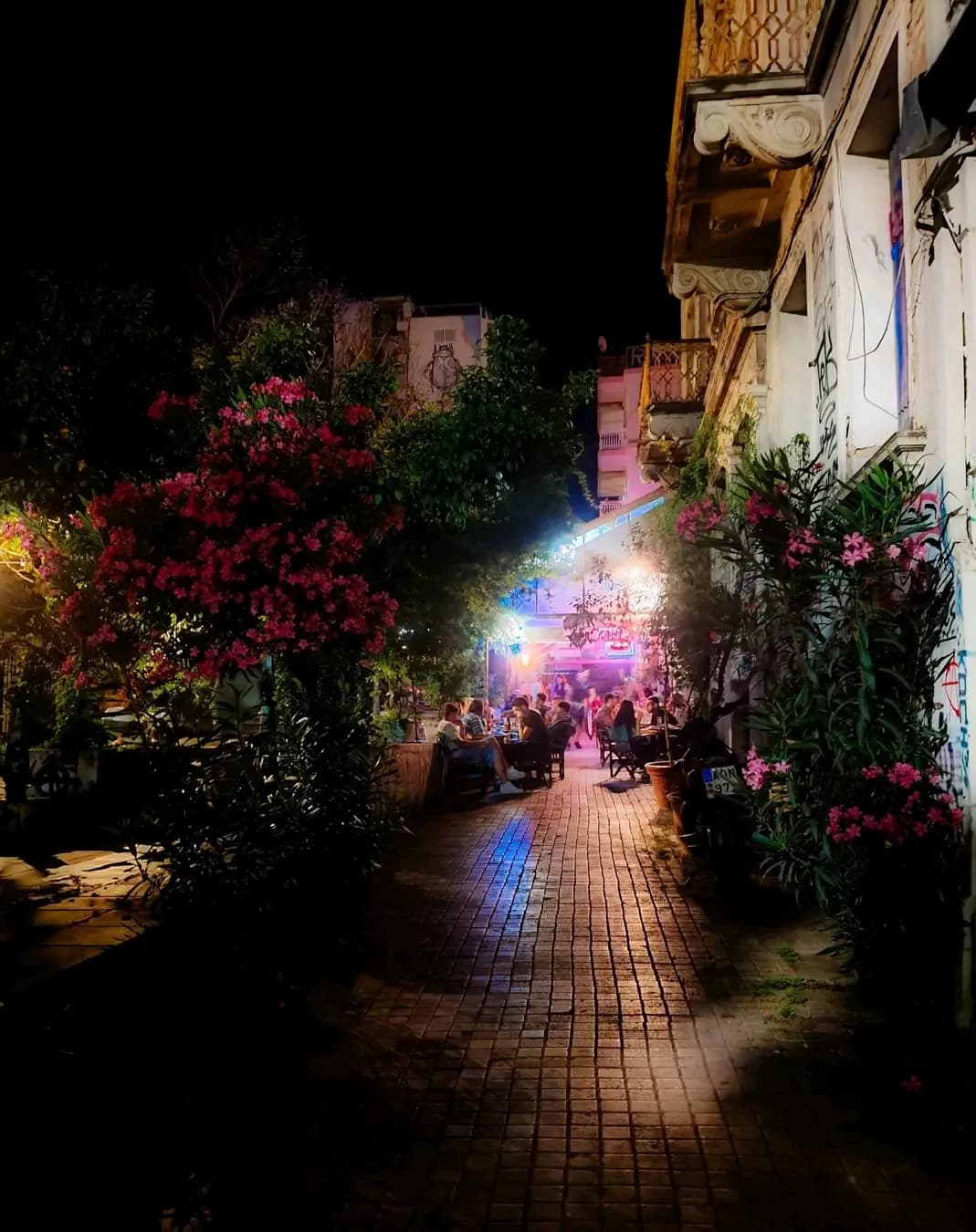
Patras is not polished for tourism. Its neoclassical buildings, its market, its long café-lined waterfront, its Sunday fish restaurants, its evening volta along the seafront — these are a city living normally. For travelers who want to experience the texture of contemporary Greek urban life alongside the ancient sites, Patras is the honest version.

Patras

Best Beaches near Patras

Kalogria Beach

One of the most beautiful beaches in the Peloponnese, about 40 minutes from Patras. A long stretch of golden sand backed by the Strofylia forest — a protected wetland with rare bird species. The water is shallow and crystal-clear. Tip: arrive early on summer weekends as it fills up with Patra locals.

Psathopyrgos

The closest beach to Patras, just 15 minutes east. A long pebble-and-sand shore with organised sunbeds and several seaside fish tavernas. Perfect for a quick afternoon swim without a long drive.

Longos & Selianitika (Aigialeia)

Two attractive beach resorts about 30-40 minutes east of Patras along the Aigialeia coast. Longos has a lively seafront with cafes and restaurants; Selianitika is quieter with a long pebble beach. Tip: the coastal road from Patras to Aigio is one of the most scenic drives in the region.

Nafpaktos Beaches (Gribovo & Psani)

The beaches of Nafpaktos, about 25 minutes west of Patras via the Rio-Antirrio bridge. Two organised sandy beaches on either side of the Venetian harbour — Gribovo on the east and Psani on the west. The backdrop of the castle and old town makes these unusually scenic. Tip: stay for sunset and dinner in the harbour.

Kourouta & Beaches of Ilia

About an hour south of Patras, the coast of Ilia offers some of the longest sandy beaches in the Peloponnese. Kourouta is the most popular, with fine sand, clear water, and beach bars nearby. Further south, beaches like Spiantza and Agios Ilias are quieter. Tip: combine with a visit to Ancient Olympia — only 30 minutes inland.

Patras

Best time for Patras

💡 Secret: Combine Carnival season with a day trip to Ancient Olympia or Kalavrita. Most Carnival visitors never leave the city — which means the surrounding sites are unusually quiet during one of Greece’s busiest festival periods.

Carnival Season (late January – March)

The reason to time a visit specifically. Hotels book out early; reserve months in advance. The energy of Patras during Carnival is unlike anything else in Greece. The weather is cool but rarely prohibitive.

Spring (April – June)

The ideal season for exploring the wider region. Ancient Olympia and Delphi are manageable in temperature; the Aigialeia coast is uncrowded; Kalavrita and the mountain villages of Achaia are in bloom. Perfect conditions for driving the back roads.

Summer (July – August)

Hot inland but the Aigialeia coast and the beaches of Ilia come fully into their own. The city itself is less crowded than in Carnival but fully alive. Ancient Olympia in July heat is demanding — go very early in the morning.

Autumn (September – November)

The second-best season. The heat softens, the sea is still warm, olive harvests begin in the countryside, and the cultural calendar of the city picks up again. September in Nafpaktos or Messolonghi is particularly atmospheric.

Patras

How to get to Patras

💡 Secret: The overnight ferry from Italy — Bari, Brindisi, Ancona, Venice — arrives directly in Patras. Traveling from western Europe by ferry and using Patras as the entry point into Greece is a classic route that has been quietly underused in recent years. It also produces a memorable arrival: approaching the city by sea at dawn.

By car from Athens

The expressway (E65 / A8 via the Rio–Antirrio bridge, or A8 direct) connects Athens and Patras in approximately 2–2.5 hours. The most convenient way to explore the wider region.

By train from Athens

The intercity train service connects Athens (Kiato/Corinth) with Patras. Journey times vary; check current TRAINOSE schedules as the Athens–Patras rail line has undergone significant upgrade works.

By bus (KTEL)

Frequent KTEL departures connect Athens (Kifissos station) with Patras daily in approximately 2.5–3 hours. Local KTEL services from Patras reach Pyrgos (for Olympia), Aigion, Nafpaktos and other regional centers.

By ferry from Ionian Islands & Italy

Patras is a major ferry hub. Regular services from Kefalonia, Ithaca and Zakynthos connect the city to the Ionian Islands. International ferry lines connect Patras directly with Bari, Brindisi, Ancona and Venice.

Patras

Top attractions in the city

1

Castle of Patras

The Byzantine castle built in the 6th century on the hill above the old town is the city’s most commanding landmark. The walls, towers and interior gardens are well preserved, and the view from the ramparts — over the city, the gulf and the Rio–Antirrio bridge — is the finest in Patras. Secret: Come in the late afternoon as the sun moves toward the western hills across the gulf. The light on the water at that hour is exceptional.

2

The Old Town & Psila Alonia

The hillside neighbourhood of the old town, with its neoclassical mansions, steep staircase streets, bougainvillea-draped facades and hidden squares, is where Patras keeps its architectural identity. Psila Alonia square, with its panoramic view and outdoor cafes, is the social heart of this part of the city.

3

Agios Andreas Cathedral

The largest Orthodox church in Greece and one of the most important in Eastern Orthodoxy — the Cathedral of Saint Andrew houses the skull relic of Saint Andrew the Apostle, the patron saint of Patras. The cathedral’s scale is genuinely impressive; its setting at the western end of the seafront makes it a natural starting point for a city walk.

4

Roman Odeum of Patras

An intact Roman-era theatre built in the 1st century AD and still used for summer performances. The seating is original stone; the stage backdrop looks out over the city. The Archaeological Museum of Patras nearby holds finds from throughout Achaia.

5

Rio–Antirrio Bridge

The Charilaos Trikoupis Bridge connecting the Peloponnese to central Greece is 2.8 kilometres long and one of the major engineering achievements of recent European infrastructure. The view of the bridge from the waterfront of Rio village at sunset is one of the more striking images in the region.

6

Patras Carnival Museum & Archive

Outside Carnival season, the city’s Carnival heritage — costumes, historical floats, archives, photographs — is preserved and displayed in the dedicated museum. The craftsmanship of the satirical floats, built over months by dedicated groups, is remarkable up close.

Patras

Practical Tips

Getting around the region

A rental car is strongly recommended for anyone planning to explore the wider region. Patras is well-placed as a hub but the dispersed nature of the sites means that combining more than one in a day without a car is difficult.

The Rio–Antirrio Bridge

The bridge toll applies in both directions. For day trips to Nafpaktos, Delphi and Messolonghi, crossing it is unavoidable and quick.

Carnival dates and booking

The Patras Carnival dates change annually, depending on Orthodox Easter. Hotels in the city book out 3–6 months in advance for Carnival weekend. The Grand Parade takes place on the Sunday before Clean Monday.

Visiting Ancient Olympia

The site opens at 8am. July and August visits should begin at opening time. The Archaeological Museum requires separate time; allow a full half-day for site and museum together.

Patras

FAQ

How many days should I spend in Patras?

Two nights in the city allows you to see Patras itself properly. A stay of 4–5 nights turns it into a regional base and allows day trips to Olympia, Delphi or Kalavrita, a coastal day on Aigialeia or Ilia, and a visit to Nafpaktos or Messolonghi. A full week covers all of the above comfortably.

Is Patras worth visiting outside Carnival season?

Completely. The city has its own character, the archaeological sites are excellent year-round, and the regional day trips are the main reason to use Patras as a base.

Can I visit Ancient Olympia as a day trip from Patras?

Yes, comfortably. The drive is approximately 1 hour 15 minutes via the E55 motorway. Allow a full day for the site and museum.

Can I visit Delphi as a day trip from Patras?

Yes, via the Rio–Antirrio bridge. Allow approximately 2 hours each way; arrive at the site at opening time to avoid the heat and the tour groups.

Is the Kalavrita rack railway operating?

The Odontotos rack railway has been intermittently closed for maintenance works in recent years. Check the current operating status before planning a visit. When operating, it is one of the most spectacular short railway experiences in Greece.

What is avgotaraho and where can I buy it?

Avgotaraho is a cured mullet roe produced from grey mullet caught in the Messolonghi Lagoon. It is one of Greece’s great food specialties. The finest versions come directly from producers in Messolonghi.

Is Patras family-friendly?

Yes. The city has good infrastructure, a long safe waterfront, beaches in easy reach, and the proximity of Ancient Olympia.