
Food & Wine Guide
Athens, Piraeus & Argosaronic Food Guide
📍 Place: Athens · Piraeus · Argosaronic Islands
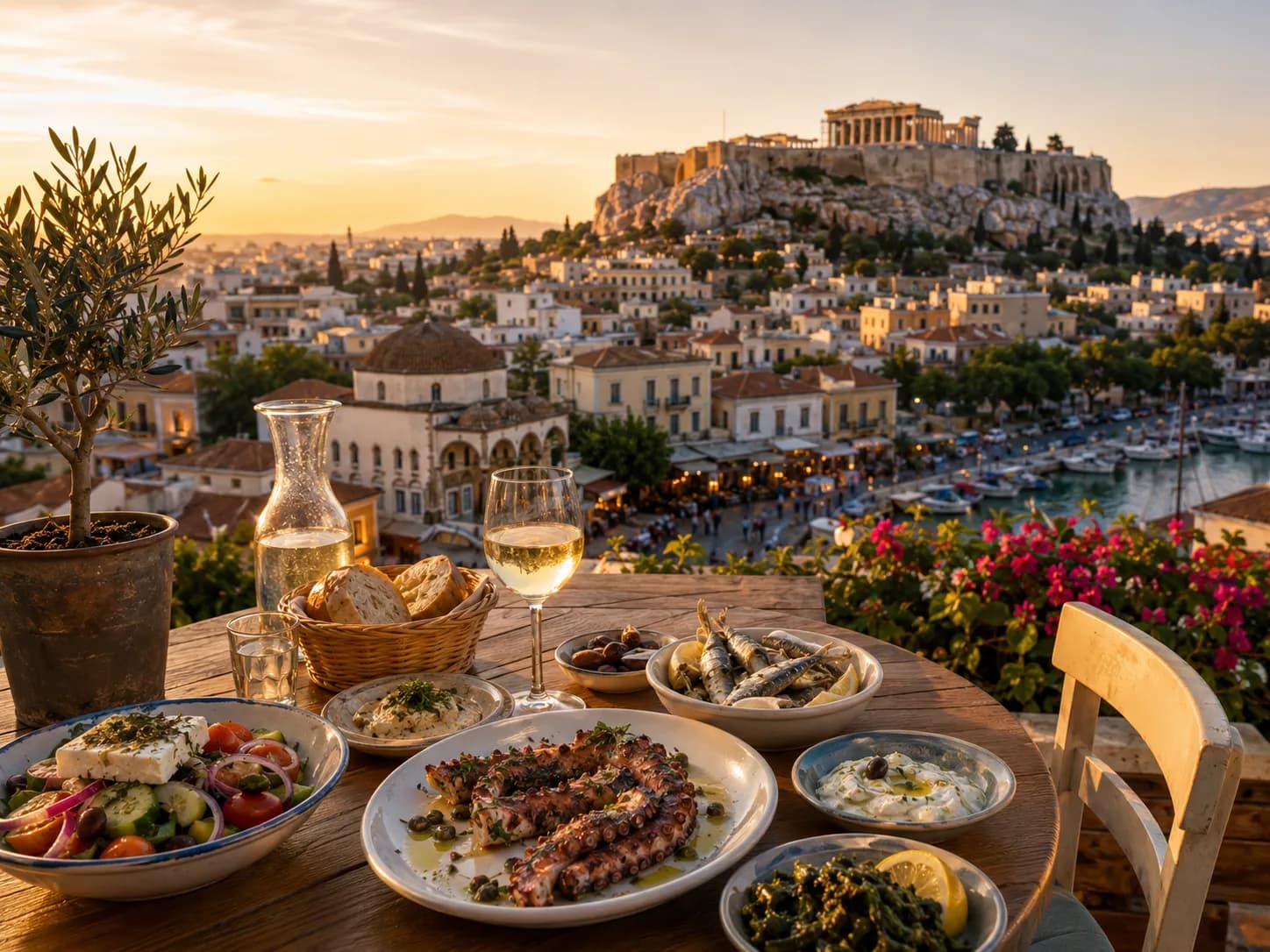
Overview
The Experience
Athens is not a single dining experience — it is dozens layered on top of one another, neighbourhood by neighbourhood, plate by plate.
The city has always been a crossroads. Byzantine, Ottoman, Asia Minor refugee, and modern Mediterranean influences all sit at the same table. What has emerged is a food culture that is unpretentious, deeply social, and impossible to reduce to a single dish.
Add to that the port energy of Piraeus — one of Greece's great seafood destinations — and the quieter pleasures of the Argosaronic islands just a short ferry ride away, and you have a food region that could absorb days of focused attention.
The cuisine of the Athens–Piraeus–Argosaronic area is shaped by:
• Street food culture refined over generations
• The long tradition of the ouzeri and the tsipouradiko
• Asia Minor culinary roots, especially in Piraeus and Kokkinia
• The freshest fish from the Saronic Gulf
• Island specialties just an hour from the city centre
Whether you are eating a late-night souvlaki in Monastiraki or grilled dentex by the water in Aegina, the rhythm is always the same: slow down, order one more plate, and let the conversation stretch.
Athens: The Neighbourhoods That Feed the City
Monastiraki & Psiri — Street Food & Taverna Culture
The historic centre is where Athens eats without ceremony. Monastiraki Square and the streets running through Psiri are the city's most concentrated zone of food energy.
What to eat here:
• Souvlaki and gyros — the benchmark versions are still found in small, no-frills shops
• Offal breakfast (kokoretsi, spleen sandwich) from early-morning grill houses around the central meat market
• Bougatsa — a warm custard or cheese-filled pastry, best eaten standing at the counter
• Mezedes at old Psiri tavernas with house wine by the carafe
Psiri has gentrified but not entirely. The best tavernas here are those that have been there since before it was fashionable.
Monastiraki food tip: Walk away from the square's main drag. The best souvlaki shops are one or two streets back, with no tourist signage and shorter queues.
Exarcheia — Neighbourhood Eating at Its Most Honest
Exarcheia has no rooftop bars and no Instagram-friendly plating. What it has is some of the most reliable, affordable neighbourhood cooking in Athens.
What to look for here:
• Ouzeri-style dining with rotating daily specials
• Ladera (olive oil-based vegetable dishes) — some of the best in the city
• Simple grilled meats with house wine
• Late-night eating culture that extends well past midnight
The neighbourhood rewards explorers. Menus are often handwritten, specials are spoken by the waiter, and the décor is unchanged from 1987. These are features, not flaws.
Kolonaki & Lycabettus — Refined Dining & Wine Culture
Kolonaki is where Athens dresses up. The neighbourhood runs up toward Lycabettus Hill and is home to the city's more upscale tavernas, wine bars, and modern Greek restaurants.
What to seek out:
• Modern interpretations of Greek classics — lavraki with capers, pork belly with honey and thyme
• Greek natural wines from producers across the country, served in dedicated wine bars
• Coffee culture elevated to a ritual — afternoon freddo espresso or cold brew is non-negotiable
• High-end mezedes bars where the small plates are artfully composed
This is also where Athens' brunch culture is strongest, especially on weekends.
Koukaki & Neos Kosmos — Local Athens Without the Tourist Layer
South of the Acropolis, these residential neighbourhoods offer some of the city's most genuine local dining.
What to find here:
• Family-run tavernas with handwritten menus and paper tablecloths
• Tsipouro bars where meze arrives automatically with each round of drinks
• Bakeries producing traditional Greek breads and pastries from early morning
• Affordable set lunch menus popular with local office workers
The view of the Acropolis from the hill above Koukaki is best enjoyed with a coffee from one of the neighbourhood's quieter cafes.
Glyfada & the Athenian Riviera — Seafood and Summer Dining
The southern coastal strip stretching from Faliro to Vouliagmeni is Athens' most relaxed side. In summer, life here shifts toward the sea entirely.
What to eat along the coast:
• Grilled whole fish at waterfront fish tavernas
• Fresh mussels and clams, often served with ouzo
• Seafood pasta — spaghetti with sea urchin or clams is a Riviera staple
• Light summer mezedes at beach-club restaurants
Vouliagmeni tip: The lake at Vouliagmeni has its own microclimate and a handful of excellent fish restaurants nearby. Quieter than Glyfada, more consistent in quality.
Piraeus: Greece's Great Seafood Port
Mikrolimano & Zea — The Harbour Dining Experience
Piraeus is not simply the city's departure point for ferries. It is one of the most serious seafood dining destinations in Greece — a fact Athenians themselves have always known.
Mikrolimano, the smaller circular harbour, is Piraeus at its most atmospheric. Fishing boats return here in the morning and their catch reaches the restaurants by lunchtime. The tables spill onto the waterfront. The fish arrive whole, grilled or baked simply.
What to order in Piraeus harbour tavernas:
• Whole grilled fish — pagros (red porgy), lavraki (sea bass), tsipoura (gilt-head bream)
• Fried calamari — the Piraeus version, rings cut thick and lightly battered
• Shrimp saganaki — in tomato sauce with feta, a staple here
• Seafood pasta and risotto-style dishes
• Marinated anchovies — served cold with lemon and olive oil
Zea Marina offers a slightly more upscale version of the same experience, with yachts moored alongside.
Kokkinia (Nikaia) — The Asia Minor Legacy
Piraeus has a deep Asia Minor identity. Waves of refugees arrived here after 1922 and brought with them a cuisine that changed the city.
The legacy of this history is still present in the food:
• Smyrna-style meatballs (Soutzoukakia Smyrneika) — oval, spiced with cumin, cooked in tomato sauce
• Patsas — tripe soup, a working-class staple eaten in the early morning after a long night
• Fried liver and offal dishes
• Spiced sausages and cured meats with Asia Minor character
Old-style establishments in the Kokkinia area are some of the most historically interesting places to eat in greater Athens.
Argosaronic Islands: Day Trips with Serious Food
Aegina — Pistachios, Octopus and the Freshest Fish
Aegina is the closest of the Saronic islands and one of the best day-trip food destinations from Athens. The port is lively, the tavernas are genuine, and the island's signature product — the Aegina pistachio — is unavoidable and justifiably celebrated.
What to eat in Aegina:
• Grilled octopus — hung to dry in the sun and then charcoal-grilled, a defining Aegina image
• Fresh fish at the harbour tavernas, ordered by weight
• Kakavia — traditional Greek fisherman's soup, made with the day's catch
• Aegina pistachios — bought directly from producers at the port, or eaten in every possible form: roasted, in sweets, in ice cream
• Psarosoupa (fish soup) — Aegina-style, richer and more aromatic than most versions
Aegina food tip: Arrive on the morning ferry, eat a late breakfast at the port, walk to the Temple of Aphaia, return for a long lunch at a harbour taverna. This is the correct itinerary.
Poros — Calm Waters and Simple Pleasures
Poros is intimate. The narrow channel between island and mainland creates an almost lagoon-like setting, and the tavernas here serve food that matches the atmosphere: honest, unfussy, and seasonal.
What to look for in Poros:
• Grilled fresh fish, always the priority
• Octopus with vinegar and capers
• Simple horiatiki (village salad) made with proper tomatoes
• House wine, often poured from unmarked bottles
The island's small scale means the restaurant scene has stayed local and unaffected by mass tourism.
Hydra — Dining Without Cars or Compromise
Hydra is the only island in the Argosaronic where motorized vehicles are banned. The silence this creates is unusual for a popular island, and it shapes the entire atmosphere — including how people eat.
Dining in Hydra:
• Waterfront tavernas where the catch arrives by caïque (traditional wooden boat)
• Grilled lobster when in season — Hydra is one of the better places to eat it around Athens
• Traditional mezedes at ouzeri-style establishments away from the main port
• Homemade sweets — almond-based pastries and local honey
Hydra rewards those who walk uphill. Some of the best tavernas are tucked into the upper neighbourhoods, with views over the Saronic Gulf.
Spetses — Pine Trees, Architecture and Serious Summer Dining
Spetses is the furthest of the Argosaronic islands and the most aristocratic in character. Large 19th-century mansions, pine forests reaching the sea, and a food scene that caters to a clientele who know what good dining looks like.
What to eat in Spetses:
• Spetses-style baked fish (Psari Spetsiotiko) — the island's signature dish, baked with tomato, garlic, parsley and olive oil
• Fresh grilled catch at the old harbour tavernas
• Mezedes and grilled meats at the smaller inland spots
• Traditional sweet pastries and loukoumades at old-fashioned cafes
Spetses food tip: Eat at the old harbour (Palio Limani) rather than the main port. The atmosphere is more intimate and the food is often better.
What to Drink: Athens, Piraeus & Argosaronic Edition
Ouzo and Tsipouro
Athens and Piraeus have a strong ouzeri and tsipouradiko culture. Tsipouro — the Greek pomace spirit, unseasoned with anise unlike ouzo — is increasingly popular in the city's small bars. It arrives with meze automatically.
Greek Wine
The Athens wine bar scene has grown significantly in recent years. Natural and low-intervention Greek wines are well represented — from Assyrtiko from Santorini to Xinomavro from Naoussa and indigenous varieties from smaller producers. Many bars specialise exclusively in Greek labels.
Retsina
Old-school Attica retsina — wine aged with pine resin — is undergoing a quiet revival. Modern versions are lighter and more nuanced than the versions that frightened generations of tourists. Worth approaching with fresh eyes.
Greek Coffee
Greek coffee (ellinikós kafés) remains the measure of a proper café. Ordered as glykós (sweet), métrios (medium) or skétos (no sugar). In summer, the freddo espresso and freddo cappuccino are the city's dominant drinks.
Frequently Asked Questions About Eating in Athens, Piraeus & the Argosaronic Islands
Where is the best place to eat in Athens?
There is no single best area — it depends on what you want. Monastiraki and Psiri for street food and traditional tavernas. Kolonaki for modern Greek dining and wine bars. Koukaki for neighbourhood authenticity close to the Acropolis. Glyfada for seafood along the coast.
What is the most iconic Athens street food?
Souvlaki and gyros are the undisputed answer. But the Athens street food scene also includes bougatsa (warm pastry filled with custard or cheese), koulouri (sesame-coated bread rings sold from carts), and tiropita (cheese pie) from neighbourhood bakeries.
Want to taste Athens like a local? Book a guided food tour
Is Piraeus worth visiting just for food?
Yes — especially Mikrolimano harbour. It is one of the best seafood dining settings in Greece and is only 20 minutes from the city centre. Many Athenians make the trip specifically for a long fish lunch.
Can you do a food day trip to the Argosaronic islands?
Aegina is the most practical: a 40-minute ferry from Piraeus, with a full harbour dining scene and the island's famous pistachios. Poros and Hydra are also doable as day trips, with longer ferry rides but equally rewarding food.
What is Psari Spetsiotiko?
It is the signature dish of Spetses: whole fish (usually white-fleshed) baked with tomatoes, garlic, parsley, white wine and olive oil. Every taverna in Spetses makes it differently. Tasting multiple versions is a reasonable excuse to visit more than once.
How much does eating out cost in Athens?
A full meal with drinks at a traditional taverna: €15–25 per person. A sit-down souvlaki or gyros with sides and a drink: €8–12. Upscale modern Greek restaurants in Kolonaki or along the Riviera: €40–70 per person. Harbour fish tavernas in Piraeus or Aegina: €25–40 per person, depending on the fish ordered.
What time do Athenians eat dinner?
Dinner rarely starts before 9pm and often begins closer to 10pm. Kitchens in traditional tavernas are open until midnight or later. Arriving at 8pm will mark you clearly as a tourist — though no one will mind.
💡
From souvlaki in Monastiraki to fresh octopus in Aegina — your complete guide to eating and drinking around Athens and the Saronic Gulf.
What stands out
Highlights
- ✨ Souvlaki & Street Food
- ✨ Fresh Whole Fish
- ✨ Aegina Pistachios
- ✨ Grilled Octopus
- ✨ Soutzoukakia
- ✨ Psari Spetsiotiko
- ✨ Greek Natural Wine Bars
- ✨ Lobster in Hydra