
Food & Wine Guide
Ionian Islands Food & Wine Guide
📍 Place: Corfu · Kefalonia · Zakynthos · Lefkada · Paxos
Overview
The Experience
The Ionian Islands taste different from the rest of Greece. Not lesser — different. Deeper, in some ways. More layered.
For centuries, Venice ruled these islands. The Ottomans never did. That distinction matters at the table more than anywhere else. Venetian cooking techniques, spice combinations, slow-braised meat dishes, and a tradition of elaborate pastry-making all settled into the local cuisine and never left. They merged with Greek ingredients, Byzantine flavors, and the extraordinary produce of the western coast — abundant rain, fertile soil, forests of ancient olive trees — to create something that is entirely its own.
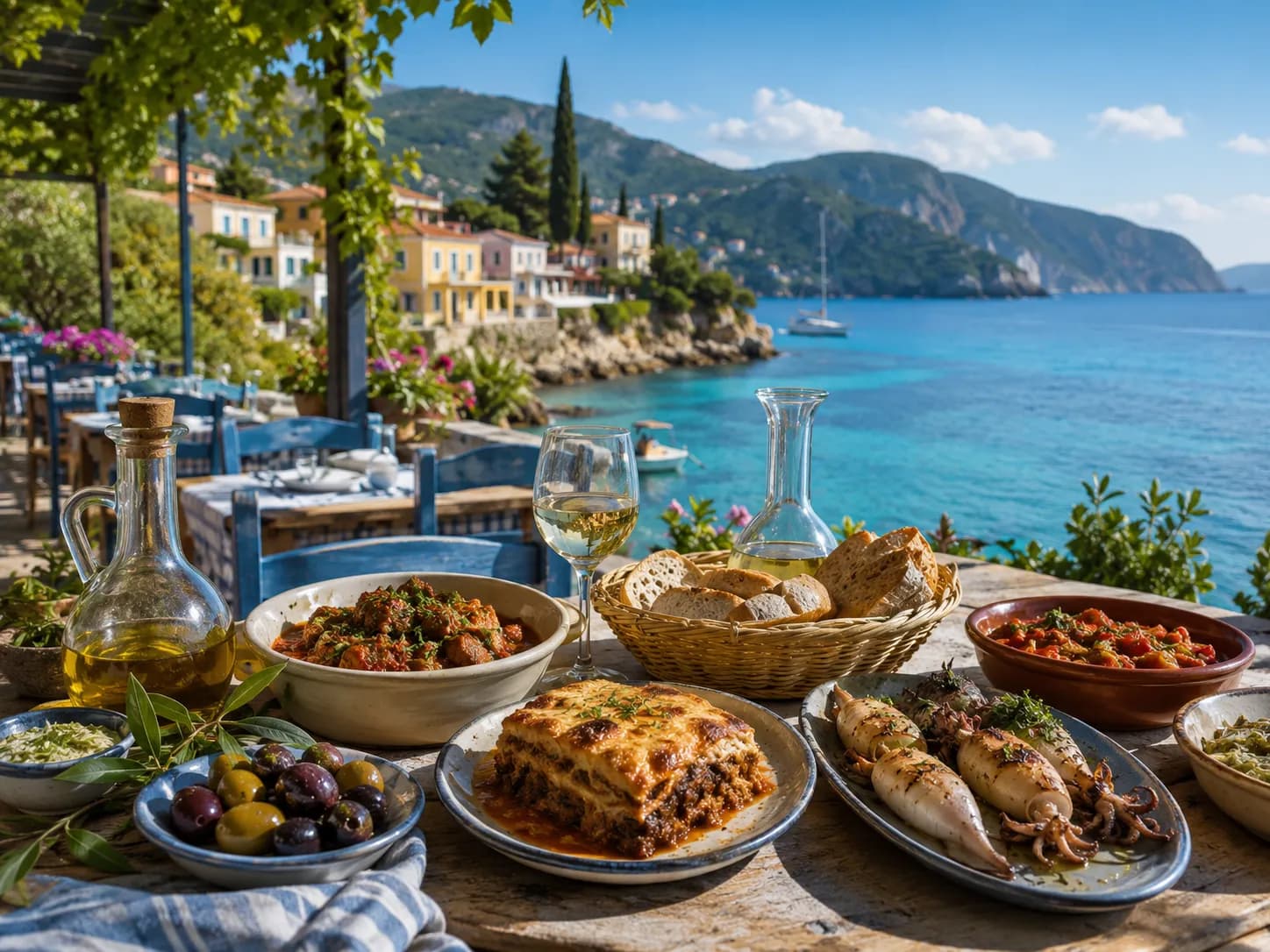
The Ionian table is not minimalist. It is generous, aromatic, and historically dense. Every island has its own dish, its own drink, its own way of marking a meal as complete. And the differences between them — between the aristocratic complexity of Corfu's kitchen and the mountain austerity of Lefkada's grills — are sharp enough that a traveler moving through the archipelago will feel each shift.
The cuisine of the Ionian Islands is shaped by:
• Centuries of Venetian culinary influence — slow braises, wine-based sauces, spiced meats
• Exceptional local olive oil, among the finest produced in Greece
• The Ionian Sea's rich catch — dentex, swordfish, tuna, cuttlefish
• Mountain ingredients from the island interiors — wild herbs, goat, pork, game
• A strong tradition of sweets, nougat and pastry rooted in Venetian and Byzantine confectionery
Eating well across the Ionian Islands requires no strategy. Find the taverna with the handwritten menu, ask what came in today, and order the house wine. The rest arranges itself.
Corfu — The Venetian Kitchen of Greece
A Cuisine Unlike Anywhere Else in Greece
Corfu's food is the most distinctively European-influenced in all of Greece, and the most misunderstood by travelers who expect the standard Aegean template. The island spent four centuries under Venetian rule, followed by periods of French and British administration. Every one of those occupations left something on the plate.
The result is a cuisine of slow-cooked meat dishes, wine-heavy sauces, aromatic spicing and elaborate sweets that feels simultaneously Greek and something else entirely.
Sofrito — The Dish That Defines Corfu
Sofrito is the island's most iconic dish and one of the great Greek regional specialties. Thin slices of veal are gently pan-fried, then slow-cooked in a sauce of white wine, garlic, parsley and white pepper until the meat is almost falling apart and the sauce has reduced to a deep, aromatic glaze.
It is served everywhere in Corfu — from the simplest village taverna to the most refined restaurant in Corfu Town. Every cook makes it slightly differently. Comparing versions is a legitimate reason to eat it more than once.
Pastitsada — The Sunday Dish
Pastitsada is Corfu's other essential dish: rooster or veal slow-braised in a rich tomato and spice sauce — cinnamon, allspice, cloves, bay leaf — then served over thick pasta (usually thick macaroni). The Venetian hand is unmistakable in the combination of meat, pasta and warm spice. On Sundays, the smell of pastitsada drifts from windows across the island.
What else to eat in Corfu:
• Bianco — a delicate white wine and garlic stew of white fish, a simpler but equally important Corfiot classic
• Bourdeto — a spicy fish or scorpionfish stew cooked with plenty of red pepper, intense and warming
• Tsigareli — wild greens sautéed with leeks and red pepper, one of the most honest Corfiot side dishes
• Mandolato — the island's signature nougat, made with honey, egg white and almonds; sold in confectionery shops throughout Corfu Town
• Kumquat liqueur — Corfu is the only place in Europe where kumquats grow in significant quantities; the resulting liqueur is sweet, fragrant and unmistakably Corfiot
Corfu Town: Where to Eat
The old town (a UNESCO World Heritage Site) is full of restaurants, but quality varies enormously. The best traditional cooking is found in the lanes behind the main squares and in the villages of the island's interior — Pelekas, Agios Markos, Sinarades — where the tourist layer thins and the cooking sharpens.
Corfu dining tip: Order the sofrito and pastitsada on separate visits to the same taverna. This is not excessive — it is research.
Kefalonia — Meat Pies, Robola Wine and the Open Sea
An Island That Takes Its Food Seriously
Kefalonia is the largest of the Ionian Islands and has the most varied food landscape: mountain villages with meat-heavy cooking, a long coastline with excellent seafood tavernas, and a wine culture anchored by one of Greece's most distinctive indigenous grape varieties.
The island is also one of the few places in Greece where a single dish — the Kefalonian meat pie — has achieved the status of a national monument.
Kefalonia Meat Pie (Kreatopita Kefallinias)
There is no dish in the Ionian Islands that carries more local pride than this one. A thick pastry crust — made with olive oil, not butter — encloses a filling of slow-cooked lamb and pork with rice, herbs, and seasoning. The result is dense, satisfying and deeply aromatic. It is eaten at celebrations, on feast days, at family gatherings, and in any taverna that still makes it by hand.
Seek out the versions made in wood-fired ovens in mountain villages. The crust behaves differently over wood — crisper, more smoky, more honest.
Robola Wine — Kefalonia's Signature Drink
Robola is a white grape variety grown almost exclusively in the limestone highlands of Kefalonia, centered on the Omala Valley. The wine it produces is dry, mineral, and citrus-forward — not unlike a restrained white Burgundy in structure, though with an entirely Greek character.
It is produced by the Robola Cooperative and a small number of private estates. A glass of cold Robola with fresh fish is one of the better combinations available in Greece.
What else to eat in Kefalonia:
• Lagoto — rabbit or hare braised with wine, rosemary and garlic; deeply rustic and completely satisfying
• Aliada — garlic potato purée (similar to skordalia), made richer with the island's excellent olive oil
• Fresh tuna — the deep waters around the island bring excellent bluefin tuna in season
• Savoro — sweet-and-sour fried fish marinated with vinegar, raisins and rosemary
• Mandola — hard almond candy, a traditional sweet
Kefalonia food tip: Visit the Robola Cooperative in the Omala Valley, taste the wines at the source, and pair them with local cheese. This is a half-day well spent.
Zakynthos — Sweetness, Sea and the Flavors of the South
Warm, Fertile, and Generously Stocked
Zakynthos is the southernmost of the main Ionian islands and the most Mediterranean in character — warmer, more open, with a softer landscape of olive groves, citrus orchards and vineyards. Its cuisine reflects that warmth: generous portions, strong flavors, and a tradition of sweets and confectionery that is among the most developed in the Ionian.
What to eat in Zakynthos:
• Skordostoubi — a powerful garlic sauce used as a condiment and marinade
• Strapatsada — scrambled eggs with tomatoes, a simple local breakfast staple
• Fresh fish and grilled seafood — the southwestern coast has excellent fish tavernas
• Salted cod (bakaliaros) — prepared in multiple ways, often with Zakynthian garlic sauce
• Mandolato Zakynthos — the island's version of Ionian nougat, with local honey and almonds
Zakynthos Sweets — A Separate Category
The island has an unusually strong confectionery tradition.
• Mandolato — the island's pride, given as gifts
• Pasteli — sesame-honey bars, thicker and chewier than mainland versions
• Fougato — cream-custard pastry with Venetian roots
Zakynthos food tip: The best mandolato is sold in small family-run shops in the old town, not in tourist souvenir outlets. The difference in quality is immediately obvious.
Lefkada — Mountain Cooking and the Finest Fresh Fish
An Island Between Land and Sea
Lefkada is connected to the mainland by a floating bridge — technically not an island in the most absolute sense — and its food reflects that ambiguity. The mountain interior produces some of the most honest, fire-driven cooking in the Ionian: roasted meats, wild herbs, wood-fired bread. The coastline, meanwhile, offers access to the open Ionian Sea and some of the best fresh fish in the archipelago.
The Lefkada Character
Lefkada's cuisine is less Venetian than Corfu's, more directly Greek, and closer in spirit to the traditions of Epirus across the water. The cooking is strong and direct. Meat matters. Olive oil is extraordinary. The island produces one of the most celebrated extra virgin olive oils in Greece.
What to eat in Lefkada:
• Fresh swordfish — grilled simply with lemon and olive oil
• Fresh tuna — grilled steaks, raw slices with olive oil, marinated versions
• Grilled meats over charcoal — whole lamb or kid on the spit
• Tsigariasto — slow-cooked lamb or goat with wine and olive oil
• Local olive oil — worth purchasing directly from producers
• Fresh cheese — excellent soft white cheeses and aged varieties
Lefkada food tip: Englouvi is known for producing a specific variety of lentil — smaller, denser, more flavorful than standard Greek lentils. Worth bringing home.
Paxos — The Smallest Island, the Finest Olive Oil
A Place of Extraordinary Simplicity
Paxos is small — the smallest of the five islands covered in this guide — and its food scene reflects that scale. There are no grand restaurants, no elaborate menus, and no reason to expect the range of dining options available on larger islands.
What Paxos has, instead, is something rarer: some of the best olive oil produced anywhere in Greece, a small handful of genuinely excellent fish tavernas, and the kind of unhurried island atmosphere in which a simple grilled fish becomes an event.
Paxos Olive Oil — A World Apart
The island is almost entirely covered with ancient olive trees — some of them over a thousand years old — and the oil they produce is consistently ranked among the finest in the Mediterranean. It is fruity, balanced, and peppery, with a complexity that reflects the age of the trees and the island's specific microclimate.
Everything in Paxos is cooked in this oil. Tasting it fresh, poured over bread or drizzled over grilled fish, is the defining Paxos food experience.
What to eat in Paxos:
• Fresh whole fish, grilled — the daily catch is small and menus are short
• Grilled octopus — hung over the water, dried in the sun, cooked over charcoal
• Mezedes with house olive oil — bread, cheese, olives and the island's oil
• Soufiko — ratatouille-style vegetables cooked in olive oil
• Fresh local cheese — small quantities, worth ordering when available
Antipaxos
The tiny sister island is accessible by short boat trip. Its beaches are famous. Less known is the small number of tavernas serving simple, fresh fish by the water. Allocate a half-day to Antipaxos — and eat there.
Paxos food tip: Buy a bottle of Paxos olive oil directly from a local producer before leaving. It is available elsewhere, but nowhere cheaper or fresher.
What to Drink: The Ionian Islands
Robola of Kefalonia
The standout wine of the Ionian archipelago. Dry, mineral, aromatic — excellent with fish and seafood. The Robola Cooperative in the Omala Valley produces reliably good bottles at reasonable prices.
Verdea of Zakynthos
A distinctive amber-colored wine made from indigenous varieties grown on the highlands of Zakynthos. It is aged oxidatively, giving it a nutty, dry character unlike almost anything else produced in Greece. Rare outside the island and worth seeking out.
Lefkada Local Wine
The island produces table wine that rarely leaves its borders. Unpretentious, rustic, and often served in unmarked carafes at village tavernas.
Kumquat Liqueur — Corfu
Unavoidable on Corfu and genuinely interesting. The sweet, aromatic liqueur is made from the only kumquats cultivated in Europe. Served as an aperitif or digestif.
Tsitsibira — Corfu Ginger Beer
A remnant of British rule (1815–1864), still produced on the island. Spicier and less sweet than commercial versions. Served cold, it is one of the most refreshing drinks in summer heat.
Ouzo and Tsipouro
Less central to the Ionian than to the Aegean, but present. Tsipouro from Epirus crosses to Lefkada naturally. In Corfu, local digestifs and liqueurs tend to take precedence.
Frequently Asked Questions About Eating in the Ionian Islands
What makes Ionian Islands food different from other Greek islands?
The primary distinction is the Venetian influence. Unlike the Aegean islands, which were under Ottoman rule for centuries, the Ionian Islands were governed by Venice from the 14th to the 18th century. This produced a cuisine with slow-braised meats, pasta, spiced sauces, and a more elaborate pastry tradition than most of Greece.
What is the most famous dish of the Ionian Islands?
Sofrito from Corfu and Kefalonian meat pie (Kreatopita) are the two most internationally recognised dishes.
Which Ionian island has the best food scene?
Corfu has the most developed and historically rich cuisine. Kefalonia has the best combination of local specialties and wine culture. Paxos offers the most exceptional raw ingredients.
What wine should I drink in the Ionian Islands?
Robola from Kefalonia is the obvious answer — a dry white from an indigenous variety grown at altitude in limestone soil. Verdea from Zakynthos is rarer and more unusual.
Is seafood good in the Ionian Islands?
Yes — the Ionian Sea is colder and deeper than much of the Aegean. Swordfish, tuna, dentex, sea bass and cuttlefish are all excellent.
What sweet should I bring home?
Mandolato from Corfu or Zakynthos — a nougat made with honey, egg white and almonds — is the most characteristic Ionian sweet. Paxos olive oil is the best edible souvenir.
How much does eating out cost in the Ionian Islands?
A full meal at a traditional village taverna: €18–28 per person. Waterfront fish tavernas: €30–50 per person. Upscale restaurants in Corfu Town or Fiskardo: €45–80 per person.
💡
From Corfu's Venetian sofrito to Kefalonia's legendary meat pie — a complete food and wine guide to the Ionian Islands.
What stands out
Highlights
- ✨ Sofrito — Corfu
- ✨ Kefalonian Meat Pie
- ✨ Robola Wine — Kefalonia
- ✨ Mandolato — Corfu & Zakynthos
- ✨ Paxos Olive Oil
- ✨ Fresh Swordfish & Tuna — Lefkada
- ✨ Pastitsada — Corfu
- ✨ Kumquat Liqueur — Corfu
- ✨ Verdea Wine — Zakynthos
- ✨ Soufiko — Paxos