
Food & Wine Guide
Traditional Tavern Flavors in Crete
📍 Place: Crete
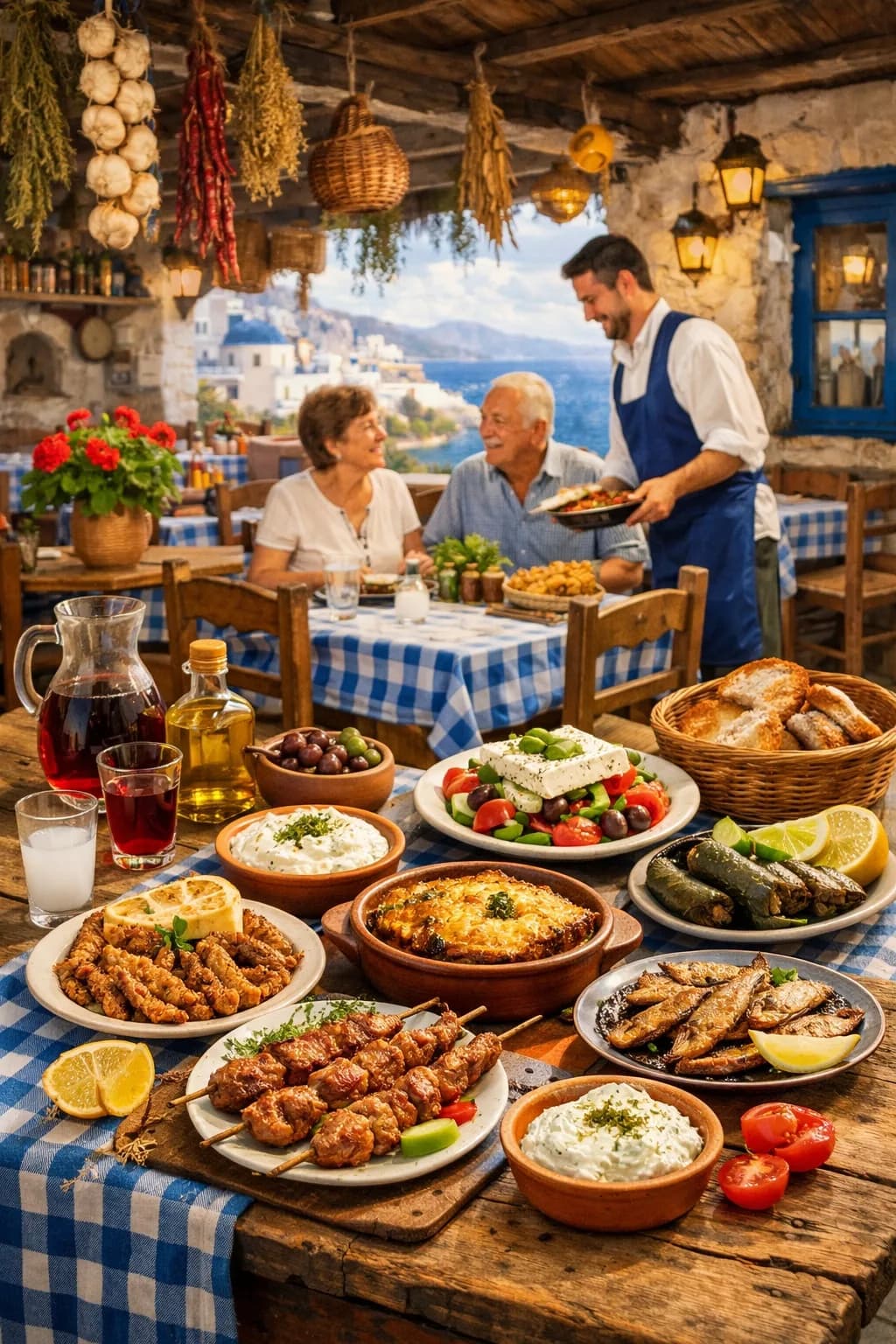
Overview
The Experience
In Crete, every region tells a slightly different story — through fire, olive oil, mountain herbs, and sea salt.
From the White Mountains of Chania to the rugged plateaus of Lasithi, the Cretan tavern is not a single experience. It changes with the landscape. And that’s what makes it unforgettable.
Chania: Mountain Soul & Slow-Cooked Depth
Chania: Mountain Soul & Slow-Cooked Depth
Western Crete carries intensity.
The White Mountains (Lefka Ori) shape both the terrain and the cuisine. Villages inland from Chania offer some of the most authentic tavern experiences on the island.
What to Look For in Chania Taverns:
• Antikristo lamb cooked over open fire
• Goat in clay pot with wild herbs
• Dakos with deeply flavorful local tomatoes
• Kalitsounia (cheese or herb pies) handmade daily
• Staka (rich Cretan dairy cream) often served with eggs or over fries
In mountain villages, meat dominates the table. Slow cooking is the rule, not the exception. Dishes are rustic, hearty, and unapologetically simple.
In seaside Chania, you'll also find:
• Fresh grilled fish
• Octopus with vinegar and rosemary
• Cretan salads with local graviera cheese
Best for: Travelers who want strong flavors, traditional mountain cooking, and deeply local taverns.
Rethymno: Balance Between Tradition & Refinement
Rethymno: Balance Between Tradition & Refinement
Rethymno sits between west and east — and its cuisine reflects that balance.
Here, you'll find traditional recipes presented with slightly more finesse, especially in village taverns around the Amari Valley and inland communities.
What to Look For in Rethymno Taverns:
• Gamopilafo (wedding rice cooked in meat broth)
• Lamb with artichokes or wild greens
• Snails (xoxlioi) with rosemary and vinegar
• Handmade pasta with slow-cooked meat
Rethymno's food feels slightly more layered — not modernized, but thoughtfully prepared.
Village taverns here often feel intimate. Stone courtyards, wooden tables, quiet evenings.
Best for: Visitors who want authentic food with subtle refinement and traditional inland flavors.
Heraklion: The Agricultural Heart of Crete
Heraklion: The Agricultural Heart of Crete
Central Crete is fertile. Olive groves stretch endlessly. Vineyards dot the hills.
Heraklion region offers some of the most ingredient-driven tavern experiences on the island.
What to Look For in Heraklion Taverns:
• Seasonal vegetable dishes (zucchini flowers, eggplants, wild greens)
• Slow-cooked pork with wine and herbs
• Local graviera and mizithra cheeses
• Cretan salads with barley rusks and abundant olive oil
Wine culture is strong here. Many taverns serve local varietals produced nearby — earthy, structured, honest wines.
The cuisine feels grounded. Ingredient-first. Less focused on spectacle, more on quality.
Best for: Food lovers interested in the Cretan diet, olive oil culture, and wine pairings with traditional dishes.
Lasithi: Wild, Remote & Deeply Authentic
Lasithi: Wild, Remote & Deeply Authentic
Eastern Crete feels different.
More rugged. Less polished. Villages in the Lasithi Plateau and coastal fishing communities preserve some of the island’s most untouched tavern traditions.
What to Look For in Lasithi Taverns:
• Goat and lamb raised locally
• Simple grilled meats with salt and lemon
• Fresh seafood in coastal villages
• Hand-cut potatoes fried in olive oil
• Minimalist menus based entirely on what’s available that day
In Lasithi, you may encounter taverns without printed menus. The owner tells you what exists. That’s your choice.
The flavors are bold but unpretentious.
Best for: Travelers seeking raw authenticity and truly off-the-beaten-path village dining.
Mountain vs Seaside & Cretan Hospitality
Mountain Taverns vs. Seaside Taverns
Understanding this distinction helps visitors choose the right experience.
Mountain Taverns: Heavier meat dishes, wood-fired cooking, rustic interiors, slower pace.
Seaside Taverns: Grilled fish & octopus, simpler seasoning, sea breeze atmosphere, lighter summer meals.
Both are equally authentic — just shaped by geography.
The Constant Across All Regions: Cretan Hospitality
No matter where you dine, one element remains unchanged. Philoxenia.
You will be offered raki at the end of the meal. You may receive fruit or dessert "on the house." You will likely be asked where you're from.
Hospitality here is not strategic. It is instinctive.
What Visitors Should Expect
• No dress code
• No rushed service
• Large portions
• Seasonal menus
• Affordable prices (€15–35 per person in most traditional taverns)
And above all — sincerity.
Frequently Asked Questions About Traditional Tavern Food in Crete
Where to eat traditional food in Crete?
You can find authentic Cretan tavern food across the island, but the most genuine experiences are often in village taverns rather than tourist-heavy areas.
• Chania: Best for antikristo lamb and handmade pies.
• Rethymno: Ideal for gamopilafo and snail dishes.
• Heraklion: Excellent for olive-oil based dishes and local wines.
• Lasithi: Perfect for simple, rustic goat and lamb dishes.
What is the most traditional Cretan dish?
There isn't just one — but these are considered staples: Antikristo lamb, Gamopilafo (wedding rice), Dakos, Horta (wild greens), Kalitsounia.
Is Cretan food different from the rest of Greece?
Yes. Cretan cuisine stands out because of the heavy use of high-quality olive oil, emphasis on wild greens, slow-cooked meats, and its strong connection to the Mediterranean diet.
How much does a traditional tavern meal cost?
A typical meal costs €15–25 per person in most villages, and €25–35 in more popular or coastal areas.
What drink pairs best with Cretan tavern food?
House wine (red or white), local Cretan wines from the Heraklion region, and naturally, Raki (served after the meal).
💡
A regional journey through Crete's traditional taverns.
What stands out
Highlights
- ✨ Antikristo lamb
- ✨ Gamopilafo
- ✨ Dakos
- ✨ Cretan Hospitality