How Much Does a Trip to Greece Cost? A Real Budget Guide
Travel Guide

How Much Does a Trip to Greece Cost? A Real Budget Guide

Find out how much a trip to Greece really costs — daily budgets, accommodation, food, ferries and island-by-island cost breakdown for every travel style.

Overview

Greece has a reputation for being expensive, largely because Santorini and Mykonos dominate its image. The reality is more nuanced. Greece can be done on a tight budget, a comfortable mid-range spend, or a full luxury experience — and the cost of your trip depends more on your choices than on Greece itself. This guide breaks down real, current costs across accommodation, food, transport and experiences so you can plan your trip with honest numbers in hand.

1

1. Daily Budget Ranges: What to Expect

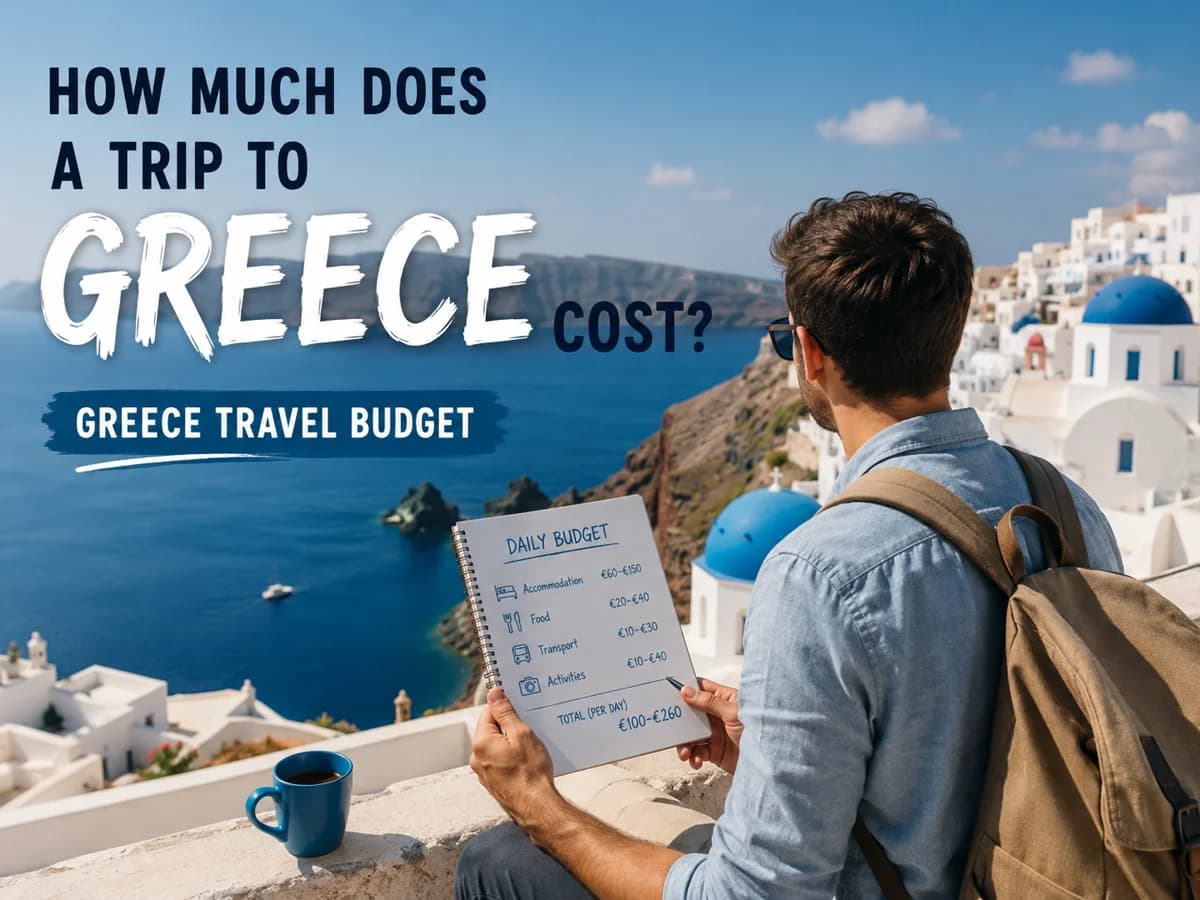
Before diving into specific costs, it helps to understand the three main travel styles and what they typically look like in Greece: Budget traveller (€60–€90 per person per day): This tier works best outside of peak July–August, on less commercialised islands and if you are comfortable with simpler accommodation, local tavernas and public transport. Destinations like Naxos, Lesvos, Ikaria, Samos and parts of Crete offer genuinely affordable experiences. You can eat very well on a Greek budget — a full meal at a local taverna with wine rarely exceeds €15–18 per person. Mid-range traveller (€120–€220 per person per day): This is the most common travel style for visitors to Greece. It covers comfortable hotels or boutique stays in good locations, a mix of restaurant meals and tavernas, car rental on islands where it makes sense, and the occasional paid experience or excursion. Most popular islands — including Corfu, Crete, Rhodes and Paros — are very manageable at this level. Luxury traveller (€300–€600+ per person per day): Santorini and Mykonos in high season are natural luxury destinations, but this tier can apply anywhere if you choose cave hotels, infinity-pool suites, private boat charters and tasting menus. Greece has grown significantly in luxury offering over the last decade, particularly in the Ionian islands, Halkidiki and the Cyclades.

2

2. Accommodation Costs in Greece

Accommodation is where your budget swings most dramatically depending on destination and season. Budget options (€25–€70 per night): Guesthouses, family-run rooms, simpler hotels away from main tourist centres, and some mid-range options in shoulder season. On islands like Naxos, Paros, Lesvos and parts of Corfu, you can find clean, well-located rooms in this range even in summer. Mid-range hotels (€80–€180 per night): This bracket covers comfortable hotels with pools, boutique guesthouses and well-reviewed 3–4 star properties. Most islands have solid choices in this range, especially if you book early for July and August. Luxury and boutique stays (€200–€800+ per night): Santorini's caldera-view hotels set the benchmark. A sea-view suite in Oia during high season can reach €600–€900 per night. Mykonos follows a similar pattern. However, the same level of boutique luxury in Kefalonia, Paros or Samos costs significantly less — often half the price. Practical tip: Prices drop substantially in shoulder season (May–June and September–October). A hotel that costs €250 in August often runs at €120–€140 in September with identical service and better weather for sightseeing.

3

3. Food and Drink Costs

Greek food is one of the great pleasures of visiting the country, and it does not have to be expensive. Local tavernas: A full meal — mezedes, grilled fish or meat, salad, bread and local wine or beer — typically costs €14–€20 per person. This is the backbone of eating in Greece, and the quality is often exceptional. Tourist-facing restaurants in main areas: In Oia (Santorini), Little Venice (Mykonos) or Plaka (Athens), restaurant prices climb significantly. A pasta dish can reach €18–€22, and a grilled sea bass can cost €28–€38. Street food and bakeries: A fresh tiropita or spanakopita costs €1.50–€2.50. Souvlaki wraps run €2.50–€4. Fresh bread, yoghurt and honey from a market makes for an excellent cheap breakfast. Coffee culture: A frappe or freddo espresso at a local café costs €2–€3.50. Avoid ordering coffee at hotel pools where the same drink costs €5–€8.

4

4. Ferry and Transport Costs

Ferries are a central part of travelling around Greece, and their cost varies enormously depending on the route, company, season and how far in advance you book. Short Aegean routes (Piraeus to Cyclades): A basic deck-class ferry ticket to Mykonos or Santorini from Piraeus costs €35–€50 one way. Fast ferries on the same routes cost €55–€80 one way. Longer routes (Athens to Crete, Rhodes, Lesvos): Overnight ferries cost €35–€55 for a basic seat. A cabin adds €30–€60 per cabin per journey. Inter-island ferries: Shorter hops between neighbouring islands — Paros to Naxos, Mykonos to Delos — often cost €8–€18 per person. Domestic flights: Olympic Air and Sky Express connect Athens with most island airports. Prices vary from €35–€120 one way. Car rental: Renting a small car costs €30–€60 per day in shoulder season and €50–€90 in peak summer.

5

5. Experiences, Attractions and Activities

Most of Greece's best experiences are either free or modestly priced. The Acropolis (Athens): €20 full price. One of the world's great monuments, worth every cent. Archaeological Museum of Athens: €12. One of the world's finest collections of ancient Greek artefacts. Sailing and boat trips: Day boat trips around islands typically cost €40–€90 per person. Beaches: Almost entirely free. Organised beach clubs with sunbeds at Mykonos and Santorini can reach €30–€80 per person per day. Guided tours: Half-day and full-day guided tours in Athens, Delphi or Olympia typically run €25–€60 per person. Sunset wine tours in Santorini, food tours in Athens and kayak tours in Kefalonia are all in the €45–€90 range.

6

6. Island-by-Island Cost Comparison

Not all Greek islands cost the same. Here is a practical snapshot: Santorini: The most expensive island overall. Budget for €200–€400+ per day per couple in high season. Mykonos: Comparable to Santorini in hotel costs, beach clubs and nightlife add significantly to the daily spend. Crete: Genuinely flexible across all budgets. Excellent value for mid-range. Corfu: Very affordable outside of the main resort strip. Excellent value for families. Paros / Naxos: Authentically priced Cycladic islands. Strong mid-range value. Kefalonia / Zakynthos / Lefkada: Ionian islands offer strong value relative to their natural beauty. Lesvos / Samos / Ikaria: Among the most affordable islands in Greece with excellent food and minimal tourist mark-up.

7

7. Tips to Save Money on a Greece Trip

Planning and timing are the two most powerful tools for managing your Greece travel budget. Travel in shoulder season. May, June and September offer lower prices, calmer weather for sightseeing, and a more relaxed atmosphere. Book ferries early for peak summer. High-demand sailings sell out or become significantly more expensive if booked at the last minute. Eat where locals eat. Walk two or three streets back from any harbour or main beach and you will typically find local tavernas at 30–40% lower prices. Consider a basecamp strategy. Staying in one location and making day trips costs less than moving hotels every two days. Use Athens wisely. Athens is one of Europe's more affordable capitals. Staying a night or two in Athens as part of your island trip keeps your accommodation average down.