Solo Travel in Greece: Everything You Need to Know
Travel Guide

Solo Travel in Greece: Everything You Need to Know

Planning solo travel in Greece? Discover the best islands for solo travellers, safety tips, how to get around, meet people and make the most of a trip alone.

Overview

Greece is one of the best solo travel destinations in Europe, and a growing number of travellers — particularly women travelling alone, and people in their 30s to 50s on their first solo trip — choose it as their destination of choice. The reasons are straightforward: Greece is safe, hospitable, easy to navigate independently, and has a natural social rhythm built around shared meals, communal outdoor spaces and a culture that welcomes strangers with warmth rather than suspicion. This guide covers everything a solo traveller needs to know before arriving — from safety and transport to the best islands, where to stay and how to make the most of travelling alone.

1

1. Is Greece Safe for Solo Travellers?

The short answer is yes — Greece is widely considered one of the safest countries in the Mediterranean for solo travel, including for women travelling alone. Petty crime exists, as in every tourist destination, and the usual common-sense precautions apply: keep an eye on your belongings in busy markets and ferry ports, use reputable taxis or rideshare apps in Athens, and be aware of tourist-area scams. These are minor considerations, not genuine safety concerns. Violent crime against tourists is rare. Greeks have a deeply ingrained culture of hospitality — the word "philoxenia" (literally "love of the stranger") is one of the foundational social values in Greek culture. Locals are generally happy to help with directions, recommendations and advice, and solo travellers often remark on how frequently they are invited to join someone's table or offered a complimentary drink. For solo female travellers specifically: Greece rates consistently high in safety surveys for women travelling alone. Harassment is far less common than in many Mediterranean destinations. Busy tourist areas, island villages and beach communities are generally relaxed and well-lit environments.

2

2. Best Greek Islands for Solo Travellers

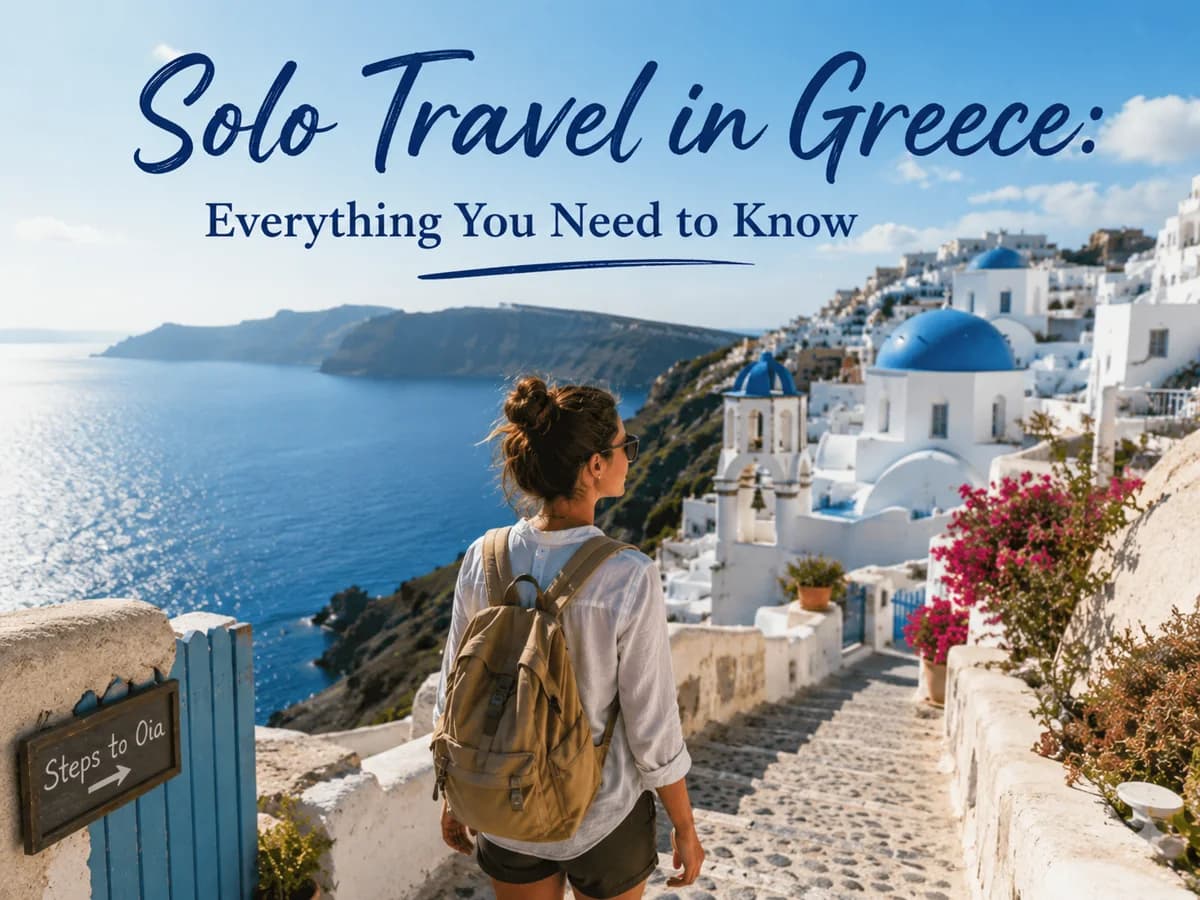
Not every island suits solo travel equally. Here is an honest breakdown of the best options depending on your travel style: Paros — the social island: Paros has become one of the most recommended islands for solo travellers in the Cyclades. Naoussa village has a lively but not overwhelming bar and restaurant scene, a strong community of young European travellers, and a beautiful harbour that functions as a natural social meeting point. Santorini — solo with a purpose: Santorini rewards solo travel for those who are there specifically for the experience — the views, the sunsets, the food, the volcanic landscape. Walking Oia alone in the early morning before the crowds arrive is a genuinely special kind of travel. Crete — the most flexible option: Crete is ideal for solo travellers who want variety and freedom. Heraklion and Chania both have lively old towns. A rented car unlocks the island's interior — mountain villages, gorges, remote monasteries. Naxos — relaxed and affordable: Naxos is one of the most liveable islands in the Cyclades for solo travellers on a mid-range budget. The main town is beautiful and sociable. Food prices are lower than Mykonos or Santorini. Athens — the solo city experience: Athens is compact enough to explore on foot, with vibrant café culture, world-class museums and nightlife that starts late but runs long. Lefkada and Kefalonia — for the nature-focused solo traveller: Both Ionian islands are excellent for solo travellers who want dramatic natural scenery and beaches that reward independent exploration.

3

3. Solo Travel Logistics: Getting Around

One of the main questions solo travellers ask is how practical Greece is to navigate alone. The answer is: very practical, with a few things worth knowing in advance. Ferries: Greece's ferry network is extensive and solo travel on ferries is completely normal and safe. Most routes between islands in the Cyclades, Dodecanese and Ionian are well served from June to September. Book ahead for peak summer routes. Getting between islands: The Cyclades connect easily. The Ionian islands are a separate network. The Dodecanese are another. Mixing between these networks requires going via Athens, which adds time. Car rental: Renting a car is genuinely one of the best decisions a solo traveller can make on larger islands. It gives complete freedom and opens up parts of the island that organised tours do not reach. Local buses (KTEL): Most islands have a basic bus network. On smaller islands, schedules are limited. Athens Metro and tram: Athens has a clean, safe and reliable metro system. The journey from Athens Airport to Syntagma takes around 40 minutes and costs €9.

4

4. Where to Stay as a Solo Traveller

Accommodation choice matters more for solo travellers than it might for couples or groups, because your base directly affects how social or isolated your experience feels. Boutique guesthouses and small hotels: These tend to be the sweet spot for solo travellers in Greece. Owners are often present, helpful and genuinely welcoming. Breakfast communal tables naturally create opportunities for conversation. Smaller properties also tend to be in better locations — old town streets, harbour views, quiet hillsides. Hostels: Available in Athens, Thessaloniki, Crete, Santorini and a handful of other destinations. Quality varies, but several excellent hostel-style properties cater specifically to independent and solo travellers. Avoiding "solo supplement" costs: Some Greek hotels charge a single occupancy supplement for solo travellers. When comparing accommodation, check whether single rooms or solo pricing is available — boutique properties and guesthouses are more likely to offer flexible rates.

5

5. Eating and Socialising Alone

One of the genuine joys of solo travel in Greece is eating. And in Greece, eating alone is not a strange or uncomfortable experience. Greek meal culture is slow and leisurely. You are expected to sit for as long as you like. No one will rush you. A good book, a journal, or simply watching the world pass by while eating a long lunch at a harbour-side taverna is one of the most pleasurable experiences Greece offers. Local tavernas, especially those slightly off the main tourist drag, tend to attract a mix of Greek families, local workers and regular visitors. Solo travellers are warmly welcomed and often find themselves in spontaneous conversation with the owner, the table next door, or a local who spotted you looking at the menu. Practical tip: Sitting at the bar rather than a table in a restaurant or wine bar naturally opens up conversation with staff and other solo travellers.

6

6. Best Time for Solo Travel in Greece

May and June are excellent months for solo travel. The weather is warm but not punishing, the sea is swimmable, prices are moderate and the tourist infrastructure is running without the crush of high season. September and October are equally strong. The peak crowds have gone, prices drop, and the overall atmosphere is more local and personal. July and August are the busiest months but also the most social — hostels are full, beach bars are lively and the energy on popular islands is at its peak. Just book accommodation well in advance.