1The Lion of Kea: a 6th-century BC sculpture with a smile that has not aged
The Liontas — the Lion of Kea — sits on a rock face on the hillside below Ioulida's eastern edge, carved directly into the natural grey schist of the slope sometime around 600 BC. It is nearly six metres long and over three metres tall, the largest archaic rock-cut sculpture in Greece and one of the oldest. The walk from Ioulida takes approximately 15 minutes on a signposted path. The lion is free to visit, open at all times.
2Ioulida: a hilltop capital unlike any other in the Cyclades
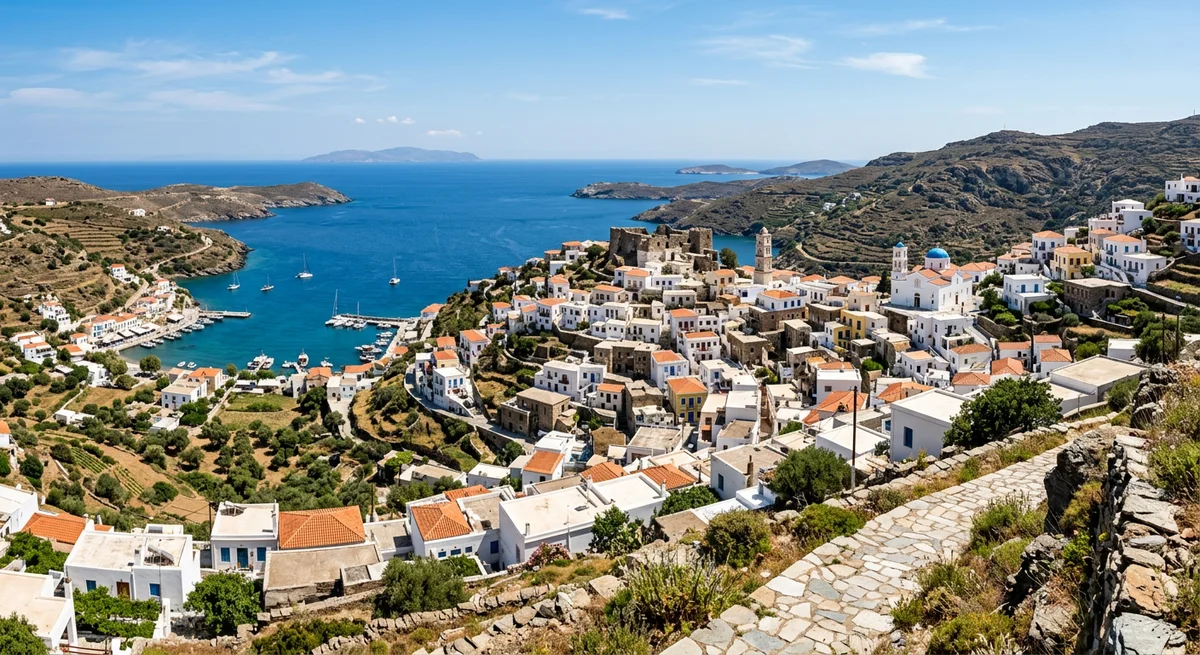
Ioulida, the island's capital, is built on a hillside in the island's centre, 8km from the port, with terracotta-tiled rooftops, stone houses in earthy ochre and warm sienna, narrow stepped alleys shaded by traditional stegadia (vaulted stone galleries). The town is car-free — like Hydra, no vehicles enter — and its silence belongs to a Mediterranean small-town life that the Greek islands increasingly stage rather than live.
3Ancient Karthaia: temples at the edge of the world
On the southeastern coast of Kea, accessible only by a demanding 12.5km hiking trail from Ioulida or by boat from the north, the ruins of ancient Karthaia occupy a dramatic sea-washed promontory. The site contains the foundations of temples dedicated to Apollo and Athena, a theatre, and the walls of a city inhabited from the 8th century BC until the late 6th century AD.
4The HMHS Britannic — the Titanic's sister ship, resting at 120 metres
In 1916, the HMHS Britannic — sister ship of the Titanic, converted to a hospital ship during World War I — struck a German naval mine between Kea and Makronissos and sank in 55 minutes. The wreck lies at approximately 120 metres depth, accessible only to technical divers, but the story and the underwater virtual reality experiences through the Kea Underwater Historic Park make it compelling for all visitors.
5Vourkari: yachts, seafood and the most elegant small marina in the western Cyclades
Vourkari is a fishing village that has evolved into the social centre of the island's summer season without losing its harbour character — fishing boats still moor alongside yachts, and the best seafood tavernas (Aristos, 9 Kores, To Kyma) serve lobster spaghetti and fried baby kalamari at tables a metre above the water. The sunset from Vourkari's waterfront is one of the finest small-harbour sunsets in the Cyclades.
6An island that functions on its own terms — one hour from the capital
Kea is closely observed and intensely loved by a specific community — educated Athenians, sailing families, artists and writers who have been returning for decades. That community's presence has produced an island with genuinely good restaurants, well-maintained trails, active archaeological sites and a social fabric that is not dependent on passing tourist traffic.