Myrtos — the iconic cove
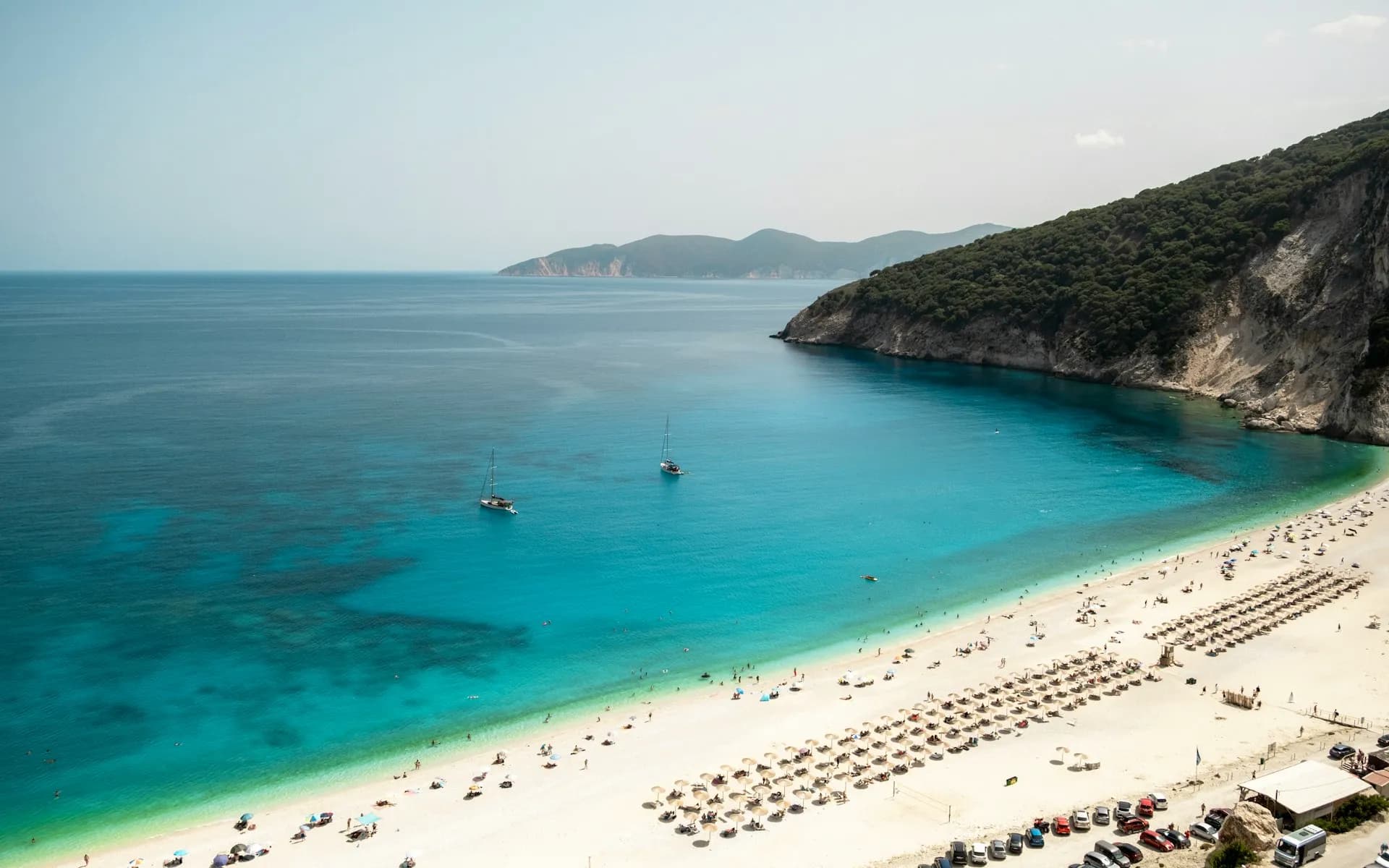
Myrtos is the most photographed beach in Kefalonia — a near-perfect semicircular bay of white pebbles flanked by dramatic limestone cliffs. The water is an impossible shade of electric blue. It is consistently ranked among the best beaches in Greece and you will understand why the moment you see it from the viewpoint on the road down.
Arrive before 09:00 to secure parking and enjoy the beach before the crowds. The road down is a narrow single-file lane — approach with caution. The beach is unorganized (no sunbeds) but there is a seasonal canteen. The pebbles are coarse — bring water shoes. Stay hydrated as there is limited natural shade.
Best for: The iconic Instagram shot, early-morning swimmers, couples
Antisamos — where locals actually swim
Framed by lush green hills and a deep blue gulf, Antisamos is widely considered the best swimming beach in Kefalonia. The water is exceptionally clear with a pebble-sand mix underfoot. It was a filming location for the Hollywood movie 'Captain Corelli's Mandolin'.
The beach is organized with sunbeds, umbrellas, two beach bars and a taverna. The setting is spectacular — the green hills plunging directly into turquoise water. It is well-sheltered from the wind, making it swimmable on days when the west coast is rough.
Combine Antisamos with a morning visit to Melissani Cave (10 minutes away) for a perfect east-coast day. Arrive early (before 10:00) for a prime sunbed spot in high season.
Best for: Families, swimmers who want clear water, sunbed comfort, proximity to Sami
Xi Beach (Paliki) — the red-clay therapeutic beach
Xi Beach stands out for its distinctive red-hued sand and clay cliffs. The red colour comes from weathered iron-rich clay minerals that give the shoreline an almost Martian appearance. The natural clay is believed to have therapeutic properties for the skin — visitors traditionally cover themselves in it, let it dry in the sun, then rinse off in the sea.
The beach is organized with sunbeds, umbrellas and shallow water that shelves gently — ideal for families with children. The nearby tavernas serve fresh fish with views across the channel to Lixouri.
Arrive before 11:00 for a good position. The afternoon sun hits the red cliffs directly, creating beautiful photo conditions. The clay washing is fun, but keep it discreet — avoid washing directly at the water's edge.
Best for: Families with children, therapeutic clay experience, photography, sunset views
Petani Bay — the sunset beach
Petani Bay is Myrtos's quieter, less hyped cousin — and for many repeat visitors, the superior beach. It is a long, sweeping bay of white pebbles on the western Paliki peninsula, with cliffs that catch the sunset light spectacularly. The water clarity rivals Myrtos but the atmosphere is more relaxed.
The beach is organized with a popular beach bar and sunbed hire. The road down is paved and easier than Myrtos's. The sunset from the beach is arguably the best on the island — the cliffs on either side frame the sun perfectly as it drops into the Ionian.
Arrive by 16:00 and stay until sunset for the full experience. Book a sunbed from the taverna for the best position. The pebbles are large — water shoes are essential. The wind can pick up in the afternoon but this rarely affects the sheltered centre of the bay.
Best for: Sunset lovers, couples, return visitors to Kefalonia
Makris Gialos & Avithos — Argostoli's closest sands
Just 5 km south of Argostoli, Makris Gialos and neighbouring Avithos are the closest proper beaches to the capital. Makris Gialos is a long stretch of golden sand with shallow, crystal-clear water — popular with families and locals after work. It has full sunbed hire, a beach bar and a taverna.
Avithos, 5 minutes further south, is quieter and has a more relaxed vibe. The sand is coarser and the water deeper close to shore, but the shade from the tamarisk trees and the excellent fresh-fish taverna make it a favourite for locals.
Both beaches face west and offer sunset views. The water is calm and usually safe for children. Parking fills by 11:00 in August — arrive early or walk from Argostoli along the coastal path.
Best for: Families based in Argostoli, evening swims, budget-friendly sunbed hire
Platis Gialos — sandy perfection near Argostoli
Platis Gialos is the beach you see on the approach to Argostoli airport — a wide, sandy bay with tamarisk trees providing natural shade. The water is shallow and calm, the sand is soft and golden, and the setting is protected from the prevailing winds.
The beach is well-organized with sunbeds, umbrellas, a taverna and a snack bar. It is particularly popular with Greek families on weekends but is generally uncrowded on weekdays. The shallow water extends a long way out — excellent for young children.
A coastal walking path connects Platis Gialos to Makris Gialos (10 minutes) and Argostoli (30 minutes). The airport is nearby — expect occasional aircraft noise, which adds to the character rather than detracting.
Best for: Families with young children, swimmers who prefer sand over pebbles, Argostoli residents
Fteri Beach — hidden cove, only by sea
Fteri is one of the most beautiful beaches in Kefalonia — and one of the most inaccessible. There is no road. The only way to reach it is by boat from the tiny port of Zola (near Agia Kyriaki in the north). The beach is a wild, white-pebble cove surrounded by vertical cliffs, with deep turquoise water that is exceptionally clear.
The isolation is the appeal. On a good day you may have the entire cove to yourself. There are no facilities at all — no sunbeds, no canteen, no shade. Bring everything you need and take everything back with you.
Several local operators run trips from Zola, typically combining Fteri with the nearby Amidi beach and the dramatic sea cliffs of the north coast. Private boat hire from Fiskardo also reaches Fteri (allow 30 minutes each way).
👉 Rolling Into The Blue — boat rentals & private cruises to Fteri
Best for: Nature lovers, photographers, couples who want genuine seclusion, adventurous travelers
Amidi — Fteri's even quieter neighbour
Amidi sits right next to Fteri but is even more secluded — a small pebble cove with dazzling water and no facilities whatsoever. It is reached by the same boat operators from Zola, often as a combined stop on the same trip.
The seabed drops off more steeply than Fteri, making it better for snorkelling. The cliffs on either side provide shade for part of the day. Amidi gets direct sun in the morning and is shaded in the afternoon — plan accordingly.
Like Fteri, Amidi has no road access, no canteen, no shade structures. This is raw, untouched Ionian coastline. Pack carefully and leave no trace.
Best for: Snorkellers, photographers, experienced travellers who know how to prepare for a remote beach day
Emblisi & Kimilia — Fiskardo's twin coves
Emblisi is the small beach at the edge of Fiskardo village — a pebble cove with deep, crystal-clear water and views across the channel to Ithaca. It is popular with the yachting crowd and can get busy but the setting is beautiful. The taverna right on the beach serves excellent seafood.
Kimilia, a 10-minute walk north along the coastal path, is quieter and more open. It is a long pebble beach with tamarisk trees and a laid-back beach bar. The water is deep and clear — excellent for snorkelling.
Both beaches are within walking distance of Fiskardo harbour, making them the most convenient option if you are staying in the north. Arrive before 11:00 to secure a spot — Fiskardo is compact and space fills quickly.
Best for: Fiskardo-based visitors, lunch-by-the-sea, snorkelling, easy-access swimming
Koutsoupia (Dafnoudi) — the wild cove near Assos
Koutsoupia (also called Dafnoudi) is a wild, remote pebble beach just south of Assos village, accessible only by a steep 15-minute downhill path from the road. The effort rewards you with deep, impossibly clear water and near-certain solitude on weekdays.
The beach is completely unorganized — no sunbeds, no canteen, no shade. The surrounding cliffs and thick Mediterranean vegetation create a private-cove feel. The water is deep close to shore — excellent for jumping in but less ideal for young children.
Koutsoupia is one of the few genuinely uncrowded beaches in the north. The walk back up is steep — take it slow and bring water. The path starts from a hairpin bend on the Assos–Fiskardo road, about 2 km south of Assos.
Best for: Experienced travelers, photographers, couples who want an off-the-beaten-path experience
Skala Beach — the south coast resort beach
Skala is the longest organized beach on Kefalonia's south coast — a stretch of golden sand backed by the Skala resort village. The water is shallow and warm, the sand is soft and the seabed shelves gently — making it the safest choice for families with young children on the island.
The beach is fully organized with multiple sunbed operators, water sports, beach bars and tavernas. It can get busy in peak season but the length means you can always find space further from the main access points.
Skala is also the departure point for day trips to Zakynthos and Ithaca in summer. The nearby ancient Roman villa with its preserved mosaics is worth a 30-minute visit.
Best for: Resort-based families, water sports, easy-access beach with full facilities
Lourdas Beach — family-friendly south coast
Lourdas (or Lourdata) is a long sandy beach on the south coast with the dramatic backdrop of Mount Ainos. The sand is soft and golden, the water is calm and clear, and the beach is well-sheltered from the prevailing northerly winds. Unlike Myrtos, the sea here stays calm even on windy days.
The beach is organized with sunbeds and umbrellas at regular intervals, several tavernas overlooking the shore, and a few mini-markets nearby. The beach slopes gently — safe for children.
The road access is paved and straightforward, with ample parking behind the beachfront properties. Lourdas is a better choice than Skala if you want a quieter atmosphere with easy access to the mountain villages of the interior.
Best for: Families, couples who want calm seas, those exploring southern Kefalonia
Agia Kyriaki — the north coast secret
Agia Kyriaki is a small pebble beach on the wild north coast, near the tiny port of Zola. The surrounding cliffs are dramatic, the water is deep and brilliant blue, and the beach is usually very quiet. The natural sea arch at the eastern end of the bay is a striking landmark — best viewed from the water.
There is a single taverna above the beach that is one of the best on the north coast, serving fresh fish and local specialties. Access is by a narrow paved road from the Antipata–Fiskardo route — the last 500 metres are steep but manageable.
Agia Kyriaki is also the departure point for boat trips to Fteri and Amidi beaches. The combination of the taverna, the sea arch and the uncrowded beach makes it one of the north's best-kept secrets.
Best for: Lunch-by-the-sea, boat trip departures, north coast explorers