Destination Overview
Lasithi
Lasithi is the easternmost region of Crete, and in many ways the most uncompromised. It covers roughly a third of the island — from the mountain plateau that carries its name in the west, all the way to Crete's most dramatic eastern tip at Cape Sideros. The region offers Spinalonga Island, Elounda Bay, Vai Palm Forest, and the unperformed pace of traditional villages. A well-planned stay here can combine history, extraordinary beaches, local food, and genuine solitude in one of the least crowded parts of Crete.
Lasithi
Why Visit Lasithi
Lasithi divides travellers into those who planned to come here and those who drove east from Heraklion and kept going. Both tend to feel rewarded.
Spinalonga is one of the most affecting sites in the whole of Greece. Not because of the fortress architecture — though the Venetian construction is formidable — but because of what happened there in the twentieth century. The island was an operational leper colony until 1957. Walking its streets, which are still largely intact, is a different kind of experience than any ancient ruin offers.
Elounda Bay has some of the finest water in the Mediterranean. The combination of the semi-enclosed gulf, white sand, and sea grass underneath produces the kind of colour that normally requires post-production. It does not require post-production here.
Vai is the only palm beach in Europe that is not the result of landscaping. The grove of Phoenix theophrasti palms is a native Cretan species, and it is genuinely strange and beautiful — especially if you visit early in the morning before the day-trip buses arrive.
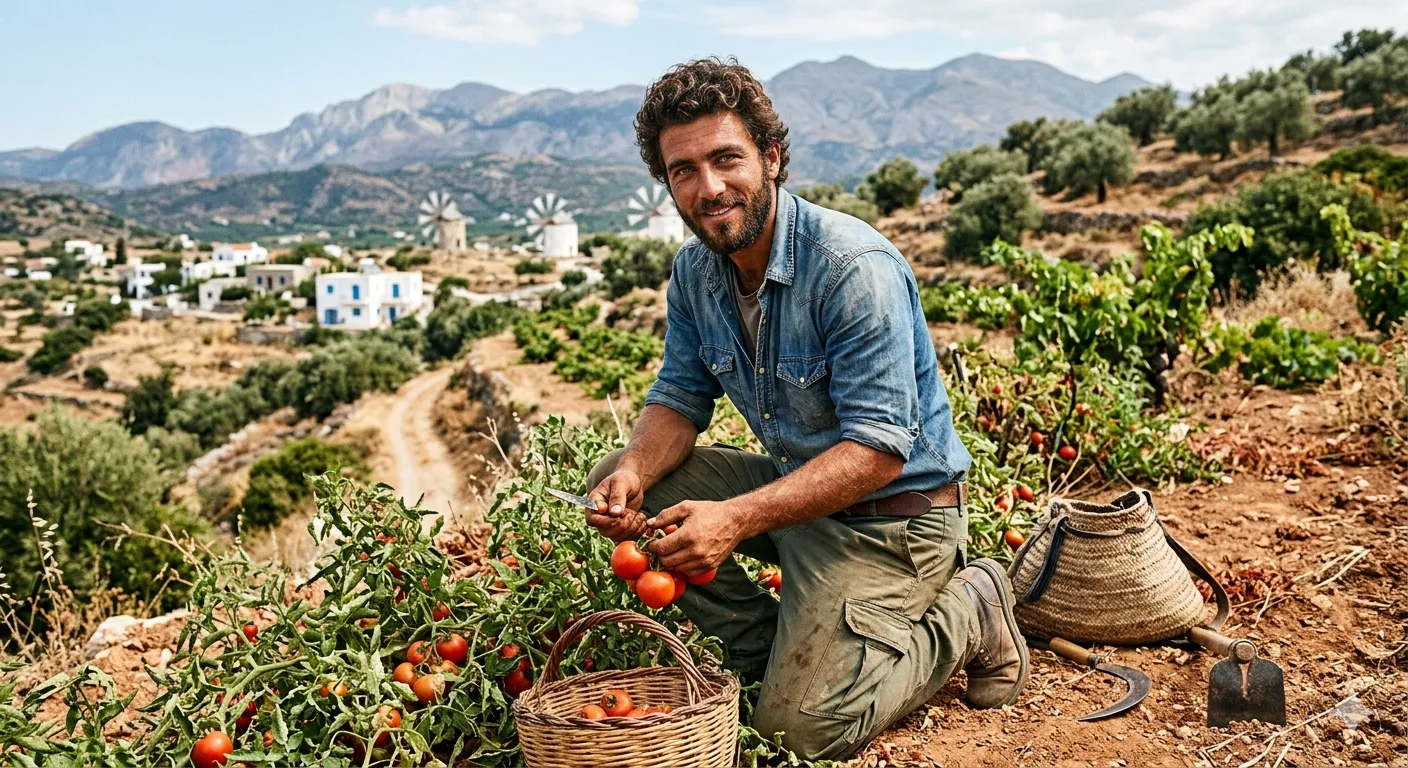
The food in eastern Crete is different from elsewhere on the island. Sitia produces a distinctive, peppery olive oil that is among the finest in Greece. The local wine — particularly from the Vilana and Thrapsathiri grapes grown in the Sitia wine region — is barely known outside Crete. Ierapetra's long summer season produces some of the best tomatoes in the country.
Lasithi is the least crowded part of Crete. Even in August, the far east of the region — Zakros, Xerokampos, the Sitia coast — has a solitude that is almost impossible to find elsewhere in Greece in summer.
Lasithi
Agios Nikolaos
The capital of Lasithi is not trying to be more than it is. A small city of around 10,000 people built around a remarkable geographical anomaly: a circular lake, 64 metres deep, connected to the sea by a narrow channel. The lake is called Voulismeni, and the story that it has no bottom — repeated on every menu placarded at the surrounding cafés — is among the more persistent myths in Cretan tourism. It does have a bottom. It's at 64 metres.
The harbourfront is the social core of the city. Tables run along both sides of the channel, and in the evening this strip fills up in the way that Greek port towns do — unhurriedly, and for a long time. The old quarter above the harbour has narrower streets, a Venetian gate, and considerably more reasonable prices than the waterfront.
**The Archaeological Museum** — Often overlooked in favour of Heraklion's museum, the Agios Nikolaos Archaeological Museum has a collection that rewards careful attention. The Early Minoan material from the Sitia Geopark area is well-presented, and the collection includes a skull — displayed in a case that always generates discussion — with a gold laurel wreath resting on top of it, found with a Roman burial. The museum is small enough to do properly in an hour.
**Kitroplatia Beach** — The town beach, a ten-minute walk from the lake. Organized, with sunbeds and a beach bar. Not the finest beach in the region — that honour goes to beaches further east — but pleasant for a morning swim and close to everything.
**The Harbour at Night** — The channel between the lake and the harbour is lit at night. If you sit on the lake side rather than the port side, the prices drop and the view is identical.
INSIDER TIP: The Agios Nikolaos market runs on Wednesday and Saturday mornings on Paleologou Street, two blocks back from the waterfront. Local honey, olive oil, cheese, and vegetables. More useful than the tourist shops on the harbour.
Lasithi
Elounda
Elounda has been colonised at the high end. The bay — a Gulf of Finland-blue expanse sheltered between the main coast and the Spinalonga Peninsula — is extraordinary, and the international hotel industry noticed this some decades ago. The result is a concentration of five-star resorts that has made Elounda one of the most expensive destinations in Greece.
This creates a situation for the independent traveller. The bay itself is open. The beaches — including the long sandy strip around the village — are public. The water quality is exceptional. You can stay in Agios Nikolaos, drive up in the morning, spend a day on the bay's edge, and have the same water without the resort cost.
**The Spinalonga Peninsula** — A narrow finger of land that encloses the bay from the north. The road to its tip leads through landscapes of dry stone walls, fig trees, and — toward the end — genuine solitude. The ancient sunken city of Olous is visible from the causeway at low water: barely visible, enough to understand why the causeway was built here. This is not a formal archaeological site; it is a shadow in the water. Worth the ten-minute walk from the causeway parking.
**Plaka Village** — A tiny fishing village at the northern end of the bay, looking directly at Spinalonga. Boats to the island also depart from here — the crossing is shorter and quieter than from Elounda. The village has two or three tavernas on the waterfront. One of the finest views of Spinalonga is from the Plaka side, especially in the afternoon light.
INSIDER TIP: Boats to Spinalonga run from three points: Elounda, Plaka, and Agios Nikolaos. The Agios Nikolaos boat takes longer but crosses more of the gulf and gives the best aerial view of the coastline. The Plaka crossing (about 10 minutes) is the most atmospheric — a small, almost wordless journey to an island you can see clearly the whole time.
Lasithi
Spinalonga Island
The island sits four kilometres offshore in a bay that is, by every reasonable measure, one of the most beautiful in Greece. The fortress was built by the Venetians in 1579 and held against the Ottomans until 1715 — long after the rest of Crete had fallen. The Ottomans used it. When the Ottomans left in 1903, the Greek state repurposed it as a leper colony, isolating the sick on the island for the next fifty-four years. The colony was closed in 1957. The last patient left. The village remained.
Walking into Spinalonga today means walking into that village — intact streets, intact houses, intact church — with the knowledge of what it was. This is not comfortable, and that is precisely what makes it worth doing. The Venetian gate, with its inscription to the Venetian governor above the entrance, leads directly into streets that were lived in within living memory.
The site gained wider international attention through Victoria Hislop's 2005 novel The Island, set partly on Spinalonga, and subsequently through the Greek television adaptation. The novel brought significant tourist interest. The history does not require the novel.
**Practical Information for Spinalonga** — Boats run regularly from Elounda, Plaka, and Agios Nikolaos. Tickets are purchased on the boat or at the jetty. The island itself has an entrance fee. Allow two to three hours. There is a small café on the island; there is no shade on the walk around the walls. Go before 10:00 or after 15:00 in summer — midday is both hot and crowded. The first boat of the morning (usually around 09:00 from Plaka) puts you on the island before the tour groups. The light is better. The silence is longer.
Lasithi
Top Attractions in Eastern Lasithi
Toplou Monastery
Twenty-five kilometres east of Sitia, the Toplou Monastery stands like something from another century — because it largely is. Founded in the fifteenth century, destroyed and rebuilt multiple times, it served as a communications hub for the Cretan resistance during the German occupation. The Icon of the Great Art by Ioannis Kornaros (1770) — a complex theological composition with 61 scenes — is displayed inside and is one of the most significant pieces of religious art in Crete. The monastery shop sells wine and olive oil made by the monks.
Vai Palm Forest
Europe's largest natural palm forest. The Phoenix theophrasti is a Cretan endemic — not imported, not planted, not the result of landscaping. The palms crowd a beach that faces east, which means it catches the morning light in a way that southern-facing beaches do not. The grove has been managed and protected since the 1980s. Go before 08:30 if you want the grove in near-solitude. INSIDER TIP: The path from the car park to the northern end of the beach takes about fifteen minutes. The southern end is quieter, less organised, and has cleaner snorkelling.
Kato Zakros & the Minoan Palace
At the far eastern end of the road system, Kato Zakros sits at the bottom of the Zakros Gorge. The Minoan palace here, excavated from 1961, is the fourth great Minoan palace site after Knossos, Phaistos, and Malia. It is also the least visited and the best preserved in its lower levels — still partially buried, still giving the sense of excavation rather than reconstruction. The beach in front of the village is calm and clean.
Xerokampos
South of Zakros, reachable by a rough road. Xerokampos is a scattered hamlet on a wide, flat beach with a handful of pensions and tavernas. One of the few beaches on Crete that still functions on an agricultural calendar — the locals have farms and apartments, not hotels and packages. A place you either love immediately or don't understand.
Sitia Geopark
UNESCO Global Geopark status was granted in 2021. The park covers the eastern tip of Crete — a landscape shaped by tectonic forces, with fossil sites, sea caves, rare plant species, and geological complexity. The gorge systems — particularly Richtis Gorge, with its 25-metre waterfall emptying into a natural pool — are the most accessible highlights. The trail is reasonably maintained; good shoes are sufficient.
Lasithi
Best Beaches in Lasithi
Voulisma Beach
Near Istro (20km east of Agios Nikolaos). A semi-circular bay with sand that is fine even by Aegean standards, calm water, and a backdrop of hills. Well-organised in summer with sunbeds and a beach bar. One of the finest organised beaches in the region.
Istro Beach
A longer and wilder stretch than Voulisma. The eastern end is rarely developed and often empty in the morning. The snorkelling off the rocks on the left is worth the walk.
Mochlos Islet
A tiny rocky island 200 metres from the village of Mochlos, reachable by swimming or a short paddle. The island has a Minoan settlement on it. The water between the island and the shore is some of the clearest in the region.
Kalo Nero (Ierapetra)
On the south coast, west of Ierapetra. Long, undeveloped, dark sand. The south coast beaches in Lasithi are different from the north — wider exposure to the Libyan Sea, stronger swell, and more dramatic cloud formations.
Kouremenos Beach (Palekastro)
The best windsurfing beach in Crete. A consistent meltemi wind, a long sandy bay, a windsurfing school that has operated here for decades. If you windsurf or are willing to learn, this is the reason to drive east.
Xerokampos Beach
Wide, flat, clean, almost always quiet. No significant nightlife infrastructure. The snorkelling along the rocky headlands on either side of the bay is excellent. INSIDER TIP: The Cretan south coast is exposed to the Libyan Sea. In summer, this means warmer water but also occasional strong southerly winds. Check the wind before committing to a long drive.
Lasithi
Food & Wine in Lasithi
Eastern Cretan food is not a lesser version of the Cretan diet — it is a regional expression of it, with its own emphases. The olive oil from the Sitia zone is produced from the Koroneiki variety at high altitude and is among the most sought-after PDO oils in Europe. The local cheeses — particularly the aged graviera from mountain villages — are distinct from their western Cretan equivalents. The wine from the Sitia wine region, built on the Liatiko grape (one of Greece's oldest varieties), is barely distributed outside Crete.
**Sitia Olive Oil** — PDO-protected, produced from Koroneiki olives at altitude. Peppery finish, green-gold colour. Buy it at the Toplou Monastery shop or direct from producers near Sitia.
**Liatiko Wine** — An ancient red grape variety grown almost exclusively in the Sitia zone. Produces a medium-bodied, sometimes semi-sweet red with strong local character. Rarely found outside Crete.
**Dakos** — The baseline of Cretan food: barley rusk, tomato, mizithra, olive oil, oregano. In Lasithi's village tavernas, the rusk is often harder and the mizithra sharper than in tourist-facing versions.
**Octopus at Mochlos** — The village of Mochlos has two or three tavernas and a local fishing fleet. Octopus dried on the line outside the kitchen and then grilled is the canonical order.
**Honey from the Dikti Mountains** — The thyme honey from the mountains surrounding the Lasithi Plateau is among the finest in Greece. Sold in village shops and at the Saturday market in Agios Nikolaos.
**Staka** — Rendered sheep's milk butter — a Cretan cooking fat rarely seen on restaurant menus but used in traditional homes.
**Raki (Tsikoudia)** — Arrives without being asked in traditional tavernas. In eastern Crete, raki is often served with a small sweet rather than mezedes.
INSIDER TIP: The tavernas in Mochlos, Xerokampos, and the villages around Sitia set their prices without reference to what the tourism market will bear — because few tourists find them. A full meal with raki and dessert in one of these places costs less than a salad in Elounda.
Lasithi
Best Time to Visit Lasithi
**April – May** — Best for gorge walks, the countryside in bloom. Spinalonga is open and quiet. Sea is cool but swimmable in May.
**June** — The finest month. Sea temperature rises, the meltemi hasn't established, and the far east of the region is not yet crowded. Kouremenos has good wind for surfing.
**July – August** — Peak heat and peak visitors at Elounda and Agios Nikolaos. Further east — Sitia, Vai, Zakros — remains manageable. Strong meltemi on exposed coasts. Excellent for windsurfing.
**September – October** — The best period for those who don't need school holiday dates. Sea is warmest, light is extraordinary, harvest season. Sitia wine region festival in September.
**November – March** — Most of the coast closes. Agios Nikolaos remains open year-round. A handful of tavernas in Elounda stay open for local trade.
INSIDER TIP: September in the Sitia wine zone is harvest time. A handful of producers — including Lyrarakis and Economou — accept visits during harvest. This is not organised wine tourism; it involves raki at some point.
Lasithi
How to Get to Lasithi
**By Air** — Heraklion International Airport (HER) is the primary gateway — 70km west of Agios Nikolaos. Sitia has a small domestic airport (JSH) with seasonal connections to Athens and a handful of other Greek airports. For most international arrivals, Heraklion is the starting point and a rental car is the most practical next step.
**By Ferry** — Agios Nikolaos has a small ferry port with seasonal connections within Crete and occasional links to the Dodecanese and Cyclades. Sitia has a more active port with regular service to Rhodes, Karpathos, and Kassos. Neither port handles the volume of Heraklion or Piraeus.
**By Car from Heraklion** — The E75 coastal highway runs east from Heraklion. Agios Nikolaos is 1 hour 10 minutes. Sitia is around 2 hours. Kato Zakros is 2 hours 45 minutes. The road quality is good on the main E75; the roads to the far eastern villages require attention and occasionally a vehicle with reasonable clearance.
**By Bus (KTEL)** — KTEL Lasithi runs frequent buses from Heraklion to Agios Nikolaos and Sitia. Connections beyond those towns are much less frequent. A car is the only practical way to reach Vai, Zakros, Xerokampos, or the Sitia Geopark trails.
Car hire note: If you are renting in Heraklion and driving to Lasithi, check whether your rental agreement covers the mountain roads to the Lasithi Plateau and the Zakros area — some budget rental agreements exclude unpaved roads.
Lasithi
Practical Tips for Lasithi
**Orientation** — Lasithi is a large region. Agios Nikolaos is the natural base for the western area (Elounda, Spinalonga, Voulisma). Sitia is the better base if you are spending time in the far east (Toplou, Vai, Zakros). Two bases — two or three nights each — is a better structure.
**Getting Around** — A car is essential beyond the Agios Nikolaos–Elounda corridor. The KTEL buses serve the main towns but not on schedules useful for day use at beaches or sites.
**Money and Payments** — ATMs in Agios Nikolaos and Sitia. Beyond those towns, carry cash. The village tavernas in Xerokampos and Mochlos almost always operate on cash only.
**Language** — English is spoken in Agios Nikolaos and Elounda. In the far east — Sitia, Zakros, Xerokampos — you are in Greece. A few words of Greek will serve you well.
**Driving Conditions** — The road to Kato Zakros is paved but winding. The road to Xerokampos via Ziros involves a significant descent on a narrow road. The Lasithi Plateau ring road climbs through 20+ hairpin turns. All of it is driveable in a standard car. None of it should be attempted at night without familiarity.
**Spinalonga Tickets** — Entrance to the island is ticketed. In July and August, buy boat and island tickets in the morning for the early crossing. No advance online booking is currently available for the island entrance itself (as of 2025); boat operators sell on the day.
Lasithi
FAQ — Lasithi Essentials
How many days do you need in Lasithi?
Four to five days is a reasonable minimum to cover the region properly — Agios Nikolaos, Spinalonga, and Elounda on the north; Ierapetra on the south; and two days in the far east (Sitia, Toplou, Vai, and Zakros). You can do a highlights version in three days if you are based centrally and willing to drive.
Is Lasithi or Chania better for a first visit?
Chania is more immediately accessible with better public transport and accommodation options. Lasithi is more rewarding if you have a car and are willing to drive. A split works well: a few days in Chania or Heraklion, then drive east.
Is Spinalonga worth visiting?
Yes. One of the few sites in Greece where the 20th century is as present as antiquity. The Venetian fortress is significant on its own terms; the leper colony history gives it a layer that purely ancient sites do not have. Allow two to three hours and do not skip the far end where the colony's church and hospital buildings are located.
Is Elounda worth it without a luxury hotel?
The bay is worth it for a day even without a luxury hotel. Drive up from Agios Nikolaos, use the public beach, take a boat to Spinalonga from Plaka, have lunch at the waterfront tavernas. The bay is a public resource.
Can you visit Vai in a day trip from Agios Nikolaos?
Yes, but it is a long day — around 1 hour 30 minutes each way on winding roads. A better structure is to stay in Sitia for two nights and use it as a base for Vai, Toplou, and Zakros.
What is the Lasithi Plateau?
A high mountain plateau at around 840 metres altitude, ringed by the Dikti Mountains. Famous for its windmills (mostly decommissioned) and the Psychro Cave — traditionally identified as the birthplace of Zeus. The drive up through the mountain switchbacks is the most scenic part. Combined with the Psychro Cave, it makes a half-day trip from Heraklion.
Is Lasithi suitable for families?
Very much so, particularly the north coast — Agios Nikolaos, the calm beaches of Elounda bay, Voulisma. The Spinalonga story requires care with younger children, but the site itself is not graphic. The south coast beaches are better for older children who swim confidently. Kouremenos is excellent for older children interested in water sports.