Skopelos
Sporades

Skopelos

Skopelos is the largest island of the Northern Sporades and, by any measure, one of the most naturally beautiful islands in the entire Aegean. Where its neighbor Skiathos trades on cosmopolitan beaches and nightlife, Skopelos is defined by something rarer: genuine character. Pine forests run almost to the water's edge, the island's capital looks as if it was carved directly into the hillside, and a network of Byzantine monasteries dots the landscape with a quiet persistence that feels entirely at odds with peak-season Greece.

Skopelos Town (Chora)

Agios Ioannis Chapel

Panormos Beach

Monasteries

Travel Guide

Where to Stay in Skopelos

Beach Guide

Best Beaches in Skopelos

Activities

Things to Do in Skopelos

Destination Overview

Skopelos

Skopelos is the largest island of the Northern Sporades and, by any measure, one of the most naturally beautiful islands in the entire Aegean. Where its neighbor Skiathos trades on cosmopolitan beaches and nightlife, Skopelos is defined by something rarer: genuine character. Pine forests run almost to the water's edge, covering roughly 80% of the island. The capital, Skopelos Town (Chora), climbs steeply from the harbour in a cascade of whitewashed cubic houses and narrow passages — one of the finest Choras in Greece. The island has 360 churches and chapels, 40 monasteries, and a local food culture built around the Skopelos plum (damaskino). Most international visitors know it from the 2008 film Mamma Mia!, which used the chapel of Agios Ioannis on a rocky outcrop at Kastri for its wedding scene. This guide covers the best beaches, the right time to go, how to get there, top attractions, honest caveats, and practical tips.

Skopelos

Why Visit Skopelos

1

A landscape that genuinely earns the word 'green'

Dense Aleppo pine forests, olive groves, plum orchards (damaskinia), and maquis scrub cover roughly 80% of the island. Skopelos' visual signature is pine forests running all the way to the water's edge, creating a landscape that feels more Ionian or Northern Greek than Cycladic. This greenery keeps the island cooler in summer and makes every coastal view look like a postcard.

2

Skopelos Town: one of Greece's finest Choras

The island's capital climbs steeply from the harbour in a cascade of whitewashed cubic houses, terracotta roofs, and narrow cobbled passages. At its apex, a Venetian kastro (castle) commands sweeping views across the Aegean toward Alonissos. The winding streets are lined with small shops, kafenia, and hidden plateias that reward exploration. Unlike some Greek Choras that feel frozen in time, Skopelos Town is genuinely lived-in and authentic.

3

Beaches for every traveler

With over 40 beaches, Skopelos offers incredible variety along its indented coastline. From family-friendly Stafylos and Agnontas with shallow waters and tavernas, to the classic wide sweep of Panormos, and the iconic Kastani made famous by Mamma Mia! — there's a cove, bay, or shore for every mood. Many beaches are backed by pine forest, so you can combine swims with shade without renting an umbrella.

4

Spiritual heritage & monasteries

Over 360 churches and chapels dot the landscape — an extraordinary number for an island of its size. The Evangelistria Monastery (17th century) is the most important, set in a pine clearing with sweeping views. Metamorfosi tou Sotiros clings to a dramatic cliffside, while the 8th-century Prodromos Monastery, hidden in a remote valley, requires a hike but rewards with Byzantine frescoes and absolute silence.

5

The Skopelos plum (damaskino)

A local variety of plum cultivated on the island for centuries, the Skopelos damaskino is smaller and more aromatic than commercial plums. It appears in tarts, spoonsweets (glyko tou koutaliou), jams, spoon sweets, tsipouro, and most famously in the Skopelitiki plum pie — a filo pastry pie with plums, cheese, and honey. The harvest in late August–September is a seasonal highlight.

6

Authentic, unhurried atmosphere

Skopelos has somehow avoided the hyper-commercialisation of some other Greek islands. Yes, it gets busy in August, but the island's character remains grounded. Locals still run the tavernas, farmers sell their plums by the roadside, and life moves at a pace that encourages you to slow down. It is an island that rewards the traveller who stays a little longer.

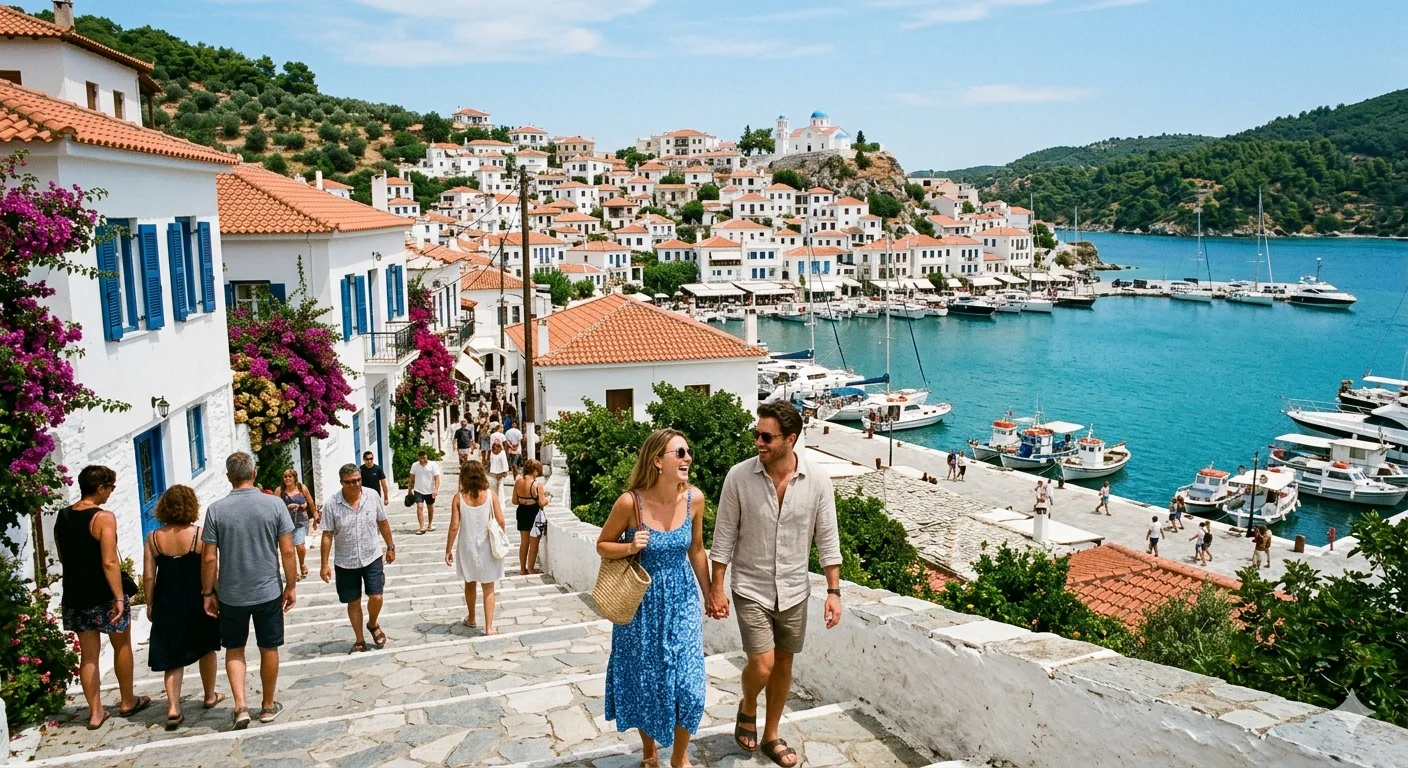
Skopelos

Best Time to Visit Skopelos

May–June — Ideal

Perfect weather (24–28°C), hillsides in full bloom with wildflowers, beaches pleasantly uncrowded. Best months for hiking the island's trails and exploring monasteries without the heat. Sea temperatures are still fresh but swimmable by late May.

July–August — Peak

Busy, hot (30–35°C), and vibrant. Beaches get crowded by midday — arrive before 10:00 to secure a good spot. The island is fully alive with events, tavernas running at full capacity, and a lively evening atmosphere in Skopelos Town and Glossa.

September — Best Secret

Warm sea (sea temperatures often exceed 25°C), fewer crowds, and the plum harvest in full swing. The island reverts to a relaxed state while still offering excellent weather. Many tavernas and hotels remain open until late September. This is when experienced travellers choose to come.

April & October — Shoulder

Quiet and low-season. April brings wildflowers and Easter celebrations. October offers solitude but many facilities close by mid-month. Weather is unpredictable but can be lovely. Best for photographers, walkers, and those seeking true peace.

Skopelos

How to Get to Skopelos

💡 Insider tip: The hydrofoil from Skiathos is frequent and fast, but if you're travelling with a car, book the conventional ferry from Volos well in advance during peak season.

Via Skiathos Airport (JSI)

The most common route. Fly to Skiathos from Athens, Thessaloniki, or European destinations (seasonal charters), then take a 40–50 minute hydrofoil to Skopelos Town. Hydrofoils run multiple times daily in summer. Check Flying Dolphin or SeaJets schedules.

From Volos (mainland port)

Volos is the main departure point for Skopelos. Conventional ferries take about 3 hours and carry vehicles. Hydrofoils take 90 minutes. Multiple daily departures in summer. Volos is easily reached by train or bus from Athens (4–5 hours).

From Agios Konstantinos

An alternative mainland port, closer to Athens than Volos. Ferries and hydrofoils connect to Skopelos (via Skiathos or direct) in about 2.5–3 hours. This can save driving time if coming from southern Greece or Athens Airport.

From Thessaloniki

Thessaloniki Airport (SKG) has more flight options. From there, drive or take a KTEL bus to Volos (2.5 hours) and connect to the ferry. Alternatively, fly to Skiathos from Thessaloniki and take the hydrofoil.

Getting around on the island

Buses run frequently between Skopelos Town, Glossa, and major beaches in summer. Car or scooter rental gives you the most freedom — roads are winding but scenic. Taxis are available but limited in remote areas. Many visitors rely on a combination of bus + rental for beach days.

Skopelos

Top Attractions in Skopelos

1

Skopelos Town (Chora)

The island's capital is a dense maze of whitewashed cubic houses climbing steeply from the harbour to the Venetian kastro. Lose yourself in the narrow streets, discover hidden plateias, visit the small Folklore Museum, and walk up to the castle for panoramic views toward Alonissos. The entire upper town is a declared preserved settlement.

2

Agios Ioannis Chapel

The iconic Mamma Mia! wedding chapel perched on a dramatic rocky outcrop above the sea. Climb approximately 200 steps (the descent is steeper than it looks) for a view that made cinematic history. Best visited early morning or late afternoon to avoid crowds and heat. Combine with a swim at the small pebble beach below.

3

Evangelistria Monastery

The largest and most important monastery on Skopelos, built in the 17th century. Set in a pine clearing about 3 km from Skopelos Town, it houses a revered icon of the Annunciation and offers pine-framed views of the Aegean. The monastery complex includes an interesting small museum of ecclesiastical artifacts.

4

Glossa Village

The second-largest settlement on the island, perched on the northwestern coast. Glossa is less polished than Skopelos Town but equally charming, with a plateia shaded by a giant plane tree, stone houses, and tavernas serving excellent local food. Walk down to the small port of Loutraki for a swim and ouzo by the water.

5

Prodromos & Metamorfosi Monasteries

Two of the oldest monasteries on Skopelos, each in a dramatic setting. Prodromos dates to the 8th century and is tucked in a remote valley accessible only by a hiking trail. Metamorfosi tou Sotiros clings to a cliffside high above the sea. Both require effort to reach but offer a profound sense of isolation and history.

6

Archaeological & Folklore Museums

Skopelos Town's small but well-curated Archaeological Museum displays finds from the island's ancient past, including Mycenaean pottery and Hellenistic sculptures. The Folklore Museum, housed in a restored mansion, offers a vivid glimpse of 19th-century island life with traditional costumes, tools, and household items.

Skopelos

Best Beaches in Skopelos

💡 Secret tip: For total solitude, hike to the remote beach of Hovolo on the northeastern coast. It has no facilities, no road access, and almost nobody there — just pebbles, pines, and impossibly clear water.

Panormos

A wide, sheltered bay on the west coast with calm, shallow water ideal for families. Well-organized with sunbeds, umbrellas, and several good tavernas right on the beach. The surrounding pine hillsides keep it scenic. It can get busy in August but has enough space to feel comfortable.

Kastani

The beach that Mamma Mia! made famous — a pebbly, pine-fringed cove on the southwest coast with turquoise water. It's smaller than you might expect from the film, but the setting is genuinely beautiful. Arrive early (before 10:00) to claim a spot, as it fills quickly. Has a beach bar and limited sunbeds.

Stafylos & Velanio

Twin beaches just south of Skopelos Town. Stafylos is the larger, organized beach with shallow water and a popular beach bar — great for families. Velanio is the adjoining cove to the south, reached by a short path, and is unofficially naturist-friendly. Both have crystal-clear water and are a short drive from the capital.

Limnonari

A narrow, sheltered sandy bay on the southern coast with exceptionally clear water and a steep pine-covered hillside behind it. Partly organized with a taverna. The water deepens quickly, making it good for snorkeling. One of the most photographed beaches on the island for good reason.

Agnontas

A small, picturesque fishing harbour on the southeastern coast that doubles as a beach. The water is calm and shallow, protected by the cove. The real draw here is the cluster of tavernas right by the water — this is arguably the best spot on the island for a leisurely fish lunch. The beach itself is pebbly but comfortable.

Glysteri (Glyfoneri)

A quieter, less-developed beach on the east coast with a mix of sand and pebbles. The water is exceptionally clear and the setting is wonderfully peaceful, backed by green hills. There is a small cantina in season but otherwise it's relatively unspoiled. Popular with those who have rented cars and want to escape the crowds.

Skopelos

Local Food & Drink on Skopelos

Skopelos Plum (Damaskino)

The island's signature product — a small, intensely flavoured local plum variety. Eaten fresh in season, dried for winter, or transformed into jams, spoon sweets, tarts, and distilled into plum tsipouro (a local pomace brandy). You'll see plum products everywhere, and they make excellent gifts.

Skopelitiki Plum Pie

The most famous local dish — a savoury-sweet pie made with handmade filo pastry, local plums, soft cheese (usually myzithra or feta), and a drizzle of honey. The combination of sweet plums, salty cheese, and crispy filo is unforgettable. Every taverna has its own version, and they are not all equal — ask locals for their favourite.

Fresh Fish at Agnontas & Loutraki

The fishing harbours of Agnontas and Loutraki (below Glossa) have tavernas that serve the day's catch simply grilled with lemon and olive oil. Nothing fancy — just whatever the boats brought in that morning. Barbounia (red mullet), tsipoura (sea bream), and lavraki (sea bass) are typical. Go at lunch for the best atmosphere.

Local Honey & Spoon Sweets

The pine forests and wild herbs of Skopelos produce excellent thyme honey and pine honey. Look for 'Anados' brand or ask at local producers. Spoon sweets (glyko tou koutaliou) made from plum, fig, sour cherry, or bergamot are a traditional treat — served with a glass of cold water and coffee.

Local Cheeses (Myzithra & Feta)

Skopelos produces excellent myzithra — a soft, fresh cheese made from sheep or goat milk, often used in the plum pie. The island's feta is also noteworthy, produced from local flocks that graze on herb-rich slopes. Try both in salads, pies, or simply drizzled with local olive oil.

Olive Oil

Like most Greek islands, Skopelos has its own olive oil production. The olive groves that cover parts of the island produce a fruity, medium-intensity extra virgin oil. Look for bottles marked with local provenance at delis or farm shops — it's a far cry from the mass-produced stuff.

Skopelos

Practical Tips for Skopelos

1

Getting around is easiest with a vehicle

While the bus network covers the main routes (Skopelos Town–Glossa, and to major beaches like Stafylos and Panormos), having a rental car or scooter gives you access to remote beaches and monasteries. Roads are winding and narrow in places — drive carefully. Book rentals well in advance for July–August.

2

Where to stay: Town or coast?

Skopelos Town offers atmosphere, restaurants, and nightlife but no beach within walking distance. For beach access, consider accommodations near Stafylos, Panormos, or Agnontas. Many visitors split their stay — a few nights in town and a few nights on a beach. Glossa is a good quieter alternative on the north end.

3

Beach essentials: Pack wisely

Many Skopelos beaches are pebbly rather than sandy — bring water shoes for comfort. Some remote beaches have no facilities, so carry water, snacks, and an umbrella. A snorkel mask is worth packing; the water clarity around the island is excellent, especially at Limnonari and the rocky coves near Glysteri.

4

Book ahead in peak season

Accommodation, car rentals, and popular restaurants fill up quickly in July–August. Book at least 2–3 months ahead for August. Even in June, weekend availability can be tight. Hydrofoil tickets from Skiathos can also sell out — book online in advance via Ferryhopper or similar.

5

Best souvenirs to bring home

Skip the mass-produced magnets and bring back Skopelos plum products (jam, spoon sweet, tsipouro), local honey, olive oil, and handmade textiles. The Folklore Museum shop has quality crafts. Dried plums and bourekia (local pastries) travel well and make excellent gifts.

6

Internet & connectivity

Most hotels and cafés offer free Wi-Fi, but coverage can be patchy in remote areas and some beaches. If you need reliable internet, get a Greek SIM card (Cosmote or Vodafone have good coverage on the island) or ensure your EU roaming is active. Skopelos Town has the best connectivity.

Skopelos

FAQ — Skopelos Essentials

How many days do I need for Skopelos?

A minimum of 3–4 days gives you time to explore Skopelos Town, visit 2–3 beaches, and see the main monasteries. For a relaxed trip that includes hiking, multiple beach days, and day trips to Alonissos, plan for 5–7 days. Many visitors find a week is the perfect amount — long enough to slow down, short enough to leave you wanting more.

Is Skopelos expensive?

Skopelos is moderately priced compared to better-known Greek islands. Accommodation ranges from €60–120/night for mid-range hotels in summer (less in shoulder season). A taverna meal with wine costs around €20–30 per person. Car rental is about €40–60/day in peak season. Overall, it offers good value — you get authentic experiences without the Mykonos/Santorini price tags.

Can I visit Skopelos without a car?

Yes, but with some limitations. The KTEL bus connects Skopelos Town to Glossa and several beaches (Stafylos, Panormos, Kastani) in summer. Taxis are available in town but scarce elsewhere. If you stay in Skopelos Town and take bus trips to beaches, it works. However, a car gives you much more flexibility, especially for reaching remote beaches and monasteries.

Is Skopelos family-friendly?

Absolutely. Beaches like Stafylos, Panormos, and Agnontas have shallow, calm water ideal for children. The island is safe, relaxed, and less party-oriented than many alternatives. Families will appreciate the unhurried pace, affordable dining, and the variety of things to do — from beaches to monastery visits to boat trips. Just avoid the peak of August if possible.

When is the Skopelos plum harvest?

The damaskino harvest runs from mid-August through September, peaking in early September. This is a wonderful time to visit — the island smells of ripe fruit, farmers sell fresh plums by the roadside, and local bakeries and tavernas showcase plum-based specialties. If possible, time your visit for the first half of September to experience both the harvest and ideal beach weather.