Syros
Cyclades

Syros

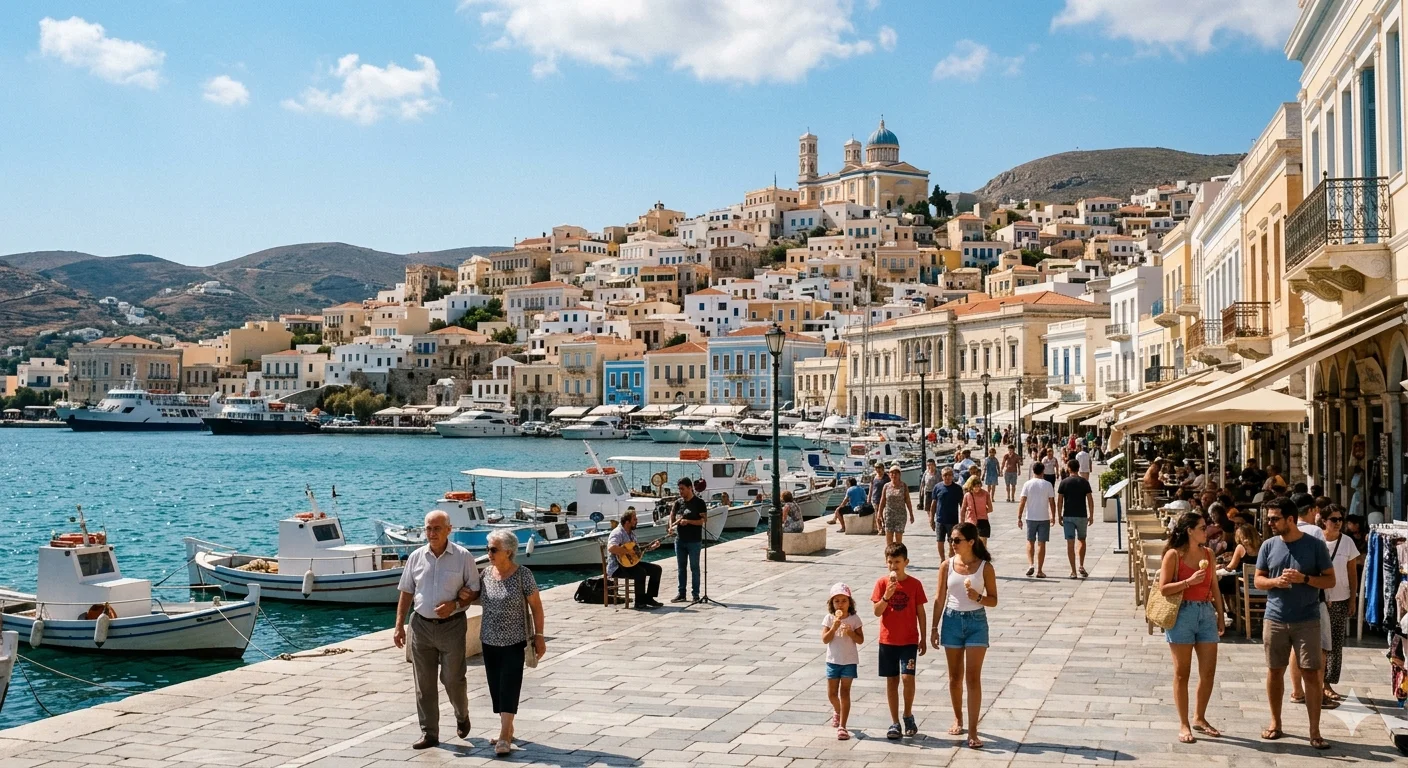
Syros is the island that surprises you — and then keeps you coming back. When travellers think Cyclades, they picture whitewashed cubes against a blue dome. Syros breaks that mould entirely. Its capital, Ermoupoli, is a fully functioning Greek city with a grand neoclassical waterfront, a marble-paved central square, an opera house modelled on La Scala, and working-class neighbourhoods with iron balconies and peeling paint that smell of real life. It is the administrative capital of the Cyclades, and it has always been too busy living its own life to reshape itself for tourism. Above the city, Ano Syros is a different world — a medieval Venetian hilltop quarter with Catholic churches, narrow stone lanes that curl around each other like a maze, and views over the bay. The food on Syros is taken seriously. Halvadopites — the island's signature sweet — are sold from old family shops. The loukoumades of Ermoupoli have their own following. Syros is the rare Greek island that works every month of the year.

Ermoupoli neoclassical architecture

Ano Syros medieval labyrinth

Halvadopites & loukoumades

Galissas & Kini beaches

Year-round destination

Destination Overview

Syros

Syros is simultaneously the most cosmopolitan and the most authentic island in the Cyclades — and those two qualities coexist because the city's identity is fundamentally not about tourism. Its capital, Ermoupoli, is a working Greek city with a grand neoclassical waterfront, a marble-paved central square, and the Apollo Theatre modelled on La Scala. The island offers an unexpected richness: Ano Syros with its Catholic cathedral and medieval lanes, quiet beaches along the west and south coasts, and a food culture that produces halvadopites and loukoumades you will remember long after you leave.

Syros

Why visit Syros

1

Ermoupoli is one of the finest port cities in the entire Aegean

Unlike the whitewashed Cycladic villages, Ermoupoli is a grand neoclassical city built by shipping merchants in the 19th century. The central Miaouli Square, framed by the imposing Town Hall and marble-paved cafes, is the heart of the city. Tip: visit Miaouli Square around 9pm when the lights are on and the city is alive with evening strolls.

2

Ano Syros is the best-preserved medieval Cycladic settlement you have never heard of

Perched on the hill above Ermoupoli, Ano Syros is a labyrinth of narrow stone alleys, arched passages, and whitewashed houses climbing up to the Cathedral of St George. Unlike the commercialized hill towns of other islands, Ano Syros feels lived-in and authentic. Tip: climb up in the late afternoon when the light softens and the views over Ermoupoli and the Aegean are unforgettable.

3

It is a real, functioning Greek city — not a resort island

Syros is the capital of the Cyclades, and Ermoupoli is a working city with shops, schools, hospitals, government buildings, and a year-round population. This gives the island a cultural depth and authenticity that purely tourist-driven islands lack. You can experience everyday Greek life here, not just a curated version of it.

4

The food culture is authentic, rooted, and genuinely excellent

Syros has a distinct food identity shaped by its Catholic and Orthodox heritage, its maritime history, and its role as a commercial hub. From halvadopites (sesame & honey nougat) to fresh Aegean seafood, and from slow-cooked meat dishes to local cheeses and cured meats, the eating here is world-class without the tourist markup.

5

It works all year — not just in July and August

Because Syros is a real city with a permanent population, it does not shut down outside the summer season. Tavernas, cafes, museums, and shops remain open, and cultural events — concerts, theatre, festivals — happen throughout the year. Tip: visiting in March or October gives you mild weather, empty streets, and a genuinely local experience.

6

Easy access and outstanding connections to the rest of the Cyclades

Syros is a major ferry hub with frequent connections to Piraeus, Rafina, and nearly every Cycladic island. Fast ferries reach Syros from Piraeus in about 2.5–4 hours, making it one of the most accessible islands in the archipelago. From Syros, island hopping to Tinos, Mykonos, Naxos, Paros, and Santorini is seamless.

Syros

Best time to visit Syros

Spring (April–May)

Ideal for exploring Ermoupoli and Ano Syros without crowds. The weather is pleasant for walking, and the island is green and blooming.

June

The best balance: warm enough for swimming, everything is open, but not yet packed. The sea is starting to warm up and the evenings are long and pleasant.

July–August

Peak season with a lively atmosphere. Ermoupoli buzzes with energy, cultural festivals take place, and the beaches are at their best. Book accommodation well in advance.

September

The sea is at its warmest, the crowds thin out, and the island settles into a relaxed rhythm. Many consider this the best month for swimming and sightseeing combined.

October–November

Quiet and authentic. Many restaurants remain open in Ermoupoli, and the weather is still pleasant for walking. A great time for cultural visits without any tourist pressure.

Winter (December–March)

Syros is at its most authentic. The island lives its daily life, and visitors who come will experience the real Syros — local cafes, winter festivals, and the famous Syros Carnival in February/March.

Syros

Ermoupoli — the grand capital of the Cyclades

1

Miaouli Square & Town Hall

One of the grandest squares in Greece, flanked by neoclassical buildings and dominated by the magnificent Town Hall designed by Ernst Ziller. The square is the social centre of Ermoupoli, filled with locals enjoying coffee and pastries. Tip: order a soumada (almond syrup drink) at one of the historic cafes — it's a Syros signature.

2

Apollon Theatre

A stunning miniature replica of La Scala in Milan, built in 1864. The theatre seats about 350 people and features exquisite frescoes, a beautiful wooden stage, and exceptional acoustics. Tip: check the programme before your visit — attending a concert or performance here is a magical experience.

3

The Port & Vaporia Neighbourhood

The long waterfront is perfect for a leisurely stroll past neoclassical mansions and fishing boats. Vaporia, the old captains' quarter, features magnificent 19th-century mansions built by shipping magnates, perched dramatically on the rocks above the sea. Tip: take the clifftop walk from Vaporia for breathtaking views of the Aegean.

4

Orthodox Church of the Resurrection (Anastasis)

Perched high above Vaporia, this striking blue-domed church offers one of the best panoramic views of Ermoupoli and the harbour. The contrast of the deep blue dome against the white walls and the surrounding sea is iconic. It is quieter than the main churches in town and rewards the uphill walk.

5

Industrial Museum of Hermoupolis

Syros was the industrial heart of 19th-century Greece, and this museum in the old Eleourgia soap factory tells that story brilliantly. Exhibits include original machinery, leatherworks, textiles, and the fascinating history of the city's industrial rise and fall. Tip: also visit the Markos Vamvakaris Museum nearby for the rebetiko connection.

Syros

Ano Syros — the medieval hill town

1

Cathedral of St George

The Catholic cathedral sits at the highest point of Ano Syros and dominates the skyline. Built in the 13th century and renovated in the 19th century, its simple white exterior belies a beautifully ornate interior. The views from the bell tower and the surrounding terrace stretch across the entire island and the Aegean.

2

The Lane Network

Getting lost in the narrow, winding lanes of Ano Syros is the best way to experience it. Whitewashed houses with colourful shutters, tiny chapels, arched doorways, and sudden glimpses of the sea make every turn a discovery. Tip: walk to the northern edge of Ano Syros for a completely different perspective — the view of Ermoupoli from above is unforgettable.

3

Capuchin Monastery & Jesuit Church

The Capuchin Monastery, built in 1535, is one of the oldest Catholic religious buildings in the Cyclades. Its simple courtyard and garden offer a peaceful retreat from the winding lanes. Nearby, the Jesuit Church (Church of the Presentation of the Virgin) adds another layer to the fascinating religious co-existence that defines Syros.

Syros

Beaches in Syros

Galissas

The most popular organized beach, a sandy crescent with clear shallow water, perfect for families. There are plenty of tavernas and sunbeds. Tip: walk to the nearby Armeos Beach for a quieter, more secluded swim.

Kini

A charming fishing village with a long pebble-sand beach and excellent fish tavernas right on the water. The atmosphere is relaxed and genuinely local. Tip: stay for sunset — Kini is famous for its fiery orange sunsets over the Aegean.

Agathopes & Komito

Two quieter beaches on the south coast, both with soft sand and clear water. Agathopes is more organized with a beach bar, while Komito is wilder and more secluded. Both are excellent choices for a peaceful beach day.

Megas Gialos

A long sandy beach with shallow waters, popular with families and within easy reach of Ermoupoli. The surrounding area has several tavernas and accommodation options.

Vari

A beautiful sandy beach on the southwest coast, usually quieter than Galissas. The water is crystal clear and the setting is peaceful. Tip: walk to the headland on the left side of the beach for a small, secluded cove away from everyone.

Delfini

A small, scenic cove just south of Galissas with turquoise water and a mix of sand and pebbles. The beach is relatively uncrowded even in peak season. Tip: go early to secure a good spot, as it is small and fills up quickly on summer weekends.

Syros

Food in Syros — what to eat and drink

Halvadopites

The signature sweet of Syros — a thin, crunchy sesame-and-honey wafer with a delicate almond flavour. Sold everywhere from bakeries to souvenir shops, but the best are freshly made. Try the ones filled with chocolate or nuts too.

Loukoumades

Syros is famous for its loukoumades — light, airy Greek doughnuts drizzled with honey and sprinkled with cinnamon and walnuts. The island's version is particularly renowned, with some shops specializing exclusively in this treat.

Fresh Aegean Seafood

Being a major port, Syros has exceptional seafood. Grilled octopus, fried calamari, fresh fish, and shrimp saganaki are staples. The best fish tavernas are in Kini and along the Ermoupoli waterfront.

Soumada

A traditional almond-based soft drink, non-alcoholic, and unique to Syros. Made from almonds, sugar, and rosewater, it is refreshingly aromatic and served cold. A must-try local specialty that you will not find anywhere else.

Local Cheeses & Charcuterie

Syros produces excellent cheeses, including the creamy San Michali (a PDO hard cheese with a salty-sweet flavour) and fresh mizithra. The island also has a tradition of cured meats, particularly syrianí (a local salami-style sausage with orange peel and spices).

Rebetiko & Music Culture

Syros is the birthplace of Markos Vamvakaris, the 'patriarch' of rebetiko music. The island's musical heritage is deeply woven into its identity. Visit the Markos Vamvakaris Museum in Ano Syros, and in the evenings, seek out tavernas and bars where live rebetiko music still plays.

Syros

Practical Tips for Syros

Arriving by ferry

Ferries arrive at the port in Ermoupoli, right in the city centre. You step off the boat and you are immediately in the heart of town — no shuttle buses or long transfers needed. Check ferry schedules carefully as they vary significantly by season.

Climbing Ano Syros

The walk from Ermoupoli up to Ano Syros takes about 15–20 minutes and involves a steep climb on cobbled lanes. Wear comfortable shoes and take water in summer. The views from the top are well worth the effort.

Beach transport

Buses run from Ermoupoli to the main beaches (Galissas, Kini, Megas Gialos, Vari) regularly in summer. Timetables are seasonal, so check at the bus station near the port. Taxis are available but limited — book ahead in peak season.

Accommodation choices

Stay in Ermoupoli for the city experience — within walking distance of restaurants, museums, and Ano Syros. Stay in Kini or Galissas for a beach holiday with seaside tavernas. Ano Syros has limited but atmospheric rooms in traditional houses.

The Meltemi wind

Syros is exposed to the Meltemi, the strong northerly wind that blows in July and August. The wind can make beachgoing uncomfortable on northern shores but often leaves southern beaches (Agathopes, Vari) calm and pleasant. Pack a windbreaker for the evenings.

Cash in the market district

While most restaurants and hotels accept cards, some smaller shops, bakeries, and market stalls in Ermoupoli's central market district prefer cash. Carry some euros for halvadopites and loukoumades purchases.

How many days are enough

For a solid visit covering Ermoupoli, Ano Syros, and a couple of beaches, plan for 3 days. For a relaxed trip that includes multiple beaches, day trips, and deeper exploration, aim for 5–7 days. Syros is also excellent as a base for island hopping.

Syros

FAQ about Syros

How many days do you need in Syros?

3 days is enough for the essentials — Ermoupoli, Ano Syros, and one or two beaches. For a fuller experience including multiple beaches, day trips to neighbouring islands, and a relaxed pace, aim for 4–5 days.

Is Syros good for families?

Very much so. The beaches at Galissas and Megas Gialos are shallow and safe for children. Ermoupoli is walkable and has plenty of family-friendly tavernas. The island's year-round infrastructure means medical services, shops, and amenities are readily available.

Is Syros worth visiting if I have been to Mykonos or Santorini?

Absolutely — and it is a fundamentally different experience. While Mykonos and Santorini are defined by their caldera views and iconic beach clubs, Syros offers a real, working Greek city with neoclassical architecture, authentic culture, and genuine year-round life. It complements the 'Cycladic postcard' islands perfectly.

What is halvadopita and where do I buy it?

Halvadopita is Syros' signature sweet — a thin, crunchy wafer made with sesame seeds, honey, and almonds. The best places to buy it are the traditional bakeries and sweet shops in Ermoupoli (especially around the central market). It makes an excellent souvenir.

Do I need a car in Syros?

Not if you are staying in Ermoupoli. The city is highly walkable, Ano Syros is a short climb, and buses serve the main beaches in summer. A car or scooter gives you more flexibility for exploring quieter beaches and the interior, but it is not essential for a fulfilling trip.

Is Syros good in winter?

Exceptionally so. The island's cultural life continues year-round with theatre, concerts, and the famous Syros Carnival (February/March). Many restaurants and cafes remain open, and the atmosphere is authentically local. It is one of the few Cycladic islands that truly shines in winter.

What is the best time to visit Syros?

May, June, and September offer the best combination of pleasant weather, manageable crowds, and open businesses. July and August are lively but busy and hot. Shoulder seasons (April, October) are ideal for cultural visits and walking.

What is the connection between Syros and rebetiko music?

Syros is the birthplace of Markos Vamvakaris (1905–1972), widely regarded as the 'patriarch' of rebetiko music. His house in Ano Syros has been converted into a small museum dedicated to his life and work. Rebetiko, often described as the Greek blues, was born in the urban centres of the early 20th century, and Syros played a key role in its development.