
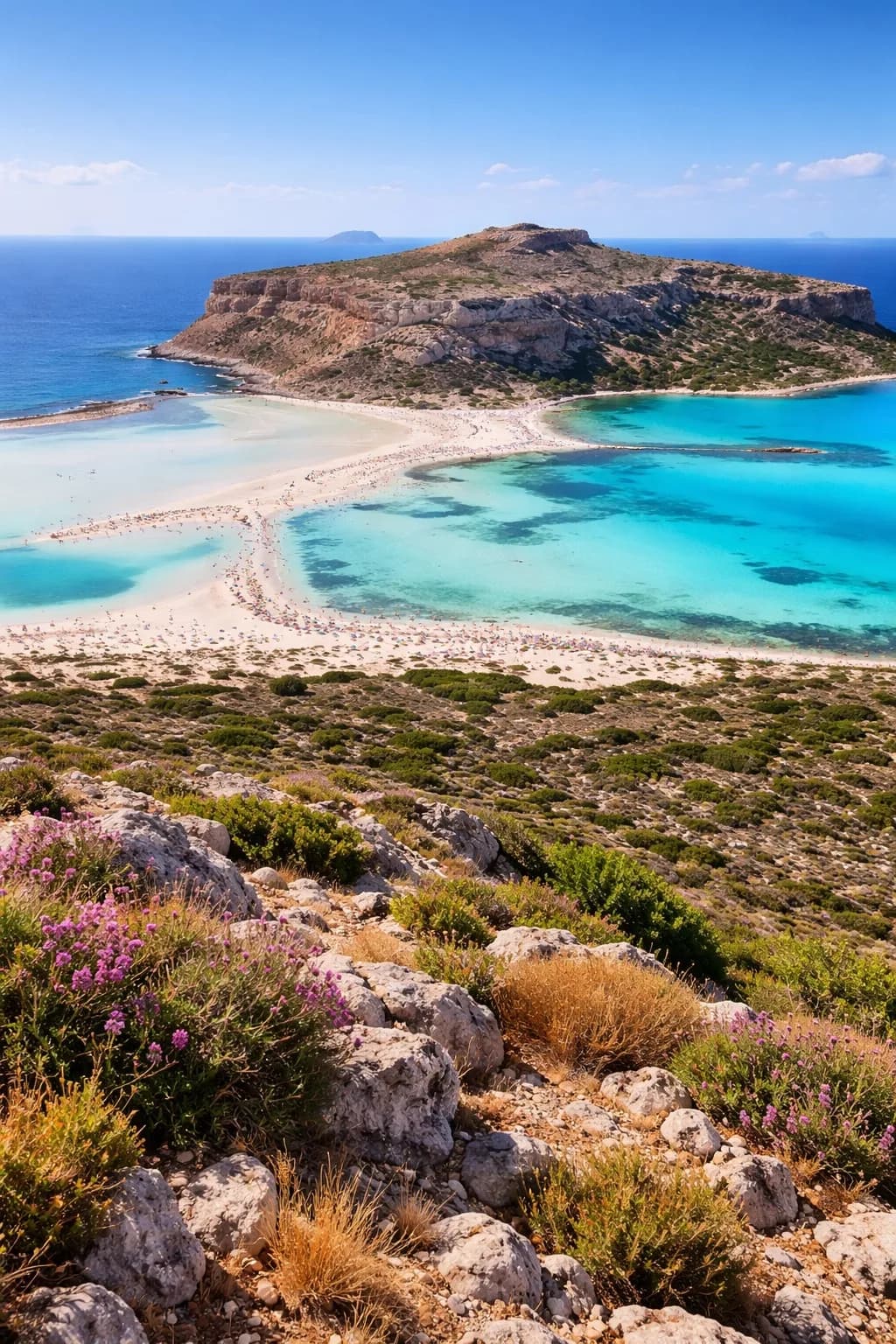
Where to Stay in Crete
Crete — Southern Aegean
Find the best places to stay in Crete — from the Venetian harbour of Chania and the UNESCO sites of Heraklion to the luxury resorts of Elounda and the wild south coast. A complete guide to Crete hotels and areas.
Relaxing stays, beautiful views and authentic hospitality — organized in a clear and practical way.
Description
Crete is the largest island in Greece and one of the most diverse destinations in the entire Mediterranean. It functions less like a typical Greek island and more like a small country — with snow-capped mountains, ancient Minoan palaces, sixteen-kilometre gorges, pink-sand lagoons and working urban cities all coexisting on the same landmass. A week here barely scratches the surface. Getting your base right from the start determines whether you spend your holiday moving freely or losing days to unnecessary driving. The island divides naturally into four regions — Chania in the west, Rethymno in the centre-west, Heraklion in the centre-east and Lasithi in the east — and each deserves to be treated as a separate destination.
1. Chania: The most beautiful city in Crete — and the best base for the west
Chania is widely considered the most atmospheric city on the island and one of the most beautiful in all of Greece. Its Venetian harbour, lined with restaurants and backed by a labyrinth of narrow lanes, bougainvillea-draped archways and restored Ottoman buildings, creates a setting that most visitors find impossible to leave. Staying in the Old Town puts you within walking distance of the covered market, the Firkas Fortress, the Maritime Museum and some of the island's best dining. Beyond the city, the western prefecture of Crete offers extraordinary natural contrasts — the pink-sand lagoon of Elafonisi, the vast open beach of Falasarna, the Samaria Gorge (one of the longest walkable gorges in Europe) and the remote south coast village of Loutro, accessible only by boat or on foot. Chania suits almost every type of traveler — couples who want character and good food, families with a base close to varied beaches and active visitors who want the gorge and west coast hiking on their doorstep. Hotels range from boutique rooms inside 17th-century Venetian mansions to comfortable modern properties on the outskirts of the Old Town.
2. Rethymno: History, a long sandy beach and the most balanced base on the island
Rethymno sits roughly halfway along the north coast and offers a remarkably well-balanced base. The city has a beautifully preserved Venetian Old Town, a landmark Fortezza fortress looking out over the sea and a long, broad sandy beach that runs for eleven kilometres east of the centre — one of the longest uninterrupted beaches in Crete. The pace here is slightly slower than Chania or Heraklion, and prices tend to be noticeably more reasonable. It is a strong base for travelers who want to divide their time between city sightseeing, beach days and day trips — Heraklion and Knossos are accessible to the east, and Chania and the western beaches are reachable to the west. The south coast village of Plakias and the beach of Agios Pavlos are less than an hour away by car, making Rethymno one of the few bases that gives you genuine access to both coastlines. Accommodation ranges from family-run guesthouses in the Old Town to large resort hotels along the beach strip.
3. Heraklion: The urban gateway to Crete's greatest history
Heraklion is the capital of Crete and the island's main transport hub — home to the largest international airport, the busiest ferry port and the most important archaeological museum in the Aegean. As a base it is often underrated by visitors who arrive expecting a resort and find a functioning city instead. But Heraklion has real substance: the Heraklion Archaeological Museum houses the most extensive Minoan collection in the world, the Palace of Knossos — inscribed on the UNESCO World Heritage List in 2025 alongside five other Minoan palace centres — is just ten minutes from the city centre, and the old market area around 1866 Street is one of the most authentic urban food experiences in Greece. The city works best as a base for travelers whose priority is history, archaeology and easy island-wide connections. Beach resorts at Agia Pelagia to the west and Hersonissos to the east are both within easy reach, and the airport connections make it the most practical arrival point for most visitors to the island.
4. Elounda and the East: Luxury, calm and the most exclusive corner of Crete
The eastern prefecture of Lasithi — anchored by Elounda, Agios Nikolaos and the Spinalonga peninsula — is home to some of the finest resort hotels in Greece. Elounda in particular has long been established as the island's luxury destination, with a cluster of world-class properties set along the edge of the Mirabello Bay offering private pools, direct sea access and a level of service and privacy rarely found elsewhere in the country. The iconic island of Spinalonga — a former Venetian fortress and one of Europe's last active leprosy colonies, made famous by the novel The Island — sits just offshore and is visited by boat from nearby Plaka. Agios Nikolaos, with its distinctive inner lake connected to the sea, offers a more accessible and lively alternative with good restaurants, a marina and a cosmopolitan atmosphere. Further east, the town of Sitia is quieter still, with direct access to the Minoan palace of Zakros, the remote beaches of Xerokampos and the extraordinary uninhabited island of Koufonisi. This part of Crete suits travelers who want privacy, natural beauty and a slower rhythm far from the tourist trail.
5. The South Coast: Wild, remote and unlike anywhere else in Greece
Crete's south coast is separated from the north by the White Mountains and the Psiloritis range, and this geographical barrier has preserved its character almost entirely. Villages like Loutro — reachable only by boat or on foot — Chora Sfakion, Matala and Paleochora feel genuinely off the main circuit. The beaches here are wilder, the sea is warmer and calmer in summer, and the tavernas are simpler and more honest. Matala, with its famous cave dwellings carved into the cliffside, has a particular mythological status in Greek travel history. Paleochora, at the far southwestern tip, is a relaxed town with beaches on both sides — a sandy bay to the west and a pebble beach to the east — and a loyal following among long-stay independent travelers. Staying on the south coast requires a car and a willingness to leave convenience behind, but for the right traveler it offers the most authentic and unhurried version of Crete available anywhere on the island.
Frequently Asked Questions
How many days do I need to see Crete properly?+
At minimum seven days, ideally ten to fourteen. The island takes over five hours to drive end to end, and each of the four main regions deserves at least two days. With less time, choose one or two regions and explore them well.
Which area of Crete is best for a first visit?+
Chania is the most rewarding first base — it combines the island's most beautiful Old Town with easy access to excellent beaches, the Samaria Gorge and the dramatic west coast. If history is your main priority, base yourself in Heraklion.
Do I need a car in Crete?+
Yes, for almost any base outside the city centres. Public buses connect the main north coast towns, but the south coast, mountain villages and gorges are inaccessible without your own transport.
Which airport should I fly into?+
Heraklion Airport (HER) is the main hub with the widest range of flights — choose it for Heraklion, Elounda, Rethymno or the east. Chania Airport (CHQ) is smaller with direct seasonal routes from most of Europe — choose it for Chania or the west.
When is the best time to visit Crete?+
May, June and September to early October offer the best conditions. The sea is warm, the island is active but not overwhelming, and prices are lower than July and August. Spring is excellent for hikers.
Is Elounda worth the premium price?+
For the right traveler, yes. The resort hotels around Elounda Bay are among the finest in the Mediterranean. If budget is a consideration, Agios Nikolaos offers a similar location and atmosphere at a noticeably lower price point.