
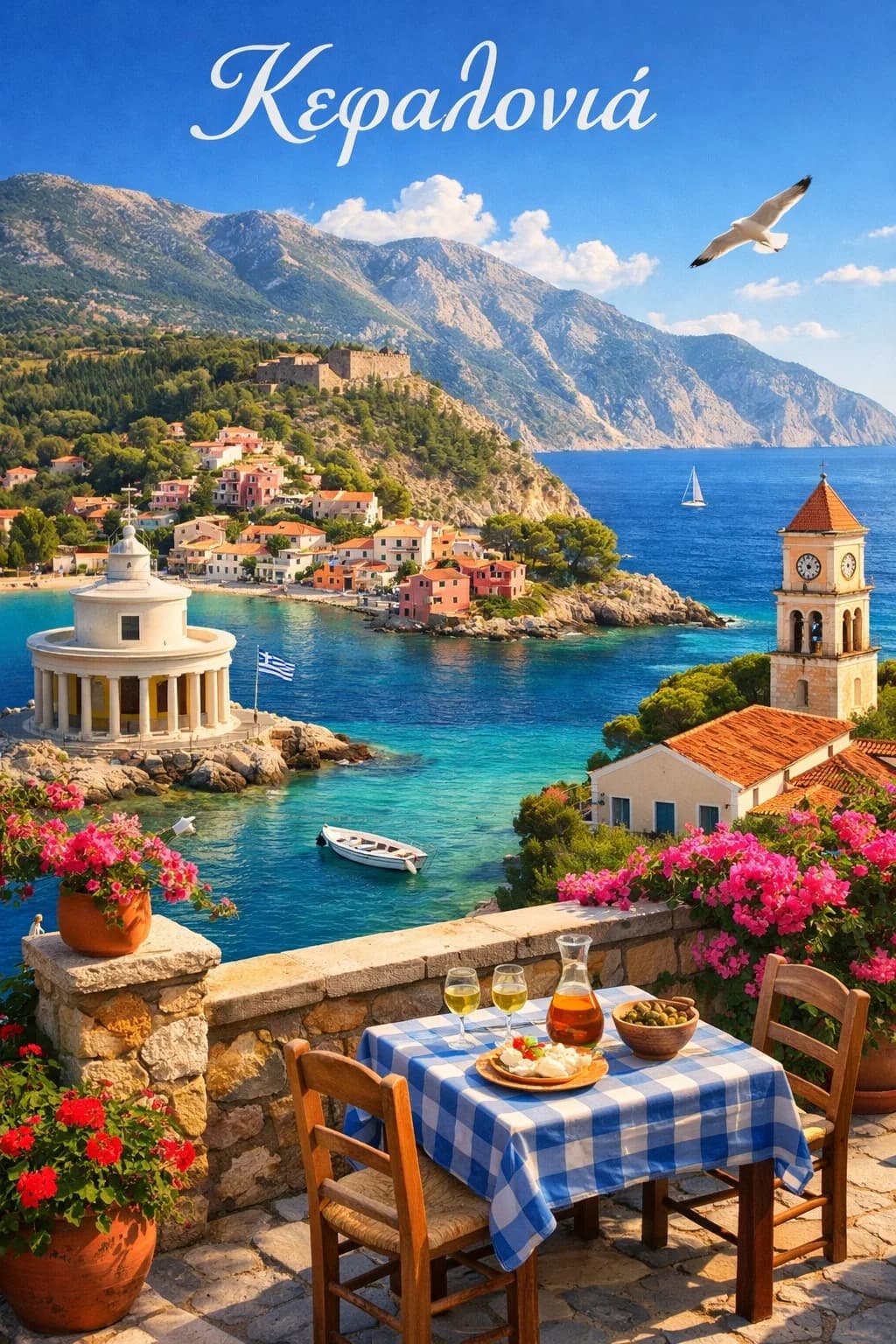
Where to Stay in Kefalonia
Kefalonia — Ionian Islands
Find the best places to stay in Kefalonia — from cosmopolitan Fiskardo and the capital Argostoli to the cliff-backed beaches of Myrtos, the caves of Sami and the authentic villages of the south. A complete guide to Kefalonia hotels and areas.
Relaxing stays, beautiful views and authentic hospitality — organized in a clear and practical way.
Description
Kefalonia is the largest of the Ionian Islands and one of the most naturally dramatic destinations in Greece. Its landscape is defined by extremes — sheer limestone cliffs dropping into impossibly turquoise water, dense forests covering the flanks of Mount Ainos, underground cave lakes lit from beneath, and Venetian-influenced harbour villages that feel unchanged by the decades. A car is essential here, but unlike some large islands the distances are manageable and the drives between areas are genuinely beautiful in their own right. Getting your base right at the start determines how much of this extraordinary variety you actually experience.
1. Fiskardo: The most cosmopolitan village on the island
Fiskardo sits at the northernmost tip of Kefalonia and is the only village on the island that survived the catastrophic 1953 earthquake almost completely intact. Its colourful Venetian harbour, pastel-painted buildings and waterfront tavernas create a picture-postcard setting that attracts a loyal following of sailors, couples and design-conscious travelers. The marina here fills with private yachts throughout summer, giving the village a refined, continental atmosphere unlike anywhere else on the island. Hotels and boutique guesthouses tend toward the premium end — charming, well-kept and intimate rather than large-resort in scale. Fiskardo works best as a base for travelers who want character and elegance over convenience, and who are happy to drive for beaches and sights. Emblisi Beach just north of the village is one of the most beautiful and least crowded on the island, and the ferry connection to Lefkada and Ithaca makes island-hopping easy.
2. Argostoli: The practical capital and the island's best-connected base
Argostoli is the capital of Kefalonia and the island's main hub for transport, services and day-to-day life. Rebuilt almost entirely after the 1953 earthquake, it lacks the preserved Venetian character of Fiskardo but compensates with genuine urban energy — a lively waterfront promenade, a covered market, good restaurants and easy access to the rest of the island in every direction. The famous De Bosset Bridge, the longest stone bridge built over the sea in the world, connects the city to the Paliki peninsula. The town beach at Lassi, just five minutes from the centre, is popular and well-organised. Argostoli is the most practical base for first-time visitors to the island — the airport is just a short drive away, rental cars are easy to arrange, and the road network fans out from here toward Myrtos, Sami, Fiskardo and the southern beaches with equal ease.
3. Asos and the Northwest: The most scenic village on the island
Asos is a small, protected bay village on the northwest coast connected to a dramatic Venetian fortress peninsula by a narrow causeway. It is widely considered the most photogenic spot on Kefalonia — a cluster of brightly painted houses around a circular harbour with forested hills rising steeply on three sides and the ruins of a 16th-century castle above. It has no large hotels, no beach clubs and almost no nightlife, which is precisely its appeal. Accommodation is limited to small family-run rooms and apartments. Asos suits travelers who want a genuinely quiet, beautiful base with easy access to nearby Myrtos Beach — one of the most photographed beaches in Greece, with white pebbles set between vertical white cliffs — just fifteen minutes away by car.
4. Sami and the East Coast: Caves, sea and the gateway to Ithaca
Sami is the main port town on the east coast of Kefalonia and the arrival point for ferries from Patra and the mainland. It has a relaxed, working-town atmosphere and a pleasant waterfront, but its real value as a base is access to two of the island's most extraordinary natural attractions. Melissani Cave — an underground lake where sunlight filters through a collapsed roof to illuminate the water in shades of blue and turquoise — is one of the most remarkable sights in Greece. Drogarati Cave nearby is a vast stalactite cavern with near-perfect acoustics, occasionally used as a concert venue. The beach at Antisamos, backed by steep green hills and facing the island of Ithaca, was used as a filming location for Captain Corelli's Mandolin and is among the most visually striking on the island. Sami also provides the most convenient base for a day trip to Ithaca, with regular ferry connections taking under thirty minutes.
5. Skala and the South: Long beaches, low-key atmosphere and family appeal
The southern part of Kefalonia — anchored by Skala, Katelios and Lourdas — is the quietest and most family-oriented stretch of the island. Skala has a long, sandy beach with calm water and a pleasant village centre with tavernas and small hotels. Katelios nearby is an even smaller fishing village with a sheltered bay and a reputation for sea turtle nesting. Lourdas sits on a south-facing hillside above a beautiful curved bay and offers some of the best sunset views on the island. The south lacks the drama of the northwest coast, but its gentler, greener landscape, calm sea conditions and unhurried pace make it the most comfortable and accessible part of Kefalonia for families, older travelers and anyone who wants a straightforward, beautiful beach holiday without the cosmopolitan premium of the north.
Frequently Asked Questions
Which area of Kefalonia is best for a first visit?+
Argostoli is the most practical base for first-time visitors — it has the best transport links, the widest range of accommodation and puts you within easy reach of every part of the island. If atmosphere and aesthetics matter more than convenience, Fiskardo is the most beautiful and memorable place to stay, though at a higher price point.
Do I need a car in Kefalonia?+
Yes, without exception. The bus network connects a handful of main routes but runs infrequently and stops early. The island's best beaches, caves, villages and viewpoints are spread across very different corners of the island and are effectively inaccessible without a car.
How far is Myrtos Beach from the main towns?+
Myrtos is approximately 30 minutes from Argostoli by car and around 20 minutes from Asos. There is no regular bus service to the beach, so a car or organized tour is the only practical way to get there.
Can I visit Ithaca as a day trip from Kefalonia?+
Yes, and it is one of the best day trips available from the island. Ferries run from Sami to Pisaetos on Ithaca in under thirty minutes. Ithaca is small, quiet and deeply beautiful — a full contrast to Kefalonia's scale.
When is the best time to visit Kefalonia?+
Late May through June and September are the ideal months. The weather is warm, the sea is comfortable for swimming, the island is active without being overcrowded, and accommodation prices are noticeably lower than in July and August.
Is Kefalonia suitable for families with young children?+
Yes, particularly the southern coast around Skala and Katelios, where the sea is calm and shallow and the pace is gentle. Argostoli is also a good family base with practical amenities. The northern and western coasts are more dramatic with pebble or cliff beaches better suited to older children and adults.