
Where to Stay in Milos
Milos — Cyclades
Find the best places to stay in Milos — from the convenient port of Adamas and the chic village of Pollonia to the hilltop capital Plaka, the volcanic south coast and the unique boathouse villages of Klima and Mandrakia. A complete guide to Milos hotels and areas.
Relaxing stays, beautiful views and authentic hospitality — organized in a clear and practical way.
Description
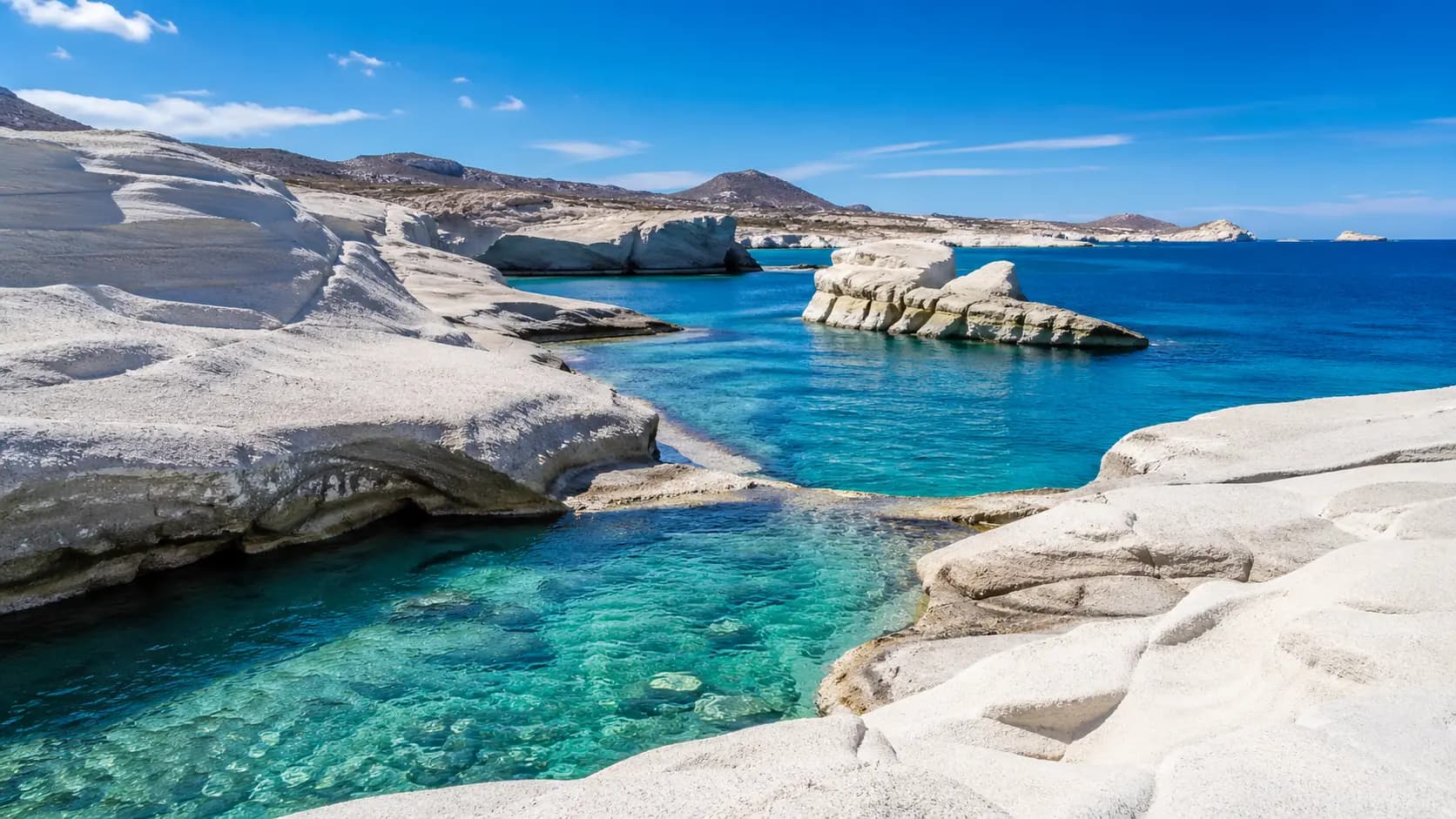
Milos is the most geologically dramatic island in the Cyclades and one of the most visually extraordinary destinations in the entire Mediterranean. Its volcanic origins have produced a coastline of over seventy beaches — sculpted into white moonscapes, ochre-red cliffs, sea caves reachable only by boat and hidden coves with turquoise water that changes colour by the hour. The island is also where the Venus de Milo was discovered in 1820, and its history of ancient settlement, Venetian occupation and centuries of mining has left a remarkably layered cultural landscape. A car is essential for exploring the island properly — most of the best beaches are spread across a coastline that has no footpath — but choosing the right base first determines how much of Milos's extraordinary variety you actually experience.
1. Adamas: The most practical base and the gateway to everything
Adamas — also written as Adamantas — is the main port and largest village on Milos, and the most convenient base for first-time visitors and anyone who wants to keep logistics simple. The ferry from Piraeus and the inter-island connections all arrive here, the bus network fans out from Adamas to every corner of the island, and the day boat tours to Kleftiko — the former pirate hideout of white sea caves and turquoise arches that is the single most celebrated attraction on Milos, accessible only by water — depart from the harbour every morning. The seafront is lined with restaurants, cafés and shops, and the Mining Museum just inland gives a surprisingly rich introduction to the island's long industrial past. Two sandy beaches — Lagada and Papakinou — sit within walking distance of the village. Hotels in Adamas range from comfortable mid-range rooms to well-appointed suites and apartments, with a wide enough selection to suit most budgets. It is the right base for travelers who want easy access to the whole island without committing to a more remote location, and the most practical choice for anyone staying without a rental car.
2. Pollonia: The most refined and family-friendly village on the island
Pollonia sits on the northeastern tip of Milos and has a character entirely different from Adamas. It is a small, polished fishing village built around a long, sheltered sandy bay with calm, shallow water — the best swimming beach directly in front of accommodation anywhere on the island. The waterfront is lined with excellent seafood tavernas and a handful of cocktail bars that fill with a relaxed, cosmopolitan crowd through the summer evenings. Pollonia is also the departure point for the short ferry crossing to Kimolos, the quiet neighbouring island with pristine uncrowded beaches that makes for one of the most rewarding day trips in the western Cyclades. Hotels and boutique properties in Pollonia tend toward the upscale end — many with sea-view terraces, private pools and thoughtful design — and the village attracts couples and families who want a refined, unhurried base rather than a busy port town. The drive to Adamas takes around twenty minutes, and the ancient ruins of Phylakopi, the sea caves of Papafragas and the moonscape beach of Sarakiniko are all within easy reach to the west. Pollonia is the consistent recommendation for repeat visitors to Milos and the choice most travelers wish they had made on their first trip.
3. Plaka: The most atmospheric village and the best sunsets on the island
Plaka is the official capital of Milos, perched high on a hill above the bay with views that extend across the entire Aegean on clear days. Its whitewashed Cycladic lanes, cascading bougainvillea, domed churches, boutique shops and intimate cocktail bars create the most traditionally beautiful village atmosphere on the island. The hilltop Castro — the ruined medieval fortification at the very top of Plaka — is the finest sunset-watching point on Milos, and on summer evenings the narrow paths leading up to it fill with visitors arriving an hour before dusk to secure their position. The adjacent village of Trypiti is equally beautiful and slightly less visited, and together the two hillside settlements form the most photogenic and memorable part of the island for evening exploration. The legendary Methismeni Politia restaurant in Trypiti — a terrace with panoramic views and reliably excellent food — is one of the best dining experiences in the Cyclades. Accommodation in Plaka is limited to smaller guesthouses, traditional studios and boutique rooms rather than large hotels, which suits the intimate character of the village entirely. The walk up through Plaka's lanes involves slopes and stairs, so it is less suited to travelers with significant mobility limitations. A car is strongly recommended as a base here, as the bus runs hourly but stops early in the evening.
4. The South Coast: Volcanic beaches, dramatic colour and remote beauty
The south coast of Milos is the most geologically spectacular stretch of coastline on the island, and staying in this area — or using it for day trips from any base — is essential for understanding what makes Milos genuinely extraordinary. Paliochori Beach is a long bay of volcanic sand in multiple colours — black, red, ochre and white — with natural underwater hot springs warming the shallows in certain spots, a cluster of beach tavernas directly on the sand and a more organised atmosphere than most beaches on the island. Firiplaka nearby is one of the most visually dramatic beaches in the Cyclades, with deep red and white cliffs framing crystal-clear turquoise water and almost no development. Tsigrado, accessible only by descending a rope ladder through a narrow rock cleft, is the most adventurous beach on the island and rewards the effort with exceptional water clarity. Accommodation in the south coast area is limited but includes some of the most luxuriously positioned properties on the island — small boutique suites and resort-style rooms with direct beach access and views of the open sea. It suits travelers who want the beaches themselves as the primary experience, and who are happy to drive for everything else.
5. Klima, Mandrakia and the Fishing Villages: The most unique stays in Greece
The small fishing villages scattered around the bay of Milos — Klima, Mandrakia, Firopotamos and Areti — offer something found almost nowhere else in Greece: the chance to sleep directly inside a syrmata, a traditional colourful boathouse built at the water's edge with a boat stored on the ground floor and a living space above. These structures, painted in vivid shades of blue, red and yellow and reflected in the calm water of the bay, are among the most photographed scenes in the Aegean, and several have been converted into holiday accommodation of genuine character and quality. Klima, just below Plaka, is the most accessible and most visited of these villages, and a handful of renovated syrmatat can be booked here for a truly one-of-a-kind experience. Mandrakia on the north coast is smaller and quieter, with the excellent Medusa restaurant serving some of the freshest seafood on the island directly above the water. Staying in one of these villages is not a practical choice — there are no shops, limited parking and no transport — but for the right traveler, a night or two in a waterfront boathouse with the Aegean lapping beneath the window is one of the most memorable experiences available anywhere in the Greek islands.
Frequently Asked Questions
Which area of Milos is best for a first visit?+
Adamas is the most practical first base — it gives you the easiest logistics, the best transport connections and immediate access to the island's boat tours. If atmosphere and beauty matter more than convenience, Pollonia is the most consistently praised base by experienced visitors to Milos, and Plaka is the most atmospheric for evenings. All three are viable for a first trip; the choice depends on what kind of daily experience you want to wake up to.
Do I need a car in Milos?+
Yes, for almost any meaningful exploration of the island. The bus network connects Adamas to Plaka, Pollonia and a handful of beaches, but most of Milos's finest beaches — Sarakiniko, Firiplaka, Tsigrado, the south coast — are unreachable without your own transport. The western half of the island requires a 4WD. Arranging a rental car from arrival is strongly recommended for any stay longer than two nights.
What is the Kleftiko boat tour and is it worth it?+
The Kleftiko boat tour is the single most praised experience on Milos and widely considered one of the best day excursions in the entire Aegean. Kleftiko is a series of extraordinary white sea caves, rock arches and turquoise lagoons on the southwest coast of the island that are accessible only by boat. Tours depart from Adamas harbour in the morning and typically include swimming stops, snorkelling in the caves and lunch on board. It is worth doing regardless of which part of the island you are staying in.
How many days do I need in Milos?+
Four to five days is the recommended minimum. Day one for settling in and a first beach; day two for the Kleftiko boat tour; day three for a self-drive loop of Sarakiniko, Papafragas and the north coast; day four for the south coast beaches and Plaka at sunset. A fifth day allows for the crossing to Kimolos or a slower revisit of favourite beaches. Most visitors leave wishing they had stayed longer.
Can I visit Kimolos as a day trip from Milos?+
Yes, and it is one of the best day trips in the Cyclades. A small ferry runs from Pollonia to the port of Psathi on Kimolos in around fifteen minutes throughout the day in summer. Kimolos is smaller, quieter and almost entirely undeveloped — its main village of Chorio is a remarkably well-preserved Cycladic settlement, and beaches like Prassa and Bonatsa offer white sand and turquoise water with virtually no other visitors. It is a strong contrast to the increasing popularity of Milos itself.
When is the best time to visit Milos?+
Late May through June and September are the ideal months. The sea is warm enough for comfortable swimming from early June, the island is active but not overwhelmed, and accommodation is significantly more available and affordable than in July and August. Milos has grown rapidly in popularity over the past decade and peak season — particularly the first three weeks of August — now requires booking five to six months in advance for the best accommodation in all three main areas.