
Where to Stay in Paros
Paros — Cyclades
Find the best places to stay in Paros — from the chic harbour of Naoussa and the convenient capital Parikia to the windsurfing sands of Golden Beach, the hilltop village of Lefkes and the quiet south coast. A complete guide to Paros hotels and areas.
Relaxing stays, beautiful views and authentic hospitality — organized in a clear and practical way.
Description
Paros is one of the most balanced and genuinely enjoyable islands in the Cyclades — and one of the most consistent recommendations for travelers who find Santorini too dramatic and Mykonos too loud. It has excellent beaches, a strong food and wine culture, two characterful towns with very different personalities, a medieval inland village, and a ferry network that makes island-hopping to Naxos, Antiparos, Ios and the Small Cyclades effortless. Unlike many Aegean islands, Paros does not have one dominant area that suits everyone — the choice of base genuinely determines the kind of holiday you have, and the island is compact enough that exploring the whole of it by car in a day is entirely possible.
1. Naoussa: The most atmospheric and stylish base on the island
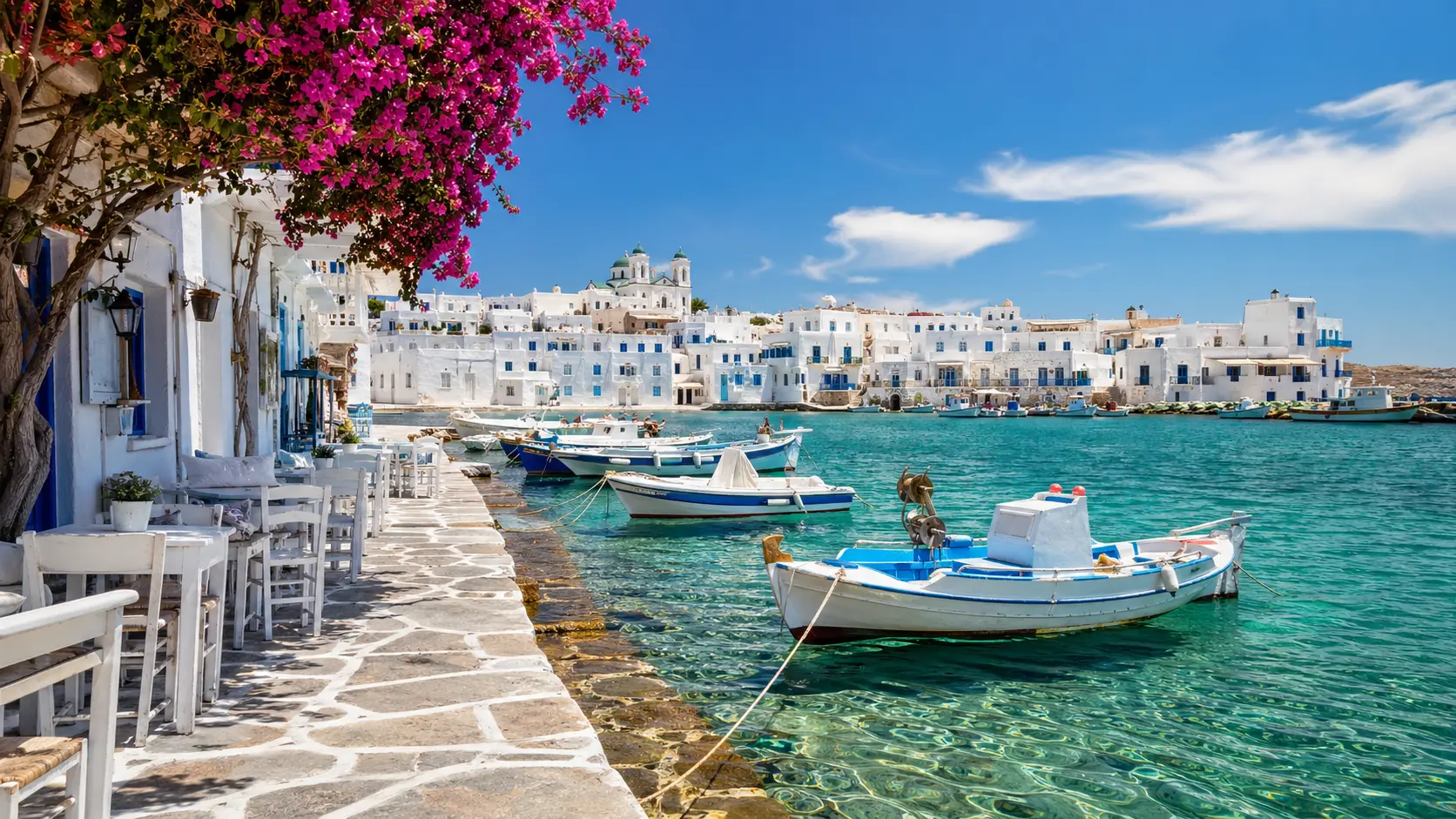
Naoussa is the most photogenic and consistently praised town on Paros, and for many repeat visitors the only place they consider staying. Built around a natural harbour on the north coast, its whitewashed lanes, flowering courtyards, boutique shops, waterfront seafood restaurants and cocktail bars packed around a half-sunken 12th-century Venetian castle create a setting that rivals the most beautiful villages in the Cyclades. In the evenings, the harbour square transforms into one enormous outdoor dining room, with the boats bobbing quietly behind the terrace tables. Naoussa is also extremely well-positioned for the island's best northern beaches — Kolymbithres, with its extraordinary granite rock formations sculpted by the sea, is a short boat or taxi ride away, and Monastiri Beach is just beyond. The Moraitis winery, one of the only operating wineries on Paros, is a short drive from town. Hotels here range from intimate boutique rooms in traditional Cycladic buildings to upscale resorts just outside the centre along the Livadia beach stretch. The main consideration is peak season intensity — Naoussa becomes very busy in July and August, particularly around the harbour after sunset, and the narrow streets make noise unavoidable in central rooms. Staying just outside the village centre, on the hillside above town or along the Santa Maria road, gives you proximity to the action with significantly more quiet and privacy.
2. Parikia: The most practical and well-connected base for first-time visitors
Parikia is the capital and main port of Paros, and considerably more interesting than most port towns in the Cyclades. Its Old Town is a genuinely beautiful Cycladic maze of whitewashed lanes, blue-domed churches and flowering bougainvillea, anchored by the remarkable Panagia Ekatontapiliani — one of the oldest and best-preserved Byzantine churches in Greece, known as the Church of One Hundred Doors. The Frankish Castle on the hill above town was built using ancient marble from a temple of Demeter, and the waterfront promenade is one of the finest sunset-watching spots on the island, looking directly west over the open Aegean. As the island's main transport hub, Parikia gives you direct ferry access to Piraeus, Naxos, Mykonos, Antiparos and the wider Cyclades, and the central bus station here connects to Naoussa, Golden Beach and most of the island's main villages. It suits first-time visitors, independent travelers, families and anyone who wants a convenient and well-serviced base without committing to a specific coastal strip. Accommodation ranges from simple family-run pensions in the Old Town to comfortable modern hotels and well-positioned apartments along the Livadia beach promenade just north of the centre.
3. Golden Beach (Chrissi Akti): The best base for watersports and east coast beaches
Golden Beach — known in Greek as Chrissi Akti — sits on the east coast of Paros and is one of the finest windsurfing and kitesurfing destinations in the Mediterranean. Its long arc of golden sand faces the open Aegean and catches the reliable summer meltemi wind that makes it a pilgrimage site for board sport enthusiasts from across Europe. Several professional schools and rental centres operate directly on the beach throughout summer. The adjacent beach of Nea Chrissi Akti extends the sandy stretch further south, and the bay of Faragas nearby is calmer and better suited to swimming and snorkelling. Hotels and studios in this area are purpose-built for beach-focused stays — more functional than atmospheric, but very well-positioned for those who want to spend the majority of their time on the water. A car is essential from this base, as public transport connections to Parikia and Naoussa are infrequent. The drive to either town takes around twenty-five to thirty minutes.
4. Lefkes: The most authentic village on the island
Lefkes sits in the hills at the geographical centre of Paros, and was the island's capital during the Byzantine and Ottoman periods — a position that sheltered it from piracy and preserved its character almost entirely. Its marble-paved lanes, Venetian-influenced architecture, amphitheatre hillside setting and sweeping views across the island to the sea on both sides make it the most genuinely beautiful inland village in the Cyclades. The Church of Agia Triada, built from pure white Parian marble, dominates the village square. A Byzantine path — part of the old donkey trail network — connects Lefkes to the coast at Prodromos and is one of the most rewarding short hikes on the island. Accommodation here is limited to small guesthouses and traditional rooms, which is exactly the point. Lefkes suits travelers who want a quiet, authentic and genuinely Cycladic base away from the beach crowds, and who are happy to drive to the coast for swimming. It is roughly equidistant from Parikia and the east coast beaches.
5. Alyki and the South Coast: Calm, family-friendly and unhurried
The southern part of Paros — including the fishing villages of Alyki and Piso Livadi — offers the most relaxed and genuinely local version of the island. Alyki sits on a sheltered bay with calm, shallow water, a sandy beach and a small waterfront lined with tavernas serving freshly caught fish. It is just five kilometres from Paros Airport, making it an unusually convenient base for arrivals and early departures. Piso Livadi on the southeast coast is a small port village with a charming harbour, excellent seafood restaurants directly on the water, and easy boat connections to the Small Cyclades — Koufonisia, Donoussa and Iraklia — for day trips or overnight extensions. Both villages suit families with young children, couples who prefer a quieter rhythm and travelers on longer stays who want to experience Paros at a pace that the busier northern towns do not always allow. Pounda Beach on the west coast, best known as the departure point for the car ferry to Antiparos, is nearby and catches excellent west-facing sunsets.
Frequently Asked Questions
Naoussa or Parikia — which is the better base?+
For atmosphere, dining and the classic Cycladic experience, Naoussa is the stronger choice — most repeat visitors base themselves there. For convenience, transport connections, sunset views and a more relaxed daily pace, Parikia is the better option, particularly for first-time visitors and those without a rental car. The two towns are just fifteen minutes apart by bus or taxi, so neither choice significantly limits what you can do.
Do I need a car in Paros?+
Paros has one of the better bus networks in the Cyclades, with regular connections between Parikia, Naoussa and Golden Beach throughout summer. For a stay based in either of the two main towns, a car is optional. If you want to reach Lefkes, Alyki, Piso Livadi, or the quieter coves on the south and east coast at your own pace, a car or scooter is strongly recommended. Renting one for two or three days to do a full island loop is a popular and very rewarding approach.
When should I book hotels in Paros?+
Paros is significantly less crowded than Mykonos or Santorini, but peak season — particularly the first three weeks of August — fills the island's best accommodation months in advance. Book four to six months ahead for July and August stays, especially in Naoussa. May, June and September are considerably easier and offer excellent weather with fewer crowds and lower prices.
Is Paros good for families with children?+
Yes, particularly Parikia and the south coast. Alyki's calm, shallow bay is ideal for young children, and Parikia has beaches, parks and practical amenities that suit family logistics. Golden Beach suits older children and teenagers who want watersports. Naoussa can work for families but is busier and more nightlife-oriented than the other areas.
Can I do a day trip to Antiparos from Paros?+
Yes, and it is one of the best day trips in the Cyclades. A small passenger ferry runs from Parikia harbour to Antiparos town in around thirty minutes, and a car ferry from Pounta connects the two islands in just seven minutes. Antiparos is quieter, smaller and bohemian in character, with excellent beaches and the remarkable Cave of Antiparos, one of the most impressive stalactite caves in Greece.
How many days do I need in Paros?+
Four to five days is the ideal minimum for experiencing the island properly — one day each for Naoussa and Parikia, a day for beaches and watersports, a day for Lefkes and the inland villages, and a day trip to Antiparos. Three days is possible but leaves most visitors planning a return. Paros consistently ranks as one of the Greek islands travelers most want to revisit.