
Where to Stay in Thessaloniki
Thessaloniki — Central Macedonia
Find the best neighborhoods to stay in Thessaloniki — from the iconic waterfront and Aristotelous Square to lively Ladadika, atmospheric Ano Poli, and the local calm of Kalamaria. A complete guide to Thessaloniki hotels and areas.
Relaxing stays, beautiful views and authentic hospitality — organized in a clear and practical way.
Description
Thessaloniki is the most underrated city in Greece and, for many travelers who visit both Athens and Thessaloniki, the more immediately enjoyable of the two. It is a genuine metropolitan city of one million people — four universities, a world-class food culture, Roman and Byzantine monuments woven into the daily urban fabric, a waterfront that stretches for kilometres along the Thermaic Gulf, and a nightlife and café scene that most European cities cannot match. Its culinary identity was forged by the Anatolian Greek refugees who arrived from Smyrna and Constantinople in the 1920s, and the result — bougatsa, mussels from the gulf, tsipouradika, the Modiano and Kapani markets — is richer and more varied than anywhere else in Greece. Getting your base right here is straightforward: the city is compact and largely walkable, and the choice between neighborhoods is more about atmosphere and noise level than about access to sights.
1. City Centre and Waterfront: The best-connected and most convenient base
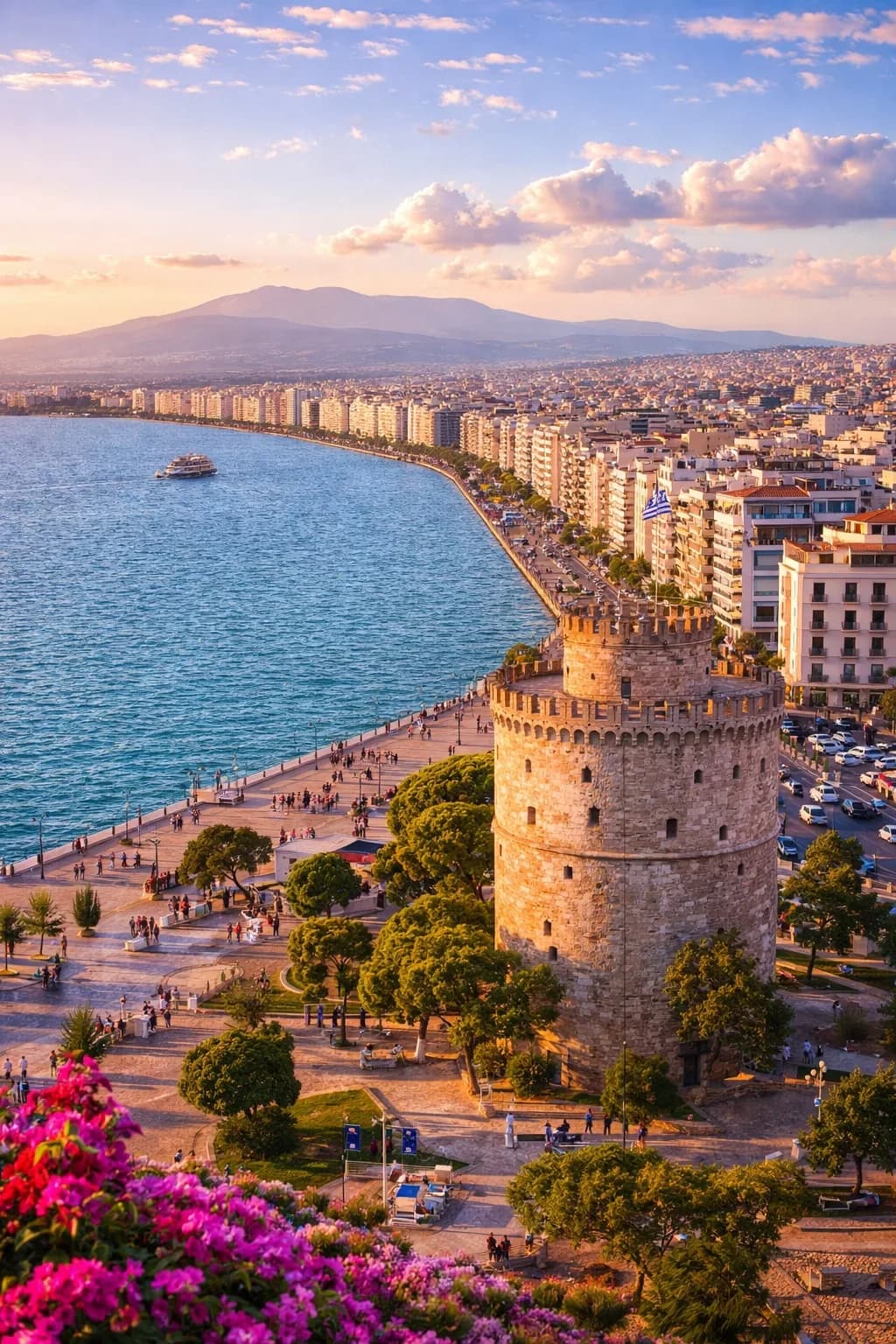
The city centre — anchored by Aristotelous Square and running along the Nikis Avenue waterfront — is the natural base for first-time visitors and anyone who wants maximum walkability. Aristotelous Square itself is one of the grandest urban spaces in Greece: a broad, colonnaded plaza designed by the French architect Ernest Hébrard that opens directly onto the seafront. Staying within a ten-minute walk of the square puts you within easy reach of virtually every major sight in the city — the White Tower, the Roman Forum, the Arch of Galerius, the Rotunda, the Modiano and Kapani markets, the Archaeological Museum and the Museum of Byzantine Culture. The waterfront promenade, redesigned in the 2010s, runs from the old port to the White Tower and beyond, and on clear days offers unobstructed views of Mount Olympus across the Thermaic Gulf. Hotels in this area range from Thessaloniki's finest five-star addresses — the Electra Palace on Aristotelous Square is the city's most prestigious — to well-positioned mid-range and boutique options a few streets back. It is the right base for travelers who want complete convenience and a central position from which to explore the whole city on foot.
2. Ladadika: The most vibrant neighborhood for food, nightlife and character
Ladadika sits just west of Aristotelous Square and is the most energetic and characterful neighborhood in Thessaloniki. Its name means 'oil shops' in Greek — a reference to the Ottoman-era olive oil trading district that once occupied the area — and its beautifully restored 19th-century warehouses and cobblestone streets now house the city's densest concentration of tavernas, ouzeries, bars, live music venues and boutique hotels. Egiptiou Street in particular is lined with the kind of generous meze restaurants that define Thessaloniki's food culture at its most convivial. The nightlife here continues until the early hours on weekends, which makes Ladadika one of the most exciting areas in the city to stay — and one of the noisiest. Travelers who want to be at the centre of the action, within walking distance of the old port and the city's best evening atmosphere, will find Ladadika difficult to beat. Those who value quiet evenings should choose a room on an inner courtyard or consider a base one neighborhood over. The metro station at Venizelou is a five-minute walk, connecting the area efficiently to the rest of the city.
3. Ano Poli: The historic upper town with the best views in the city
Ano Poli — literally 'Upper City' — is the only district of Thessaloniki to survive the Great Fire of 1917 almost entirely intact, and it remains the most atmospheric and historically layered part of the city. Its steep cobblestone streets, Ottoman-era wooden houses with overhanging balconies, Byzantine churches, active monasteries and UNESCO-listed city walls create a neighborhood that feels genuinely apart from the modern metropolis below. The Trigoniou Tower at the top of the district offers what many consider the finest panoramic view in northern Greece — across the entire city, the Thermaic Gulf and, on clear days, to Mount Olympus on the horizon. Vlatadon Monastery, the birthplace of Mustafa Kemal Atatürk, and the Heptapyrgion fortress are all within walking distance. Accommodation here tends toward small guesthouses, traditional stone-built properties and boutique hotels with gardens and terraces. The main consideration is the steep hillside location: the walk down to the city centre is a pleasant twenty minutes, but the return is a genuine climb. Bus lines 22 and 23 serve the neighbourhood regularly, and taxis are the practical option for late evenings. Ano Poli suits couples, slow travelers and anyone drawn to authentic neighborhood atmosphere over urban convenience.
4. The Roman Forum Area: Culture, green space and a quieter central option
The area immediately around the Roman Forum — the ancient agora of Thessaloniki, still partially excavated and open in the heart of the city — is one of the most interesting and least discussed bases in the city. The pedestrianized Aristotelous Street connects this neighborhood directly to the waterfront square, and the forum itself is surrounded by green space, an Ottoman hammam and the kind of quiet that is unusual for a location this central. The Aigli Geni Hamam, a 15th-century bathhouse now operating as a restaurant, bar and cultural venue, is one of the most atmospheric spaces in Thessaloniki and is a few minutes walk from this area. It suits travelers who want centrality and proximity to the Byzantine and Roman monuments without the noise of the waterfront or Ladadika, and who prefer a calmer, more residential daily rhythm within easy reach of everything.
5. Kalamaria: The seafront suburb for a local and relaxed stay
Kalamaria sits southeast of the city centre along the Thermaic Gulf coastline and offers a completely different kind of Thessaloniki experience. It is a genuine residential suburb — one where locals live, shop and eat — with a long seafront promenade, some of the finest fish tavernas in the region along the Aretsou marina, and a relaxed pace that contrasts sharply with the density of the city centre. The Plastira Street pedestrian zone is the commercial heart of the neighbourhood, and the views from the waterfront here — looking back toward the city and out toward the open gulf — are among the clearest in the wider area. The new Line 2 metro extension, which opened in early 2026, now connects Kalamaria directly to the city centre, making this area significantly more practical as a base than it was previously. It suits travelers on longer stays, those who prefer a local neighborhood over a tourist-oriented area, and families who want easy beach and seafront access alongside connections to the city's main cultural sights.
Frequently Asked Questions
How many days do I need in Thessaloniki?+
Three to four days is the ideal minimum. The first covers the central UNESCO monuments — the Rotunda, Arch of Galerius, Hagia Sophia, Agios Dimitrios — and the Archaeological Museum. The second is best spent entirely in Ano Poli. The third is for the food culture: the Modiano and Kapani markets, a proper tsipouradiko lunch and a long evening in Ladadika. If you are using Thessaloniki as a base for day trips to Vergina, Pella or Halkidiki, add at least one day per excursion.
Which neighborhood is best for a first visit to Thessaloniki?+
The city centre around Aristotelous Square is the strongest first base — it puts you within walking distance of every major sight and the full length of the waterfront, and gives you an immediate sense of the city's scale and character. If you have been before and want a more atmospheric stay, Ladadika and Ano Poli are the two most characterful alternatives.
Is Thessaloniki walkable?+
Yes, for most of the city. The waterfront, city centre, Ladadika, the Roman Forum area and the lower reaches of Ano Poli are all comfortably walkable from a central base. The upper parts of Ano Poli involve significant climbing, and Kalamaria is best reached by metro or taxi. The city is significantly more compact and easier to navigate on foot than Athens.
How do I get from Thessaloniki Airport to the city centre?+
The airport bus (line X1) runs directly to the city centre and stops near several central hotels. The journey takes approximately 45 minutes depending on traffic. Taxis and pre-arranged transfers are available at the arrivals hall. The metro does not yet reach the airport, though an extension is planned.
Is Thessaloniki worth visiting if I have already been to Athens?+
Without question. Most travelers who visit both cities find Thessaloniki more immediately enjoyable — it is smaller, more navigable, considerably cheaper, and has a food culture that is widely considered the best in Greece. The Byzantine monuments are extraordinary, the waterfront is one of the finest in the Mediterranean, and the city has a genuine urban energy that Athens, for all its scale, does not quite replicate.
What are the best day trips from Thessaloniki?+
Vergina — site of the royal tombs of the Macedonian kings, including Philip II, father of Alexander the Great — is 75 kilometres away and one of the most important archaeological sites in Greece. Pella, the ancient capital of Macedon, is 40 kilometres to the west. Halkidiki, the three-pronged peninsula with some of the clearest water in northern Greece, begins just 70 kilometres to the southeast. Meteora is approximately three hours by car and works well as an overnight rather than a day trip.