Travel Guide

Greece Trip Planning Checklist

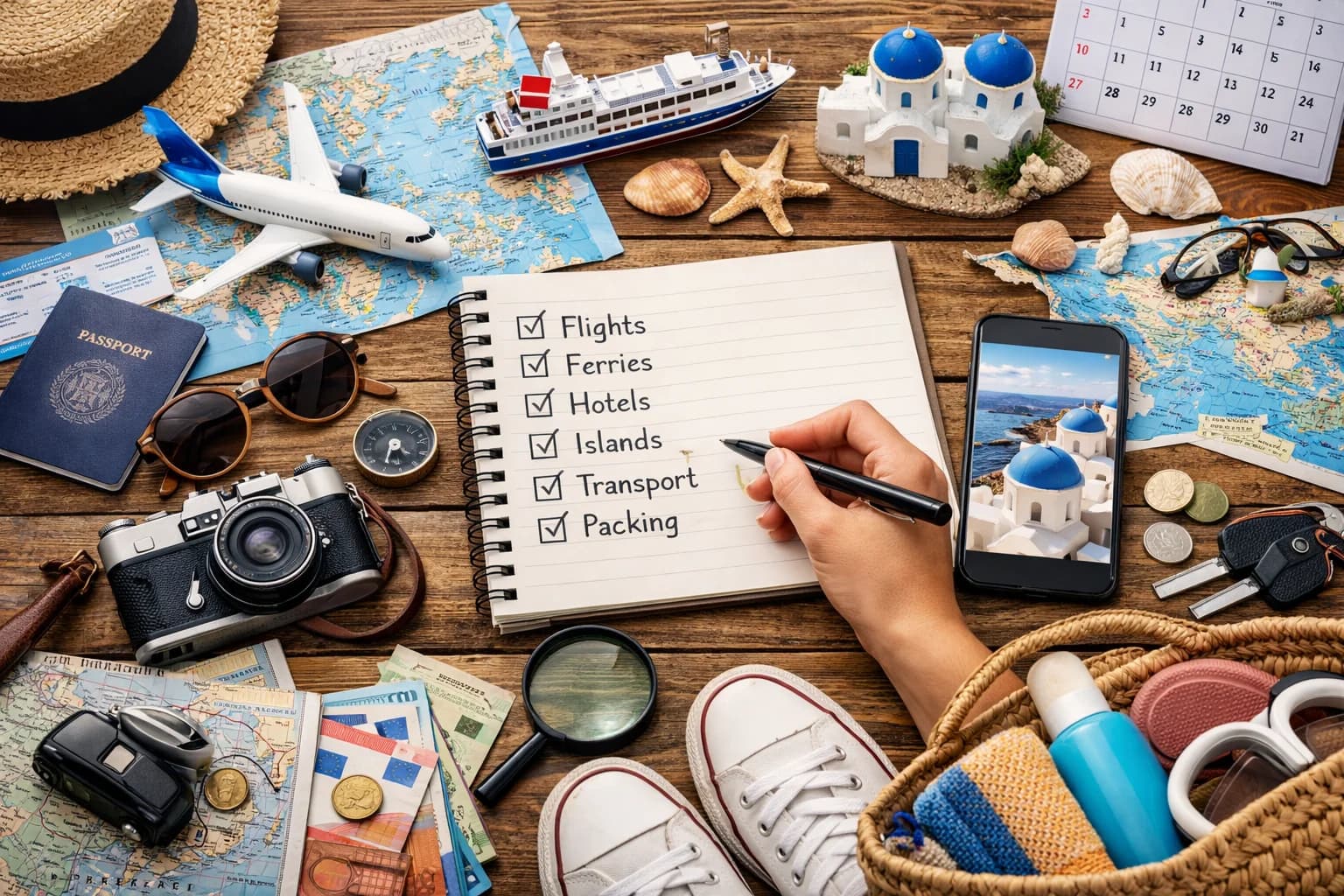
A practical Greece trip planning checklist covering flights, ferries, islands, hotels, transport, what to pack and how to organize your first trip smoothly.

Overview

A trip to Greece looks effortless on Instagram, but good planning makes a huge difference. Between flights, ferries, islands, hotel areas and seasonal timing, a little preparation can save both money and stress. Greece can be visited year-round, thanks to its Mediterranean climate, but the experience changes a lot depending on the season and destination. Ferry services also run throughout the year, with much denser schedules from March to October. This checklist covers the practical steps that matter most before you travel.

1

1. Decide what kind of Greece trip you want

Before choosing islands or hotels, decide what kind of holiday you actually want: island hopping, one island plus Athens, family beach holiday, road trip on the mainland, romantic escape, or a food-focused trip. This decision affects almost everything else, from budget to transport.

2

2. Choose the best travel month

Greece is sunny for much of the year, but not every month suits every traveler. Summer brings heat, beach life and peak island energy. Shoulder season is often better for sightseeing, easier logistics and a more balanced experience. Winter can work well for cities, culture and slower travel, while many islands are much quieter and ferry connections are reduced.

3

3. Keep your itinerary realistic

One of the biggest mistakes in Greece is trying to do too much. For a 7-day trip, one or two bases are usually enough. For 10 days, you can combine Athens with one or two islands, or do a more relaxed island pairing. The goal is not to collect destinations but to enjoy them.

4

4. Book ferries and transport early for summer

Greece has a strong sea network and regular island connections, but summer routes are busier and the most convenient options can sell out or become expensive. If your trip depends on specific ferry times, book ahead.

5

5. Choose the right hotel area, not just the right island

Many travelers spend too much time choosing the island and too little time choosing the area. In Greece, hotel location shapes your whole trip. The right area can give you easier beach access, better sunset views, fewer car needs or a quieter family base.

6

6. Check how much local transport you will need

Some islands work well without a car. Others are much easier with one, especially if you want remote beaches, villages or flexible sightseeing. This is one of the most important decisions in trip planning and affects both budget and comfort.

7

7. Build around your arrival and departure points

If you land in Athens, it often makes sense to pair the city with nearby islands or one efficient island route. If you fly directly to an island, your itinerary should stay simpler. Good Greece planning is really about reducing unnecessary transit.

8

8. Pack for sun, movement and mixed surfaces

Even elegant Greek trips involve stairs, uneven streets, ports, beaches and lots of walking. Pack light, bring good shoes, sun protection and clothing that works for heat and wind. On some islands, evenings can feel breezy even in summer.

9

9. Save your key bookings and timings offline

Keep screenshots or offline copies of flights, ferries, hotel details and transfer information. This is especially useful when moving between islands.

10

10. Leave room for Greece to surprise you

The best trips in Greece usually include some flexibility: a slower lunch in a village, an extra swim stop, a beach you had not planned, or a local recommendation that changes your day.

11

Conclusion

The best Greece trips are not the ones with the most stops. They are the ones that fit your pace, your season and your style. A practical checklist helps you spend less time stressing about logistics and more time enjoying what Greece does best: sea, food, scenery, culture and that easy Mediterranean feeling.