Also explore

Discover more about Rhodes — its medieval Old Town, beaches, tours, and travel tips in our dedicated guides.

Rhodes Old Town Guide 2026: Medieval City, Street of Knights & Grand Master Palace
Travel Guide

Rhodes Old Town Guide 2026: Medieval City, Street of Knights & Grand Master Palace

Explore Rhodes Old Town with this 2026 guide to the Medieval City, Street of the Knights, and Palace of the Grand Master. History, top sights, food, tips, and travel info.

Overview

Rhodes Old Town is one of the most remarkable historic districts in the Mediterranean and one of the strongest reasons to visit the island of Rhodes. A UNESCO World Heritage Site, the medieval city combines centuries of military, religious, and commercial history with atmospheric streets, grand fortifications, and some of the most memorable architecture in Greece. At the heart of the experience are three essential landmarks: the Medieval City of Rhodes, the Street of the Knights, and the Palace of the Grand Master. Together, they create a walkable historic core that feels unlike anywhere else in the country. For travellers planning a Rhodes itinerary in 2026, this area is not just a sightseeing stop — it is the cultural centrepiece of the island.

1

Why Rhodes Old Town Matters

Rhodes Old Town is one of the best-preserved medieval urban centres in Europe. Its walls, gates, lanes, inns, towers, and civic buildings reflect the long period when the island was ruled by the Knights Hospitaller, who transformed Rhodes into a fortified stronghold between the 14th and 16th centuries. The result is a dense historical landscape where every street has a story.

What makes the Old Town especially compelling is the way it balances monumentality and everyday life. Visitors come for the history, but they stay for the layered experience: quiet lanes in the early morning, lively squares in the evening, small museums, local shops, cafés, restaurants, and shaded courtyards hidden behind stone walls.

For 2026 travellers, Rhodes Old Town remains one of the most rewarding places in Greece for a self-guided walk, a guided historical tour, or a longer cultural stay.

If you only have a few hours, this is the simplest way to experience it: enter through one of the main gates, walk toward the Palace of the Grand Master, follow the Street of the Knights, visit the Archaeological Museum, and wander the side lanes. If you have a full day, explore the museums, fortifications, and quieter residential sections beyond the main landmarks.

2

Medieval City History

The medieval city of Rhodes developed under the Knights of St. John, who ruled the island from the 14th century until the Ottoman conquest in 1522. During that period, Rhodes became one of the most strategically important fortified towns in the eastern Mediterranean.

The Knights reorganised the city into a highly structured urban centre with administrative buildings, religious spaces, residences, hospitals, and defensive systems. The city's layout reflected both military logic and social hierarchy, with different parts assigned to different groups and functions.

Later centuries brought Ottoman, Italian, and modern Greek influences, but the medieval core remained dominant. This is why Rhodes Old Town still feels so coherent today: the city was not simply preserved as a monument, but continuously adapted while keeping its historic skeleton intact.

3

Street of the Knights

The Street of the Knights is the most famous street in Rhodes Old Town and one of the most atmospheric medieval streets in Europe. It runs through the Knights' Quarter and was once the main ceremonial and residential street for the Knights Hospitaller.

The street is lined with the inns of the different 'tongues' or language groups of the order — France, Spain, Italy, Provence, and others. These buildings were used as lodgings and administrative spaces for members of the order, giving the street its distinctive and highly ordered appearance.

Walking down the Street of the Knights today feels like entering a preserved medieval setting. The stone façades, narrow proportions, and quiet, uphill route create a powerful sense of place. It is one of the best places in Rhodes to appreciate the city's original medieval identity.

What to look for: the inns of different language groups, the paved medieval street alignment, the visual progression toward the Palace of the Grand Master, the architectural details and coats of arms on the façades.

4

Palace of the Grand Master

The Palace of the Grand Master is the most important single monument in Rhodes Old Town. It served as the seat of the Grand Master of the Knights of St. John and symbolised the political and military power of the order.

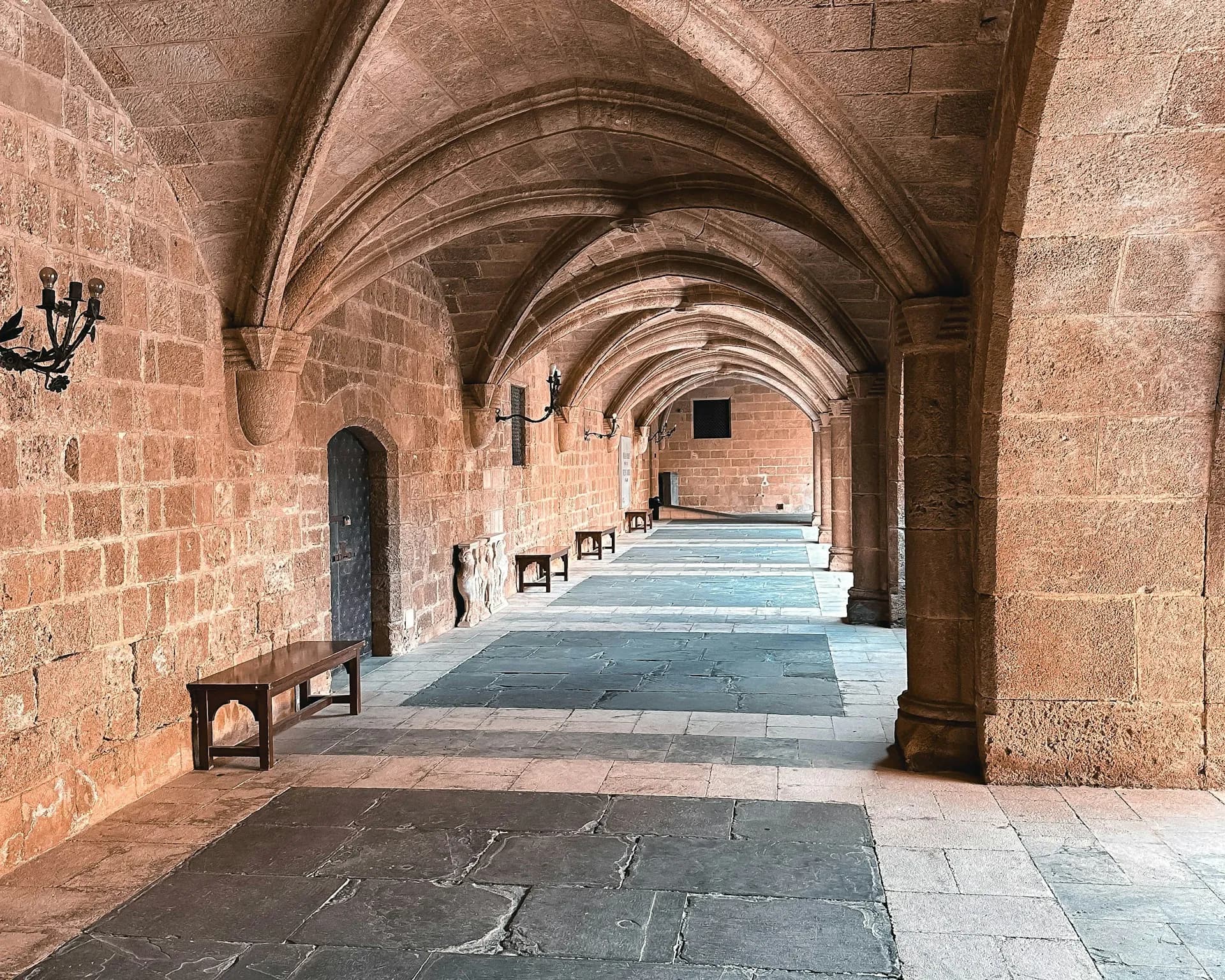
The palace is striking both from the outside and the inside. Its massive structure, towers, courtyard, and decorative interiors make it one of the island's top landmarks. Although the original medieval palace was heavily damaged over time, the present form reflects major restoration work carried out in the 20th century.

Inside, visitors can explore large halls, decorative rooms, and museum-style displays connected to Rhodes' wider history. For many travellers, this is the highlight of the Old Town visit because it combines architecture, historical symbolism, and museum content in one place.

Why it is worth visiting: it is the most iconic building in the medieval city, it offers context for the Knights' political and military role, it provides one of the best museum experiences in Rhodes Old Town, and its location makes it easy to combine with the Street of the Knights and the surrounding fortifications.

5

Best Things to See

Rhodes Old Town is much richer than its three main landmarks alone. Leave time for the surrounding sights as well:

Archaeological Museum of Rhodes — Located in the former Hospital of the Knights, the Archaeological Museum is one of the most important cultural stops in the Old Town. It helps visitors understand the island's ancient and medieval past through sculpture, inscriptions, artefacts, and burial finds.

Fortifications and gates — The city walls, gates, and bastions are a major part of the experience. Even if you do not walk the entire circuit, spending time near the ramparts helps you understand how powerful the city's defensive system once was.

Hidden squares and side streets — Some of the most enjoyable parts of the Old Town are not the major monuments but the quieter lanes, courtyards, and small squares between them. Ideal for café stops, photos, and slower exploration.

Religious monuments — The Old Town also contains churches, mosques, and remnants of earlier religious architecture. This layered character reflects the island's long history under different rulers and traditions.

6

Best Way to Visit & 2026 Tips

The best way to experience Rhodes Old Town is on foot. The area is pedestrian-friendly in the main historic core, and walking is the only way to appreciate the scale, details, and atmosphere properly.

A self-guided walk works well if you prefer flexibility, while a guided tour is better if you want historical context and a more structured route. Many travellers combine both approaches: a guided tour on the first visit, then independent wandering later.

For photography, the best times are early morning and late afternoon — softer light and fewer crowds make the stone architecture even more impressive.

2026 practical advice: - Visit early in the day to avoid crowds and heat - Book accommodation inside or near the Old Town for after-hours exploring - Reserve guided tours in advance during peak season (May–October) - Wear comfortable shoes — the streets are uneven and often cobbled - Bring water and sun protection, especially in summer - Allow time for slow wandering rather than trying to see everything in one rush

7

Where to Eat & Best Time to Go

Where to eat: Rhodes Old Town has a wide choice of dining options, from simple tavernas to more refined restaurants. Look for places serving local Dodecanese dishes, fresh fish, meze, stuffed vegetables, and island wines. Evening in the Old Town is especially attractive — the streets become more atmospheric and the buildings are beautifully lit.

Best time to go: - Spring — One of the best times. Comfortable temperatures, lighter crowds, ideal for walking. - Summer — The busiest and hottest period. Enjoyable but early starts are recommended. - Autumn — Another excellent season. Warm weather with easing crowds. - Winter — Much quieter and rewarding for those who prefer calm. Some restaurants operate on reduced schedules.

8

Suggested One-Day Itinerary

If you want a simple one-day plan for Rhodes Old Town, this route works well:

Morning — Start at one of the main gates and walk toward the Palace of the Grand Master. Spend time in the courtyard, interior rooms, and museum displays.

Late morning — Continue through the Street of the Knights and the Knights' Quarter. Pause to observe the inns and architectural details.

Afternoon — Visit the Archaeological Museum and then explore the quieter side streets, shops, and squares.

Evening — Return for dinner or a final walk after sunset, when the Old Town feels more peaceful and dramatic.

This itinerary can be shortened to 3–4 hours if you skip some museums, or extended with additional sights, meals, and café breaks.

💡Tips & Practical Advice

  • Visit early morning (before 10:00) or late afternoon (after 17:00) for the best light and smallest crowds.
  • Wear comfortable walking shoes — the streets are medieval, uneven, and often cobbled.
  • Bring water and sun protection in summer; there is limited shade on the main thoroughfares.
  • Combine a guided tour with free wandering for the best experience.
  • For photos, the Street of the Knights is most photogenic in the early morning light.
  • The Palace of the Grand Master and Archaeological Museum both charge admission; check current prices and hours online.

Frequently Asked Questions

Is Rhodes Old Town worth visiting?

Yes. It is one of the most important medieval historic centres in Greece and a highlight of any Rhodes trip. The combination of the Palace, Street of the Knights, Archaeological Museum, and fortifications makes it a world-class cultural destination.

How long do you need in Rhodes Old Town?

A minimum of 3 to 4 hours is useful for the main sights, but a full day is better if you want to visit museums and explore slowly.

Is the Street of the Knights free to walk through?

Yes, walking the street itself is free. Some nearby museums and buildings (such as the Palace of the Grand Master and the Archaeological Museum) require paid admission.

Can you visit the Palace of the Grand Master in 2026?

Yes, it is one of the main visitor attractions in Rhodes Old Town and remains a central stop for travellers. Check current opening hours before your visit.

Is Rhodes Old Town good for families?

Yes. It is walkable, historic, and easy to combine with cafés, meals, and relaxed sightseeing. Children often enjoy the palace, the walls, and the medieval atmosphere.