
Destination Overview
Corfu
Corfu mixes elegant town life, lush landscapes and easy family-friendly holidays.
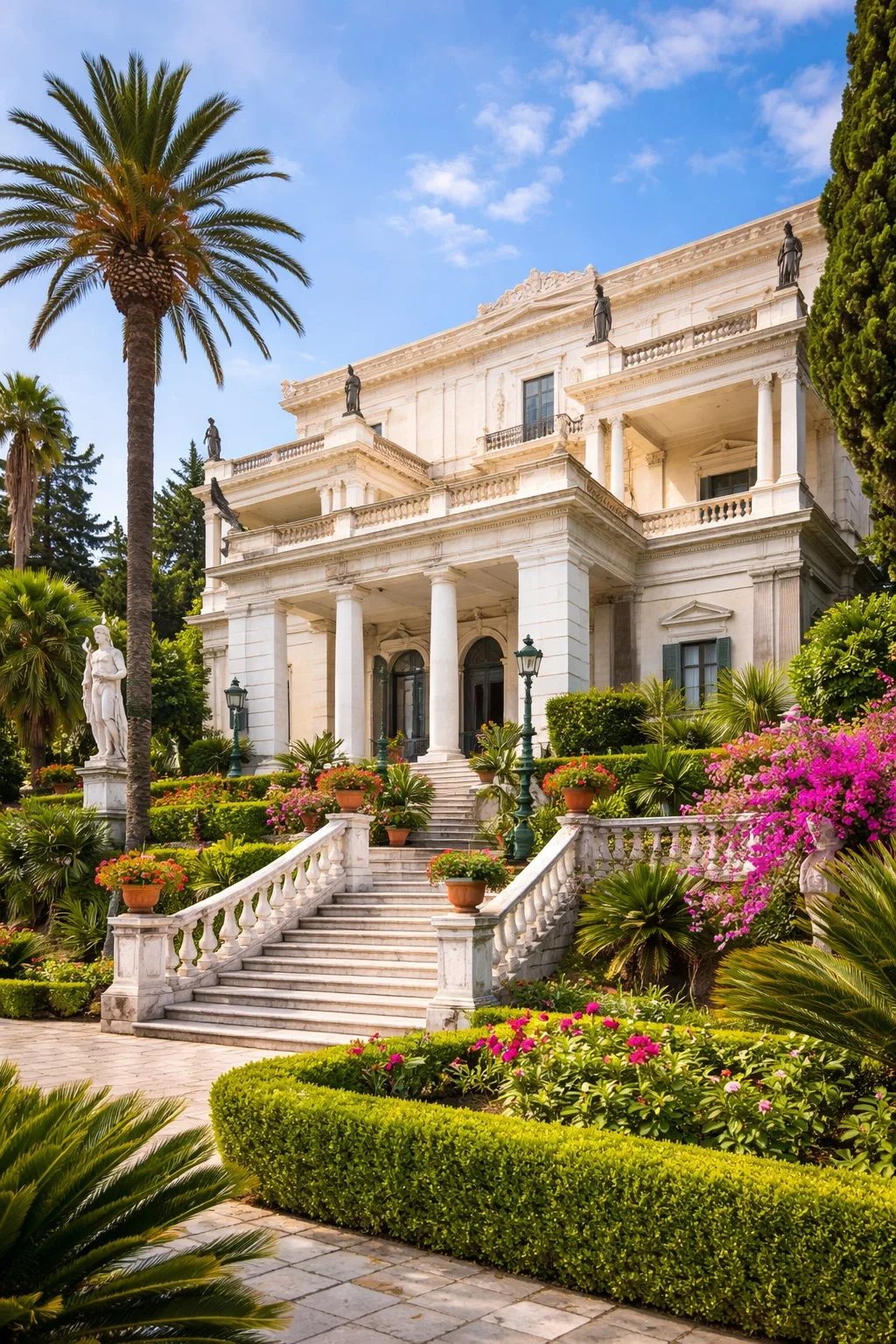
Corfu mixes elegant town life, lush landscapes and easy family-friendly holidays.
Destination Overview
Corfu mixes elegant town life, lush landscapes and easy family-friendly holidays.
Corfu
The fortresses (Old and New), the squares, the alleys and the neoclassical elements compose a set with unique authenticity. UNESCO emphasizes that the main features of the fortifications are preserved and its current form is a result of 19th-20th century works with a strong neoclassical character.
From organized sandy shores to wild pieces of coast, Corfu has a huge variety. Discover Greece mentions that 30 beaches in Corfu have been awarded a Blue Flag (and talks about a 217km coastline).
Hiking the Corfu Trail (~180 km from south to north), castles on rocks, monasteries with views, surprise museums (yes, even a Museum of Asian Art), day trips to Paxos/Antipaxos or even Albania.
Pastitsada, sofrito, bourdeto, bianco, kumquat… And these are not just meal names, they are part of the island's identity.
Corfu
💡 The secret: If you can choose one period for 'everything' (town + beaches + villages + walks), pick late May or late September. You will feel it more authentic and a lot more comfortable.
Warm weather, nice sea and fewer crowds.
Ideal for walking, nature and hiking, without the 'scorching' July.
Visit Greece mentions the custom of 'Botides' (throwing clay pots) and gives dates for things. Tip: if you go for Easter, book your stay earlier than you would for a 'regular' weekend.
Corfu
The airport is Corfu Airport 'Ioannis Kapodistrias' (CFU), with official flight/schedule info on the airport's website (Fraport Greece). Secret: If traveling high season, prefer 'off-peak' hours (very early/late night) for less stress.
The most common sea access is from Igoumenitsa, a trip around 1h10m-1h30m. There are also international connections (e.g. from Saranda Albania, ~25' to 1.5h depending on the boat type).
Corfu
Treat the Old Town like a game: pick a starting point and walk without a plan. The feeling is this mix of influences UNESCO mentions. Secret: do the same route twice: morning (quiet, photos) and evening (atmosphere, music, life).
Spianada is the largest square in the Balkans. Liston is the classic arcade walk with cafes (French period design inspired by Rue de Rivoli). Secret: Sit for coffee slightly 'deeper' in the arcades for a quieter mood.
The Old Fortress operates today as an open monument. For the New Fortress there's official info from the Ministry of Culture. Secret: Go right before sunset, the light makes the stone 'sweeter'.
Located in Corfu with a history since 1928, having around 15,000 works. Secret: Ideal for a midday break and it matches perfectly with the cosmopolitan identity of the Old Town.
Housed in a British era villa, open to the public since 2001. Secret: Go in the afternoon for a walk in the estate, the light makes it incredibly 'peaceful'.
Vlacherna Monastery (17th c.) is right across Kanoni, from there you can take a small boat to Pontikonissi. Secret: Perfect for plane-spotters. If not, go very early to enjoy it quietly.
The external areas/Imperial Gardens are open. Before you go, check official ticketing due to restoration works. Secret: Even without entering the building, the gardens are fully worth it.
Iconic landscapes: bays, rocks, pines, and boats taking you to caves. The monastery goes back to 1228. Secret: In Jul-Aug, go before 10:30, swim quickly, and leave before the noon crowds.
The Byzantine Castle Angelokastro has official hours on Odysseus. Secret: Bring water and good shoes. It's an uphill walk, but the view pays off double.
A long-distance path of around 180 km. Secret: You don't have to do it all. Pick 1-2 daily segments (ideally in Spring/Autumn) to see the 'green' Corfu.
Paxos/Antipaxos (45' to 2.5h trip) and Saranda Albania (~25' to 1.5h). Secret: Treat them as alternatives on a busy or extremely hot day in the city.
Corfu
💡 Beach secret: Corfu has spots with pebbles and small rocks. A pair of water shoes will save the day, especially on 'stony' shores.
Glyfada: sandy, organized, for an 'easy day'. Dassia / Roda / Acharavi: calm waters and great as bases.
Paleokastritsa: postcard-like bays. Canal d'Amour (Sidari): signature rock formations.
Porto Timoni (Afionas): famous twin beaches, reached via hike. Wear sneakers, take water, and save time for the viewpoint before descending.
Chalikounas / Issos (south-southwest): sand, dunes and a much more 'open' landscape. Perfect for those who want space.
Corfu
A village of Venetian origin that started coming back to life recently. Secret: Have lunch there at noon—it feels like entering another era.
Beautiful by itself, but the hidden card is that it serves as the starting point for one of the most iconic walks on the island.
Make short stops for views, coffee, and a 'quiet Corfu' away from the main town buzz.
Corfu
💡 Secret: In town, don't just stay on the main streets. Go 1-2 alleys deep: you eat better, quieter, and you don't 'pay for the view' forcedly.
A signature dish, usually with rooster or beef in a rich sauce.
More 'elegant' profile, with garlic and wine (Venetian influence).
Fish soup or fish stew made with red pepper—spicy and full of sea flavor.
Liqueur, spoon sweet, jam: the 'gift' you will take back home.
Corfu
Town: for walks, food, UNESCO vibe. West/Central (Glyfada): balance of town+beach. North: resorts/beaches. South: open spaces, less buzz.
Corfu has two bus worlds: Green Buses (intercity) and City Bus (urban). Secret: A car is great for freedom, but if you stay in town, you can do a lot just by smart bus routing.
Easter specific events draw huge crowds. Book accommodation early and pick your standing spot well in advance.
Ministry sites change hours seasonally. Check the official Odysseus system before making the trip up to a castle.
Corfu
Ideally 5-7 to do the town, 3-4 beaches, and a few villages. In 3 days: town + one west beach + Paleokastritsa or Kanoni.
Yes, definitely, especially if you pick a base with calm beaches and easy access (e.g. areas with long sandy stretches).
Not strictly. Green Buses and City Bus are solid, but a car gives access to hidden corners and saves time.
If you have to pick one: the UNESCO Old Town with the Fortresses and Spianada/Liston.
Choose May-June or Sept-Oct, start early, and include walks in nature or small villages in your itinerary.