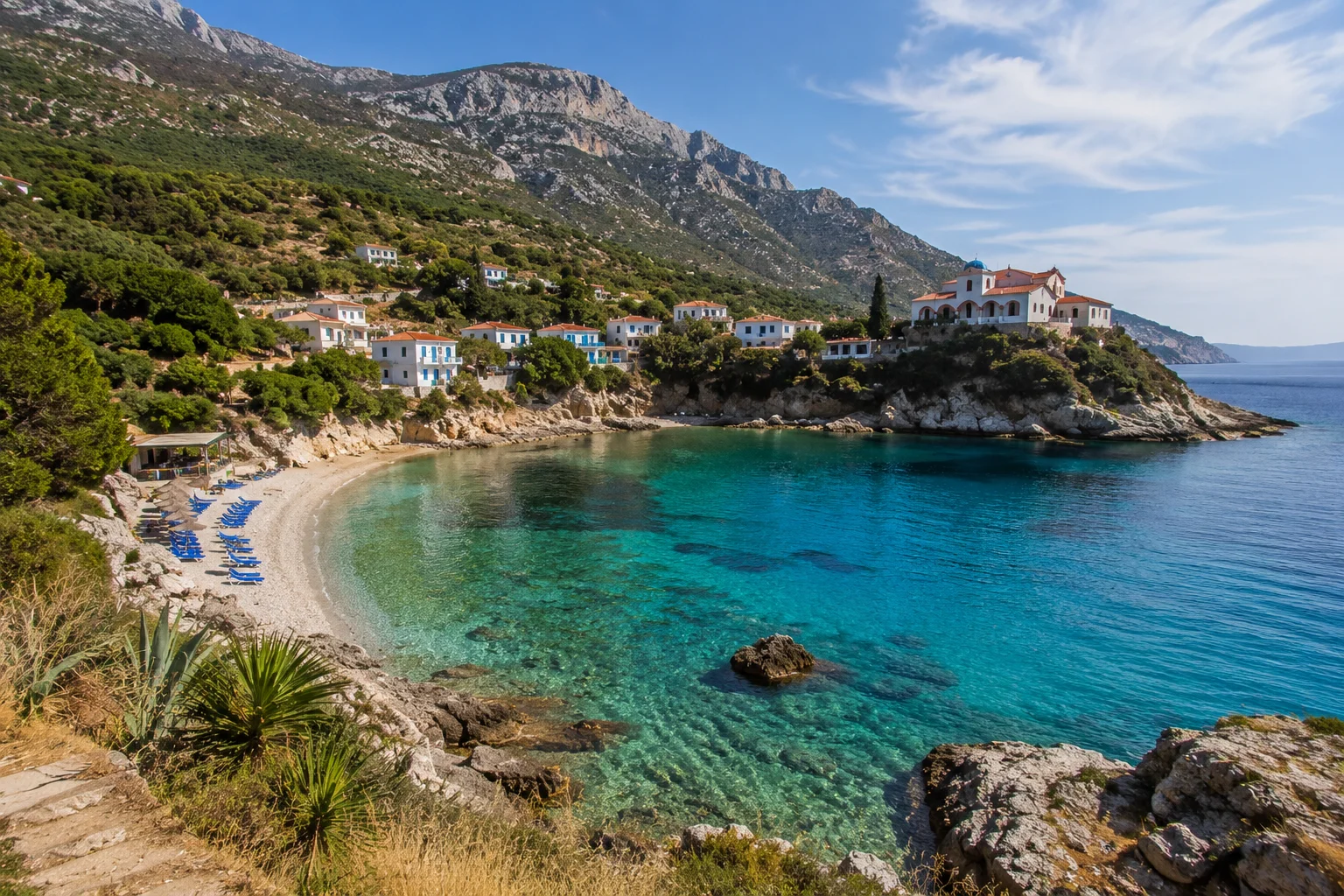
Ikaria
North Aegean

Ikaria

Ikaria is one of the world's five Blue Zones — the rare communities where reaching 90 or 100 is routine rather than exceptional. Its pitch is stranger and harder to package than Santorini's caldera or Mykonos's nightlife: people here live unusually long lives, and nobody is entirely sure why. What researchers found was a combination that reinforces itself: a traditional diet, terrain that requires walking, social culture built around communal meals and dancing, long sleep including afternoon naps, and a collective indifference to schedules. Ikaria doesn't perform its distinctiveness. It simply continues at its own pace.

Blue Zone longevity

Panigiri festivals

Thermal springs at Therma

Seychelles Beach

Travel Guide

Hidden Greek Islands Guide

Destination Overview

Ikaria

Ikaria is one of the world's five Blue Zones, studied extensively by longevity researchers from around the world. What makes it extraordinary is not a single secret but a combination of factors that reinforce each other over a lifetime: a traditional diet rich in legumes, olive oil and wild herbs; mountainous terrain that makes daily walking unavoidable; a social culture organized around shared meals, dancing at panigiri festivals, and unhurried conversation; long sleep including afternoon naps; and a genuine cultural indifference to punctuality that reduces chronic time-stress. Ikaria does not perform its distinctiveness — it simply continues at its own pace, and that pace turns out to be remarkably good for living long.
Ikaria

Why Ikaria — The Blue Zone

1

One of five Blue Zones worldwide

Ikaria is one of the world's five Blue Zones — the rare communities where an unusually high proportion of the population lives past 90. The island has been studied by epidemiologists, sociologists, food scientists and journalists from around the world. The research identified a combination of factors: a traditional diet of legumes, olive oil and wild herbs; daily physical activity built into the mountainous terrain; strong social connections through communal festivals and shared meals; long sleep including afternoon naps; and a cultural approach to time that reduces chronic stress.

2

Diet built from the land

The traditional Ikarian diet is built around legumes — lentils, chickpeas, black-eyed peas — cooked slowly with local olive oil. Wild greens gathered from the hills appear in most meals. Local honey is used medicinally. Ikarian wine is strong, tannic, and drunk in small quantities with meals.

3

The social architecture of longevity

The panigiri — a village festival held on the local saint's day with communal food, traditional music and dancing until dawn — is the social heart of Ikarian life. Elderly Ikarians attend and dance regularly. The sense of belonging and purpose that comes from community appears in longevity research across cultures as a protective factor.

Ikaria

Getting to Ikaria

By ferry from Piraeus

8–10 hours depending on route and vessel. Ikaria is served by the Samos line. Ferries call at both Agios Kirykos and Evdilos — check which ports your ferry serves.

By plane from Athens

45 minutes. The airport is small and flights are limited — book well in advance for summer.

From Samos or Mykonos

Short ferry from Samos (2–3 hours). Possible from Mykonos or Paros in season via inter-island ferries, though schedules vary.

Ikaria

Getting Around

Car rental (recommended)

Ikaria is large, mountainous, and the bus service is minimal. Renting a car gives you genuine freedom to explore both coasts and reach villages not served by public transport.

Scooter

A good option for confident riders on mountain roads. More practical than a car for narrow village streets.

Bus service

Runs infrequently on a schedule best described as aspirational. Not reliable as a primary transport method.

Ikaria

Villages & Beaches

Christos Raches

The village that wakes at midnight. Shops and cafés close in the afternoon and reopen late at night, often staying open until dawn. The village square lit by dim lights with the sound of conversation is a Greece that exists outside the tourist version of itself.

Nas & the Temple of Artemis

A sacred bay on the northwest coast at the mouth of a river running through a plane-tree gorge. Backed by the ruins of the ancient Temple of Artemis — one of the oldest Artemis sanctuaries in the Aegean. A single taverna serves grilled fish and Ikarian wine.

Therma — Hot Springs

Thermal springs used since antiquity. Radioactive mineral waters emerge at around 33°C and are credited with therapeutic properties. Several official spa facilities and informal bathing spots where hot springs meet cold sea water.

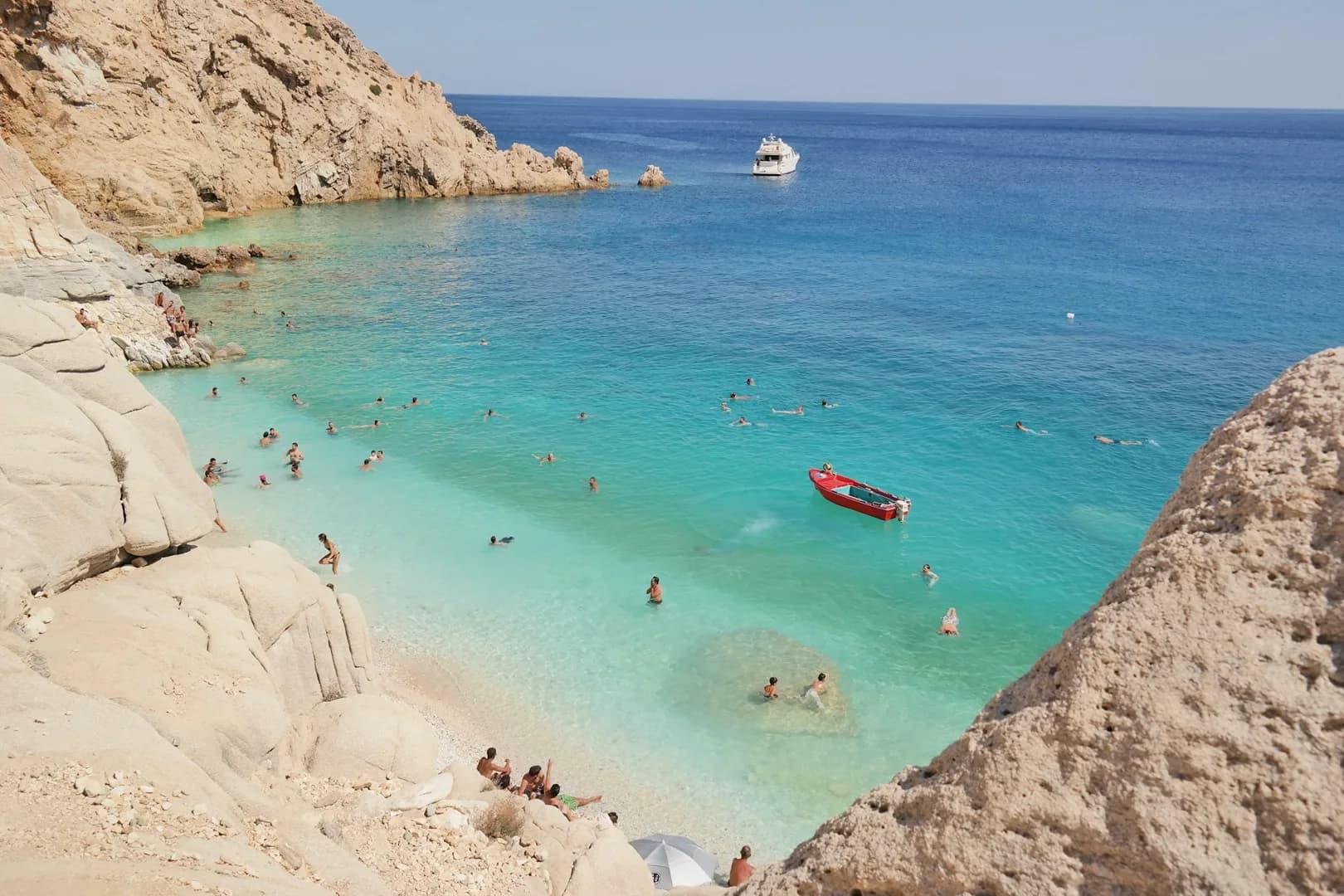
Seychelles Beach

Requires a boat trip or a serious hike — but the name reflects something true about the colour of the water. Consistently named among the most beautiful beaches in the Aegean by those who have made the effort.

Messakti & Livadi

Long sandy beaches on the north coast near Armenistis. Exposed to the Meltemi wind in summer. Together they form the most developed beach area on the island.

Faros Beach

A quiet beach near Agios Kirykos, accessible without difficulty. Good for a relaxed day by the water close to the capital.

Ikaria

Food, Drink & The Panigiri

Lentil soup (fakés) & black-eyed peas

Staples of the Ikarian diet. Cooked with local olive oil and wild thyme. Consistent with what longevity research identifies as key dietary elements.

Wild greens (horta) & soufiko

Wild greens gathered from the hillsides. Soufiko is a summer vegetable stew cooked slowly in olive oil — the Ikarian version of ratatouille.

Ikarian wine & honey

Strong, tannic red wine not widely exported — drunk in small glasses with meals. Dark honey from mountain heather and wild thyme, used medicinally and eaten raw with bread and local kathoura cheese.

The panigiri festival

Each village celebrates its patron saint's day with an outdoor festival: communal food, local wine, traditional music and dancing until dawn. Everyone attends. There is no entrance fee. Visiting a panigiri is the most direct experience of what makes Ikarian social life distinctive.

Ikaria

Best Time to Visit

May–June

The island is green from spring rain. Warm but not extreme. Good availability of accommodation.

July–August

Peak summer and the panigiri season. The island fills in August — still quiet by Cycladic standards. Book accommodation early.

September–October

Arguably the best months. Summer crowds have left. Sea remains warm. Hillsides turn golden. Tavernas and accommodation remain open.

Ikaria

Where to Stay

Agios Kirykos area

Practical, convenient for the ferry. Good base for exploring the south coast. Most amenities on the island are here.

Armenistis area

Closest to the best beaches with a bohemian atmosphere. The most popular base for summer visitors. Good tavernas.

Christos Raches

For the experience of the mountain village and the inverted daily schedule. Unique atmosphere.

Nas

Very limited accommodation but an extraordinary setting by the sacred bay. A few guesthouses and studios.

Ikaria

FAQ — Ikaria Essentials

Why do Ikarians live so long?

The research identifies several interacting factors: a traditional diet rich in legumes, olive oil and wild plants; daily physical activity built into the terrain; strong social connections through festivals and shared meals; long sleep including afternoon naps; and a cultural approach to time that reduces chronic stress.

Is Ikaria difficult to get to?

The ferry from Piraeus takes 8–10 hours, which puts some travellers off. Those who make the journey typically find it worthwhile. Flights from Athens take 45 minutes but are limited.

Do I need a car?

Yes, realistically. The island is large and the bus service is minimal. Renting a car gives you access to the full island.

When are the panigiri festivals?

Most are in July and August, with the largest gatherings in late July. Ask locally for specific dates — the calendar changes annually.

How long should I stay?

Minimum four days, ideally a week. Ikaria takes time to reveal itself. Visitors who stay only two days often leave confused. Those who stay a week often don't want to leave.