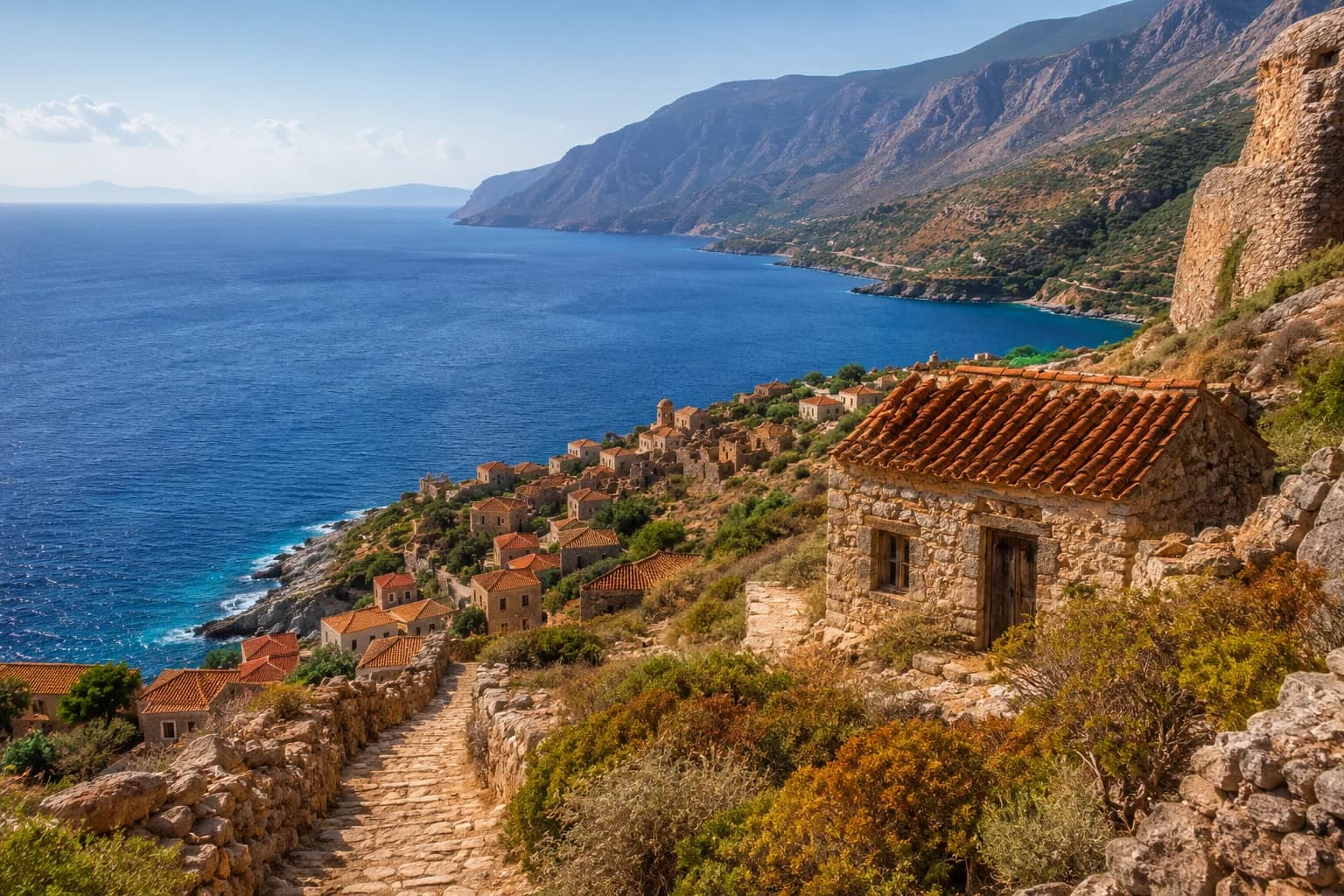
Hidden Greek Islands: 10 Off-the-Beaten-Path Destinations Worth Finding
Travel Guide

Hidden Greek Islands: 10 Off-the-Beaten-Path Destinations Worth Finding

Skip the crowds. These 10 hidden Greek islands offer dramatic landscapes, authentic villages, and the Greece most tourists never see — from tiny Kastellorizo to wild Ikaria.

Overview

Greece has over 6,000 islands. Most travellers see three of them. Santorini and Mykonos are beautiful — nobody disputes that. But the Greece that stays with you long after you leave is often found elsewhere: in a fishing village where the taverna has no menu, on a ferry that runs twice a week, in a caldera that nobody has photographed a thousand times already. These ten islands will not appear on every Instagram feed. Some require patience to reach. All of them reward it. The obvious reason to visit is fewer crowds. But that understates it. When an island hasn't been shaped by mass tourism, the rhythms of daily life stay intact. These are islands where Greece feels like itself.

1

1. Kastellorizo — The Most Remote Village in the Aegean

Island group: Dodecanese | Getting there: Ferry from Rhodes (2–3 times per week) or small plane from Rhodes Kastellorizo — officially Megisti — is the easternmost point of Greece, sitting just 2 kilometres from the Turkish coast. Its harbour, lined with neoclassical mansions in faded terracotta and ochre, is one of the most beautiful and most overlooked in the entire Mediterranean. The island has fewer than 500 permanent residents. There are no cars to speak of, no beaches in the traditional sense, and no nightlife. What it has is something harder to find: complete stillness, extraordinary clarity of light, and the feeling that you have arrived somewhere genuinely out of reach. The Galazia Spilia — the Blue Cave — is the island's most famous natural feature, reached only by small boat. The cave floods with an intense cobalt light when the sun hits the water at the right angle. The harbour front is the heart of the island: a crescent of painted houses reflected in deep, still water. The Lycian tomb carved into the cliff above the harbour is a remnant of an ancient civilization that once ruled this coastline. Population: Around 500 | Ferry frequency: 2–3 sailings per week from Rhodes | Stay: 2–3 nights minimum | Season: May–October | Note: Day-trippers come from Rhodes in summer — stay overnight and the island is yours after 4pm.

2

2. Ikaria — The Island Where People Forget to Die

Island group: Eastern Aegean | Getting there: Ferry from Piraeus (8–10 hours) or Samos; occasional flights from Athens Ikaria is one of the world's five Blue Zones — the rare places on earth where an unusually high proportion of the population lives past 90. The island has been studied by epidemiologists, sociologists, and food scientists trying to understand what its residents do differently. The short answer seems to be: not much, deliberately. Ikarians sleep late, eat locally, walk the terrain, drink wine in the evening, and observe a social culture built around shared meals and unhurried conversation. The island has no particular interest in adjusting itself for tourism. It remains, defiantly, itself. → Full guide: Ikaria — The Island of Longevity

3

3. Folegandros — The Cyclades Without the Crowds

Island group: Cyclades | Getting there: Ferry from Piraeus (6–8 hours) via Milos or Santorini Folegandros sits between Milos and Santorini but occupies an entirely different psychological space. It has the whitewashed geometry, the clifftop village, and the sharp Aegean light of the classic Cyclades — but the scale stays intimate and the atmosphere stays calm. The Chora of Folegandros is considered by many to be the most beautiful village in the Cyclades. It sits on a clifftop 200 metres above sea level, accessed through arched passageways and tiny squares shaded by hibiscus and bougainvillea. The Church of Panagia, reached by a steep path up a bare limestone hill, offers one of the best views in the Aegean. Beaches are reached on foot or by the island's single bus. Katergo beach, accessible only by boat or a 45-minute walk, rewards the effort. Population: Around 750 | Best time: May–June, September | Stay: 3–4 days | Note: No ATM on the island reliably — bring cash.

4

4. Sifnos — The Food Island the World Hasn't Fully Found Yet

Island group: Cyclades | Getting there: Ferry from Piraeus (3–4 hours on fast ferry) Sifnos is quietly famous among Greeks for two things: its cuisine and its pottery. The island has produced more professional chefs per capita than anywhere else in Greece, and its culinary traditions — revithia (chickpea stew slow-cooked overnight in clay pots), mastelo (lamb with dill wine), local honey — are genuinely regional rather than pan-Hellenic. The Apollonia main village is a network of interconnected white streets and squares. The footpath system that links the island's villages is one of the best-maintained walking networks in the Cyclades, passing through ancient towers, chapels, and terraced hillsides. The pottery tradition is visible everywhere: handmade ceramics fill shop windows, and working kilns can be visited in Kamares.

5

5. Astypalea — The Butterfly of the Aegean

Island group: Dodecanese | Getting there: Ferry from Piraeus (12 hours) or Kos; flights from Athens Astypalea's shape — two triangles connected by a narrow isthmus — seen from above resembles a butterfly with open wings, which explains the island's poetic reputation. The Kastro, a medieval fortress village built by the Venetians, sits above the main port and is one of the best-preserved castle settlements in the Aegean. Underwater, Astypalea is exceptional. The waters around the island are among the clearest in the Aegean, and several dive sites are accessible to all levels.

6

6. Koufonisia — Tiny, Turquoise, and Almost Unknown

Island group: Small Cyclades (between Naxos and Amorgos) | Getting there: Ferry from Naxos or Amorgos (1–2 hours) Koufonisia is two small islands — Ano Koufonisi and Kato Koufonisi — with a combined population of around 400. The beaches here, particularly Pori and Fanos, have water that turns an improbable shade of turquoise over white sand and is routinely described as the best swimming water in the Cyclades. The island fills in August; outside of peak season it remains genuinely quiet.

7

7. Amorgos — Wild, Dramatic, Unmistakably Greek

Island group: Cyclades | Getting there: Ferry from Piraeus (9–12 hours) Amorgos is long, narrow, and spectacularly vertical. The island's most famous image is the Monastery of Hozoviotissa, built directly into a white cliff face above the Aegean — one of the most dramatic architectural images in Greece. The main Chora is among the oldest continuously inhabited settlements in the Cyclades. The dive site at the wreck of the Olympia — a ship that went down in 1929 — is considered one of the finest wreck dives in the Mediterranean.

8

8. Halki — 300 People and No Cars

Island group: Dodecanese (near Rhodes) | Getting there: Short ferry from Rhodes (1.5 hours) Halki has fewer than 300 permanent residents, no cars, and a single settlement — Emporio — whose neoclassical harbour mansions were built by wealthy sponge merchants in the 19th century. The island was declared a Peace and Friendship Island by UNESCO and has maintained that spirit ever since. One of the quietest places in the Aegean, and one of the most visually striking.

9

9. Tilos — The Island of Protected Nature

Island group: Dodecanese | Getting there: Ferry from Rhodes (2–3 hours) Tilos made international headlines in 2018 when it became the first energy self-sufficient island in the Mediterranean, running entirely on wind and solar power. It is also a bird sanctuary — the island lies on a major migration route and hosts species rarely seen elsewhere in Greece. The island's commitment to sustainable tourism is genuine and results in exceptional care of its natural environment.

10

10. Serifos — Where the Wind Lives

Island group: Cyclades | Getting there: Ferry from Piraeus (3–4 hours) Serifos gets fewer visitors than its neighbours Sifnos and Milos, which means the atmosphere in its hilltop Chora — built on a dramatic peak above the port — remains genuinely local. The beaches at Livadi and Psili Ammos are excellent; the walking paths between villages are among the most scenic in the Cyclades.

💡Tips & Practical Advice

  • Most of these islands have limited ferry connections outside of June–September — check Ferryhopper before building your itinerary
  • Combining Kastellorizo with Folegandros in a single week is not realistic — choose one island group and explore it
  • Bring cash — smaller islands have limited or no ATMs
  • May, June and September offer the best weather, open businesses and manageable crowds
  • Western Cyclades route: Athens → Sifnos → Folegandros → Serifos → Athens
  • Eastern Dodecanese route: Rhodes → Kastellorizo → Halki → Tilos → Rhodes
  • Central Aegean route: Naxos → Koufonisia → Amorgos → Ikaria

Frequently Asked Questions

Which hidden Greek island is easiest to reach?

Folegandros and Sifnos are both reachable from Piraeus in under 4 hours on fast ferries and have enough accommodation to visit without much advance planning.

Which hidden Greek island is best for couples?

Folegandros and Kastellorizo are both consistently recommended for romantic travel. Both offer dramatic settings, excellent food, and the kind of quiet that encourages actual conversation.

Is Kastellorizo worth the journey?

If you want one genuinely remote Greek island experience, yes. The journey is part of the point — Kastellorizo is somewhere you have to decide to go, and that intention shapes the visit.

Which island is best for first-time visitors to lesser-known Greece?

Sifnos is the most accessible introduction: easy ferry connections, excellent food, good walking, and Cycladic character without the intensity of peak-season Santorini or Mykonos.

When is the best time to visit the hidden Greek islands?

May, June and September offer the best combination of good weather, open businesses and manageable crowds. July and August are warmer but busier — even on small islands, peak season brings significant visitor numbers.