
Destination Overview
Meteora
Towering rock formations, cliff-top monasteries and one of the most extraordinary landscapes in Greece.
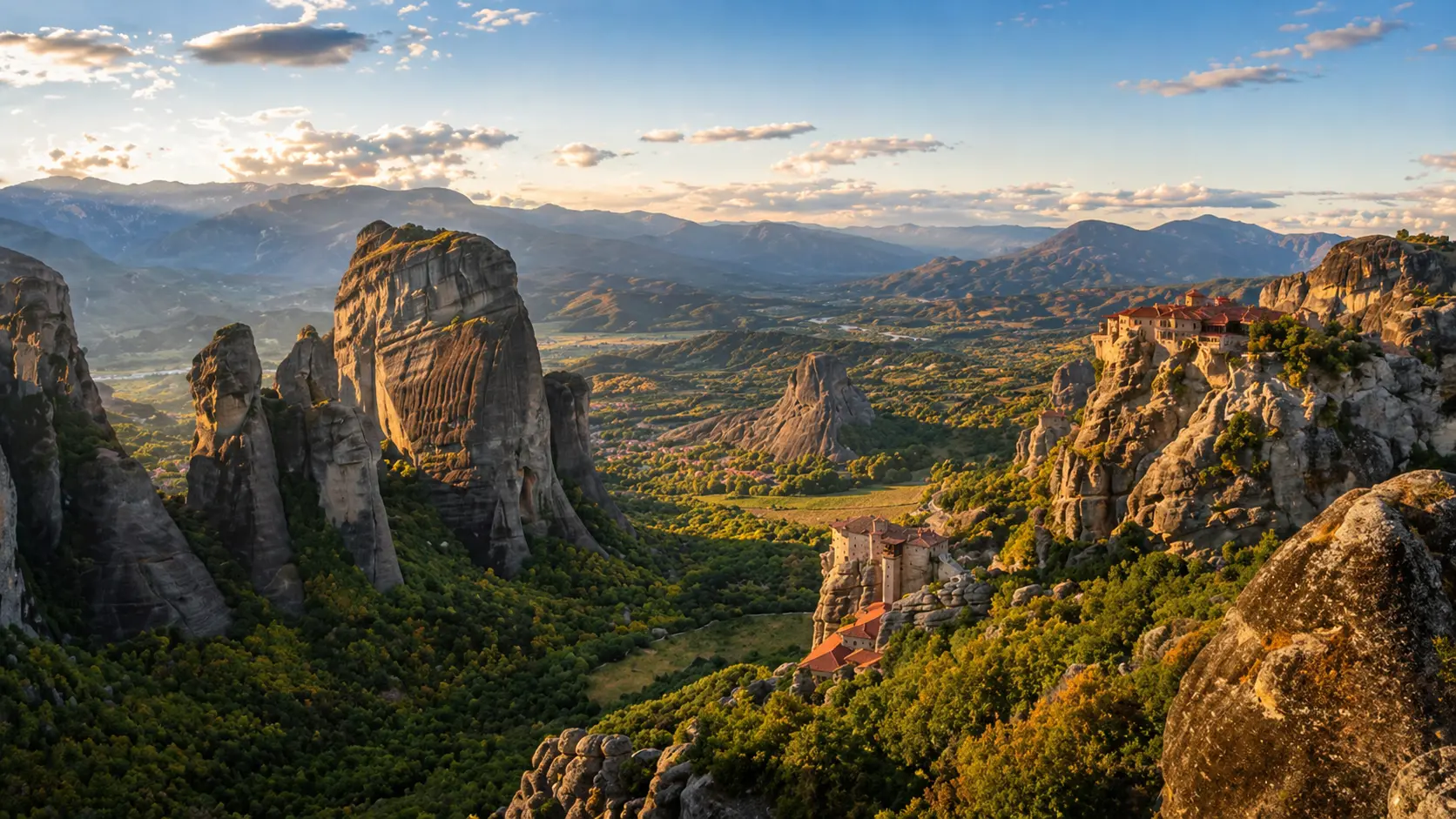
Towering rock formations, cliff-top monasteries and one of the most extraordinary landscapes in Greece.
Destination Overview
Towering rock formations, cliff-top monasteries and one of the most extraordinary landscapes in Greece.
Meteora
Meteora is a strong choice for travelers who want one of the most unique landscapes in Greece, a destination with UNESCO-level historic and cultural significance, dramatic viewpoints and memorable photography, monastery visits and a deeper sense of place, and a rewarding mainland stop that feels very different from beach-driven Greece. This is not a destination built around nightlife, shopping, or resort life. It is about landscape, atmosphere, scale, and meaning.
Meteora
Where to base your stay or focus your time in the region.
Kalambaka is the main base for most visitors and the most practical place to stay. It offers easy access to the Meteora area, useful services, accommodation options, and a straightforward starting point for exploring the monasteries and viewpoints.
Kastraki has a quieter and more scenic village feel and is often preferred by travelers who want a more atmospheric stay close to the rock formations themselves.
This is the core of the experience and the reason most visitors come. The monasteries and the surrounding roads, viewpoints, and dramatic rock backdrop define the destination.
Part of Meteora's appeal is not only visiting individual places, but also experiencing the broader landscape from different angles and at different times of day.
Meteora
Meteora is a destination where the main attractions are tied closely to the landscape itself. **The cliff-top monasteries** These are the defining landmarks of the region and the main reason Meteora feels so extraordinary. Even visitors who are not deeply religious usually find the setting deeply impressive. **The rock formations** The geological scale of Meteora is a major part of the experience. The landscape creates a sense of height, isolation, and calm that is rare. **Viewpoints and scenic drives** Many of the most memorable moments in Meteora come from stopping, looking, and taking in the wider panorama rather than rushing from one point to another. **Kastraki and the surrounding base villages** The villages add practical value and a softer human scale to a destination that might otherwise feel purely monumental. **Sunrise and sunset atmosphere** Lighting changes the whole mood of Meteora, which is why timing matters here more than in many other destinations.
Meteora
Food in Meteora is less about big-city variety and more about grounding the trip in something simple and local after the scale of the landscape. Many visitors enjoy traditional Greek meals after sightseeing, relaxed tavern dinners, regional mainland flavors, quiet meals with mountain and rock views, and slower evenings after a day of walking and exploring. This is not a destination where food overwhelms the experience. Instead, it supports it. A good meal in Meteora often feels like part of the calm that follows the visual intensity of the day. Explore our Greece food & wine guides for more local travel ideas.
Meteora
Where you stay in Meteora depends on the kind of atmosphere you want. Explore our Meteora hotel recommendations.
You want the most practical and convenient base. You prefer easier access to services and transport. You are building Meteora into a broader mainland trip.
You want a quieter and more atmospheric setting. Being close to the rock formations matters more to your trip. You prefer a more scenic and intimate base.
Landscape and overall atmosphere are central to your experience. You want your stay to feel more connected to the destination itself rather than just functional.
Meteora
Meteora is best experienced at a steady pace. Some of the most rewarding ways to spend time here include visiting selected monasteries rather than trying to rush through everything, stopping at viewpoints and scenic roads, spending time in Kalambaka or Kastraki between visits, planning around light, weather, and quieter moments, and combining cultural interest with walking, photography, and simple exploration. This is one of those places where quality matters more than quantity. A smaller number of meaningful stops usually creates a better trip than trying to “complete” everything too quickly. Explore our Meteora tours and experiences.
Meteora
Meteora can be rewarding well beyond peak summer, which makes it different from many of Greece's more seasonal destinations. Spring and autumn are especially attractive for walking, views, and more balanced temperatures. Summer can still work well, especially for travelers combining Meteora with a broader mainland route, but midday heat can affect the pace. Shoulder season often suits Meteora very well because the destination is driven more by landscape and cultural interest than by beach weather. Weather, visibility, and time of day all affect the experience more here than in many other destinations.
Meteora
Common questions for planning your trip.
Yes. Meteora is one of the most unique and memorable destinations in Greece, especially for travelers interested in landscapes, monasteries, and cultural significance.
It is best known for its giant rock formations and monasteries built high above the surrounding landscape.
Many travelers visit briefly, but Meteora is more rewarding when you have enough time for views, monastery visits, and a slower pace.
No. Even travelers without a religious focus often find Meteora deeply impressive because of its landscape, history, and atmosphere.
Kalambaka is more practical, while Kastraki is often more atmospheric and scenic.
Yes. It works very well as part of a broader route through northern or central Greece.