
Where to Stay in Andros
Andros — Cyclades
Find the best places to stay in Andros — from the refined neoclassical Chora and the family-friendly beach village of Batsi to the peaceful Korthi coast, the transit-hub of Gavrio and the hiking-focused inland villages of Menites and Apikia. A complete guide to Andros hotels and areas.
Relaxing stays, beautiful views and authentic hospitality — organized in a clear and practical way.
Description
Andros is large enough and varied enough that the choice of base genuinely determines the nature of your visit. The island's primary road runs north-south, connecting Gavrio in the northwest to Chora on the east coast and then south toward Korthi. Batsi lies on the west coast, roughly midway between Gavrio and Chora. The inland villages are connected by a network of secondary roads and hiking trails that predate the asphalt.
Chora, the island's capital, sits on a narrow ridge between two bays on the east coast — a magnificent pedestrianised town of neoclassical mansions, marble-paved lanes, and the Goulandris Museum of Modern Art. It is the cultural heart of the island and the most beautiful base, but accommodation here is limited and relatively expensive. Batsi, on the west coast, is the island's most developed resort village — a sheltered bay with a good sandy beach, a wide range of accommodation, and an attractive waterfront. Gavrio, where the ferry arrives, is a functional port town with a surprising amount of character and the most practical base for those arriving by ferry and exploring by car. Korthi is the southernmost settlement, a fishing village with a handful of excellent tavernas and a genuinely relaxed atmosphere. The inland villages — Menites with its springs, Apikia with its waterfalls, Stenies with its mansions — offer the most distinctive Andros experience but require a car and a tolerance for mountain roads.
A rental car is strongly recommended for any stay on Andros. The island bus (KTEL) connects Gavrio, Batsi and Chora with reasonable frequency in summer but does not reach the inland villages, the trailheads or the remoter beaches (Achla, Tis Grias To Pidima). For hikers, the Andros Routes network links directly to accommodation in several villages, and several trail-focused guesthouses offer luggage transfer between stages.
1. Andros Chora — the marble capital of the Cyclades
Chora is among the most beautiful and most distinctive capitals in the Cyclades — not for whitewashed cubic architecture and blue-domed churches (though it has those too) but for the neoclassical mansions, marble-paved lanes, arcaded passages, and the extraordinary concentration of cultural infrastructure that the maritime wealth of the 19th and early 20th centuries built here. The Goulandris Museum of Modern Art, one of the finest small art museums in the Mediterranean, is a five-minute walk from the central square.
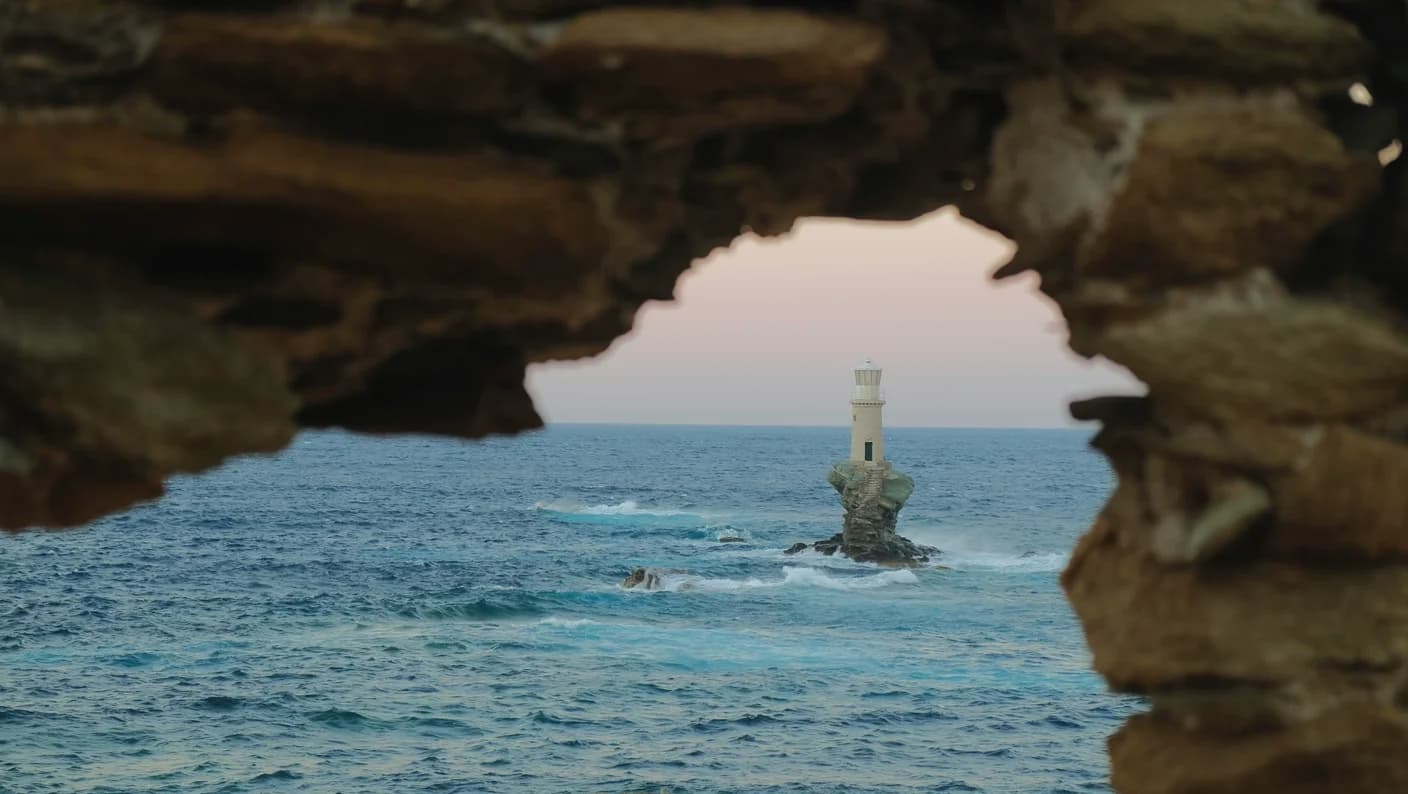
The town sits on a narrow ridge between Neimporio beach on one side and Paraporti on the other, both within a 10-minute walk of the centre. The pedestrianised main axis runs from the port at Neimporio to the Tourlitis lighthouse at the cape — a walk of about 20 minutes that passes the museum, the Archaeological Museum, the central square with its marble fountain, and the lane of shipowners' mansions that could stand in a European capital without looking out of place.
Chora has a population that lives here year-round — it is not a seasonal tourist town — and the difference shows in the cafes that are full on a Wednesday afternoon in October, the excellent bakeries, the fresh fish market, and the general sense that the town operates for itself rather than for its visitors. The atmosphere is refined, quiet in the evenings (the bar scene is virtually nonexistent), and oriented toward culture, food and walking.
Accommodation in Chora is limited — the town has relatively few hotels and guesthouses, and those that exist are in high demand. The best options include Hotel Karanassos and Cavo D'Oro in the restored neoclassical mansions of the upper lanes, offering period charm combined with modern facilities. For a quieter stay, Mare Vista, Anemi, Leto and Neimporio Rooms are excellent waterfront or near-port choices. Properties with sea views — of Neimporio or Paraporti bay — are the most sought after.
Honest note: Chora is quiet at night. If you want nightlife, bars, or beach clubs, this is the wrong base. If you want the most architecturally distinguished capital in the Cyclades, the finest food on the island at your doorstep, and the Goulandris Museum as your local cultural resource, it is the best choice.
2. Batsi — the family beach resort
Batsi is the most developed resort settlement on Andros — a sheltered bay on the west coast, roughly midway between Gavrio and Chora, with a crescent of sandy beach, a pedestrianised waterfront lined with tavernas and cafes, and the widest concentration of accommodation on the island. It is the most popular base for families and for visitors who want a conventional beach holiday with all services within walking distance.
The beach at Batsi is good — soft sand, shallow entry, clean water, and a length sufficient for a proper walk. Beach bars operate in summer, sunbeds and umbrellas are available, and watersports (paddleboarding, kayaking) are offered at the central section. The bay is sheltered from the Meltemi, which means the water is consistently calm.
The Batsi waterfront is a continuous line of tavernas, from simple Greek diners to more ambitious seafood restaurants. The quality is generally high — competition keeps standards up. Several minimarkets, a bakery, souvenir shops, and a pharmacy complete the resort's services.
Batsi is well connected by bus to Gavrio (10 minutes), Chora (15 minutes) and the beaches further south. Most visitors arrive without a car and manage comfortably, though a rental car opens up the island's interior and the northern beaches.
Accommodation style: The widest range on the island — from simple studios and apartments to comfortable mid-range hotels with pools. Popular options include Andros Palace, Chryssi Akti, Achilleas Hotel, Ekati Hotel and Sagrereas, many of which sit directly on the waterfront with sea views. Prices are moderate and the best options book out well in advance for July and August.
Honest note: Batsi is a purpose-built resort and lacks the architectural character of Chora or the inland villages. It is pleasant, well-serviced, and practical rather than beautiful. For families and those prioritising beach access and amenities, it is the best base on the island. For those seeking atmosphere, authenticity, or culture, Chora or the inland villages are preferable.
3. Gavrio — the port village
Gavrio is the ferry port of Andros — the arrival point for all visitors and the natural starting point for an island exploration. It is not the most beautiful settlement on Andros, but it has more character than most Cycladic ports, with a genuine waterfront of working fishing boats, traditional kafeneions, and a small town that operates for its own population rather than for tourists.
The Agios Petros Hellenistic tower, just north of town, is one of the best-preserved ancient defensive structures in the Cyclades — a circular tower dating to approximately the 3rd century BC, well worth the short walk. The beach at Gavrio itself is functional rather than beautiful, but the long sandy stretch of Agios Petros beach is a 5-minute drive north.
Gavrio is the most practical base for visitors arriving by ferry and renting a car on arrival — the rental agencies are concentrated at the port, and the main road south passes through Gavrio before dividing toward Batsi and Chora. Several hotels and studios line the waterfront and the hillsides above the port, most offering sea views toward Evia.
Accommodation style: Mid-range hotels and family-run studios, mostly with sea views, at prices 10-20% lower than equivalent properties in Chora or Batsi. The choice is adequate but limited.
Honest note: Gavrio is not a destination in itself — it is a transit point and a practical base. The ferry noise and activity can be noticeable at portside accommodation. For travellers who want to arrive and begin exploring immediately with a rental car, it is the most logical base for the first or last night of the trip.
4. Korthi — the peaceful south
Korthi is the southernmost village of Andros, a fishing settlement with a small pebble beach, a handful of excellent waterfront tavernas, and a genuinely relaxed atmosphere that is noticeably different from the busier west and east coasts. It is a 30-minute drive from Chora along a scenic coastal road that passes through olive groves and offers views across the Aegean toward Naxos.
The approach to Korthi is part of the experience — the road descends through the Dipotamata valley, one of the most biodiverse river valleys in the Cyclades, before emerging at the coast. The Korthi bay is calm, the water is clear, and the tavernas along the waterfront serve fish caught that morning. The area around Korthi has several good hiking trails into the Dipotamata gorge.
Accommodation in Korthi is limited to a handful of studios, apartments and guesthouses, such as Andros Philoxenia. There are no large hotels. The atmosphere is deliberately low-key — more suited to couples and those seeking quiet than to families or groups looking for activity.
Honest note: Korthi is quiet — genuinely quiet. There is almost no nightlife, limited services, and a car is essential. For those who want a peaceful southern base with access to good hiking and excellent seafood within walking distance, it is the best choice on the island.
5. Inland villages — hiking & tradition
The inland villages of Andros — Menites, Apikia, Stenies, Vourkoti and Kochylos — are where the island is most distinct from every other Cycladic destination. These are working agricultural settlements, set in green valleys with springs, plane trees, and the extraordinary xirolithia dry-stone walls that are unique to Andros. Staying in one of these villages is the closest a visitor can come to experiencing the island as it was before ferry tourism.
Menites, on the mountain road from Gavrio toward Chora, has the Springs of Dionysus — flowing water, a large plane tree with stone tables built around its trunk, and two excellent tavernas. Apikia, a short drive from Menites, is the village of the Pithara waterfalls and the source of Sariza mineral water. Stenies, perched on a hillside north of Chora, has a lane of neoclassical captain's mansions so intact that it feels like a museum without admission fees. Vourkoti, the highest village on the island, is often in cloud and is the trailhead for the hike to Achla beach.
Accommodation in the inland villages is limited to a small number of guesthouses, traditional inns and converted farmhouses, including Sariza Villas in Apikia, Paradise Art Hotel near Menites, and Stenies Houses in the village of Stenies. This is not hotel territory — the experience is village tourism, with all the authenticity and limitations that implies. Most options are simple but well-maintained, with the best offering panoramic views over the island's green interior.
Honest note: Staying in the inland villages requires a car, a willingness to drive on narrow mountain roads, and acceptance that dining options are limited to one or two village tavernas. For hikers, nature lovers and those who want to experience the Andros that makes it unique among Cycladic islands, these villages are the best base — but they are not for everyone.
Frequently Asked Questions
What is the best area to stay in Andros?+
It depends entirely on the type of trip you want. Chora is best for culture, the Goulandris Museum, refined atmosphere and the most beautiful urban setting in the Cyclades — but quiet at night and limited accommodation. Batsi is best for family beach holidays, watersports and convenience. Gavrio is best for arrival/departure and budget-friendly portside stays. Korthi is best for peace, seafood and southern exploration. The inland villages (Menites, Apikia, Stenies) are best for hikers, nature lovers and anyone seeking the most authentic Andros experience — but require a car.
Do I need a car in Andros?+
Strongly recommended. While the bus connects Gavrio, Batsi and Chora reliably in summer, it does not reach the inland villages, the hiking trailheads, or the remote beaches (Achla, Fellos, Tis Grias To Pidima). The island is large enough that relying on taxis for day trips becomes expensive. Rental agencies at Gavrio port offer reasonable rates, and booking in advance for August is essential.
Is Andros good for families with children?+
Yes — particularly for families with older children and teenagers. Batsi is the best family base, with a sandy beach, shallow water and all services within walking distance. The hiking trails (beginners welcome) are excellent for active families. Chora's pedestrianised streets are safe for children. For families with younger children, Batsi is the clear first choice. Avoid the inland villages and the remote southern beaches with toddlers.
How many days should I stay in Andros?+
Five to six days is the recommended minimum: one day for Chora and the museum, one for the inland villages (Menites, Apikia, Stenies), one or two for hiking (the Apikia-Pithara trail and the Grias To Pidima coastal path), one for a beach day at Achla or Batsi, and one for the archaeological sites (Paleopolis, Agios Petros). A dedicated hiker aiming to complete significant sections of the Andros Routes network would benefit from a week or more.
When should I book accommodation in Andros?+
For July and August, book at least six to eight weeks in advance for the best properties in Chora and Batsi. For June and September, four to six weeks is typically sufficient. For May and October, two to three weeks. Andros is less pressured than Santorini, Mykonos or Paros, but the best Chora properties — especially restored neoclassical mansions — have limited inventory and go early.
Can I stay in Andros without a car?+
Yes — but only if you stay in Batsi or Chora, which have good bus connections and enough services within walking distance. Without a car you will miss the inland villages, the hiking trails in the interior, and the remote beaches. For a first visit focused on the central axis (Gavrio-Batsi-Chora), a car-free stay in Batsi or Chora works well. For subsequent visits or for hikers, a car is essential.