Family Travel in Greece
Travel Guide

Family Travel in Greece

Plan family travel in Greece with ideas for beaches, easy destinations, island choices, museums, food and practical tips for smoother holidays with kids.

Overview

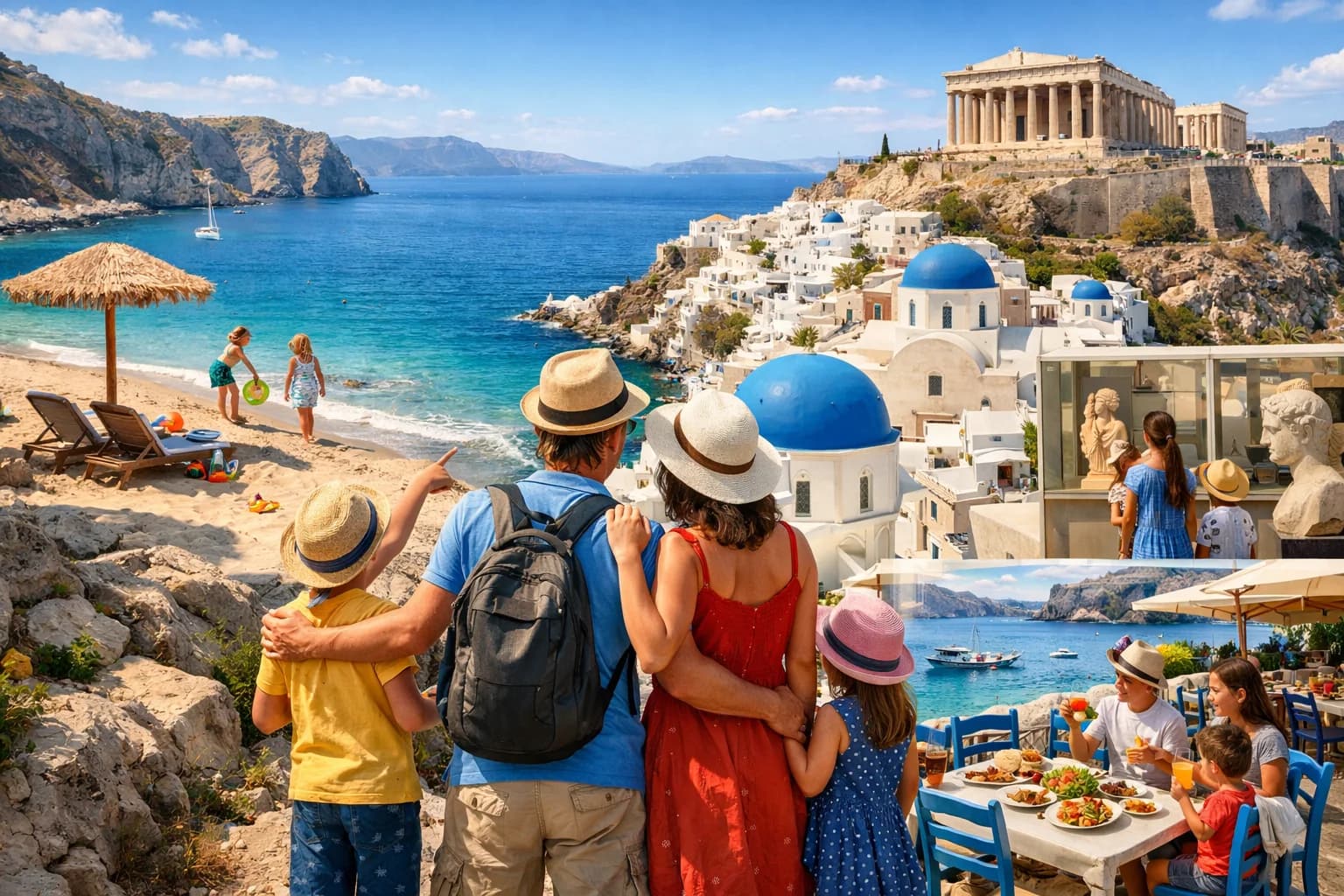
Greece is one of the best family holiday destinations in Europe. It combines safe, shallow beaches, simple and delicious food, reliably warm weather, genuine local hospitality and an enormous variety of destinations that work at very different paces. Whether you are travelling with toddlers, primary-school children or teenagers, the country bends surprisingly well around family life — partly because Greeks are genuinely welcoming to children in a way that feels natural rather than performative. Official tourism guidance consistently highlights the Greek islands, Crete and Halkidiki among the strongest family travel options in the country. Safe swimming areas, water parks, marine parks, outdoor activities, open-air archaeology and the sheer availability of relaxed beach-front tavernas all add to the appeal. For accommodation, see our Best Hotels in Crete for Families guide. For the ideal travel window, check the Best Time to Visit Greece guide, which covers the shoulder seasons that often work better for families than the full peak of August. The Getting Around Greece guide also covers car-free island options and transport combinations that simplify movement with children. The core principle of a good family trip to Greece is the same regardless of destination: build the trip around ease. Easier beaches, easier meals, easier movement, enough flexibility for rest, and a realistic pace rather than an over-packed schedule.

1

Why Greece Works So Well for Families

The structural advantages of Greece as a family destination are worth spelling out before diving into specific destinations. The food is easy. Greek cuisine is built on ingredients children already recognise — grilled chicken, lamb chops, cheese pies, bread, olives, fresh tomatoes, simple pasta dishes and fried potatoes that appear on almost every taverna menu. At the same time, the raw materials — fresh fish, good olive oil, seasonal vegetables — mean the food is genuinely nourishing even when it looks simple. The sea is warm. By June the Aegean and Ionian are comfortably warm for swimming. By late July and August the water temperature in southern Greece often reaches 26–28°C, which means extended time in the sea is genuinely comfortable even for younger children. The long summer season, from roughly late May through to mid-October in warmer areas, gives families a wide booking window. The culture is accessible. Greece has arguably the most recognisable ancient history in the world. Children who have been through any basic school history programme — myths, the Olympics, Athens, Sparta — already have a framework. A visit to the Acropolis, Delphi or Olympia lands differently when there is some prior context. You do not need to manufacture interest: the sites tend to do the work themselves. The hospitality is genuine. Children are welcome almost everywhere in Greece. A family arriving at a taverna is not an inconvenience — it is often greeted warmly, with staff happy to accommodate, improvise off-menu dishes for younger children, or simply bring a plate of chips without being asked. This ease of dining out substantially reduces the daily friction that family travel sometimes creates elsewhere in Europe.

2

Crete

Crete is the strongest single family destination in the country, and it is not particularly close. The island is large enough to support every type of family need: major resort areas with full infrastructure, excellent beaches at every level of organisation, a rich food culture, strong inland options for days when the beach is enough, and the archaeological sites of Knossos and the Heraklion Archaeological Museum for older children. The beaches around Chania and Rethymno in the west are particularly well-suited to families. Elafonisi, with its shallow lagoon and pinkish sand, is one of the most genuinely impressive beaches in Greece for young children — the water barely reaches knee height for long stretches, and the setting is striking enough to hold adult attention too. Balos is similarly special. Falassarna, near Chania, has a long sweep of sand with organised facilities and good access. Further east, the beaches around Elounda and Agios Nikolaos are calmer and more sheltered, which is useful for families who prefer quieter water. Accommodation in Crete ranges from large all-inclusive resorts in the Hersonissos and Malia areas (highest concentration of child-focused facilities, water parks, kids clubs) to mid-range family hotels near Chania Old Town and independent villas across the island. For more detail on where to stay, see the Best Hotels in Crete for Families guide. Best for: First family trip to Greece, longer stays of 10–14 days, mixed groups with different ages, families wanting resort infrastructure alongside cultural day trips.

3

Corfu

Corfu has one of the most varied landscapes of any Greek island, which translates directly into a varied family experience. The north of the island — Sidari, Kassiopi, the area around Roda — has calmer, shallower water than many Ionian options. The area around Paleokastritsa, on the west coast, is arguably the most beautiful part of the island: dramatic coves, clear water and the kind of scenery that justifies the journey. Corfu Town itself is among the most architecturally interesting town centres on any Greek island — the Venetian influence gives it a distinctly different character to Cycladic villages, and it holds up well as a half-day or full-day destination when the family wants something beyond the beach. The Old Fortress, the Liston arcade and the shaded streets of the old town are all accessible and manageable with children. The island is green and lush by Greek standards — the combination of Ionian rainfall and dense olive groves creates a landscape that looks different from the bare volcanic islands of the Aegean. Best for: Families wanting variety across a single island, those who prefer greener landscapes, first-time visitors who want town + beach + nature in one place.

4

Naxos

Naxos is the most underrated family island in the Cyclades, and in many ways one of the best. The beaches on the west coast — Agios Georgios, Agios Prokopios, Agia Anna, Plaka — are long, sandy, shallow and well-organised without being over-commercialised. The water is calm. The distances between beach and town are manageable. The food in Naxos Town is notably good by island standards. The island is also large enough to have an inland dimension that most small Cycladic islands lack. The mountain villages of Apeiranthos and Filoti, the scattered ancient marble ruins, and the giant Kouros statues offer day-trip options that extend the trip beyond pure beach mode. For teenagers especially, having somewhere genuinely interesting to explore beyond the sun lounger matters. Naxos is significantly more relaxed in pace and atmosphere than Mykonos or Santorini — both of which are, frankly, not ideal for young families. Naxos avoids that entirely. Best for: Families who want a proper Cycladic experience without the hype and crowds of the famous islands, beach-focused trips with some inland variety.

5

Halkidiki

For families travelling from mainland Europe who want to avoid the ferry system entirely, Halkidiki is one of the most compelling options in Greece. Located an hour's drive from Thessaloniki airport, it offers some of the best beaches in the country on its three peninsulas: Kassandra (the most developed, highest concentration of family resorts), Sithonia (wilder, more wooded, with excellent beach camping options and quieter coves), and Athos (the monastic peninsula, which adds a unique and genuinely unusual cultural dimension to a trip). The beaches on Sithonia in particular are excellent — Karidi, Kalogria, Tristinika and Vourvourou offer clear water and varied scenery without the full resort overlay of Kassandra. Road access is good, and having a rental car (strongly advisable here) opens up a larger range of beaches than most islands can offer. Thessaloniki itself, easily reachable for a day trip, is one of Greece's most enjoyable cities for families — good street food, the White Tower waterfront, accessible archaeological sites and a compact old town that does not require enormous amounts of walking. Best for: Families driving or flying to Thessaloniki, those who want beach quality without the logistics of island travel, longer stays combining city and beach.

6

Rhodes

Rhodes is one of the largest Greek islands and one of the most infrastructure-rich for family tourism. The resorts around Faliraki and Ixia offer concentrated family hotel options with pools, entertainment and direct beach access. Rhodes Town itself deserves a full day from any family staying on the island. The medieval Old Town — a UNESCO World Heritage Site — is one of the most complete medieval fortified towns in the world, and it is large enough to wander without feeling like a scripted museum visit. The Street of the Knights, the Palace of the Grand Master, and the atmospheric squares and narrow lanes are all accessible and genuinely impressive for older children. The water park at Faliraki is one of the largest in Greece, and for families with children in the 5–14 age range it can easily fill a full day. Best for: Families wanting a combination of resort infrastructure, cultural depth and excellent beaches; teenagers who want more activity options.

7

Athens as a Family Destination

Athens is often treated as a transit stop rather than a destination in its own right for family travel, which is a mistake. Two to three days in Athens at the start or end of a trip works extremely well, particularly for families with children old enough to engage with history. The Acropolis and the Parthenon remain one of the most powerful archaeological experiences in the world. The new Acropolis Museum, directly below the rock, is exceptionally well-designed and explicitly family-friendly — the layout, the transparent floors revealing excavations below, and the quality of the exhibits make it genuinely engaging for children aged 8 and up. The National Archaeological Museum in Exarchia is larger, deeper and more suited to older children and teenagers. Beyond archaeology, Athens has a lively street-food culture centred around areas like Monastiraki and the Central Market, the National Garden offers a green escape in the middle of the city, and Plaka's café-lined streets are easy to navigate with children. The Athens Riviera — the coastal strip running south from the city towards Glyfada and Vouliagmeni — provides beach access on days when the family wants water without leaving the wider Athens area. Best for: Building historical context at the start of a trip, two-night stopovers, families with older children interested in mythology and ancient history.

8

Family-Friendly Beaches: What to Look For

Not every Greek beach is equally suitable for young children. The open-sea beaches on exposed coastlines can have strong waves and sudden depth changes. The best beaches for families share a few consistent characteristics: Shallow gradient into the water — the seabed drops gradually rather than suddenly. Elafonisi in Crete and Agios Georgios in Naxos are classic examples. Sandy rather than pebbly — not universal in Greece, where pebble beaches are common, but sandy beaches are substantially easier for children. Sheltered from prevailing winds — the Aegean north wind (meltemi) can build significant waves and create uncomfortable beach days in July and August. Sheltered coves, east-facing beaches and Ionian beaches are typically calmer. Organised facilities nearby — a sunbed rental area with a beach bar provides a useful base because having toilet access and cold drinks within walking distance matters enormously with young children. The best family beaches by region: Elafonisi and Falassarna (Crete west), Balos (Crete northwest), Agios Prokopios and Plaka (Naxos), Palaiokastritsa (Corfu), the Vourvourou area (Halkidiki Sithonia), and Lindos Bay (Rhodes).

9

Timing Your Family Trip: When to Go

The Best Time to Visit Greece guide covers this in detail, but from a specifically family travel perspective the picture is clear. Late June and early July are the most practical weeks for families bound by school calendars. The sea is warm, facilities are fully open, but the deepest peak-season pressure of August has not yet arrived. Prices are lower than August, beaches are less crowded, and the overall rhythm is more manageable. September is arguably the best single month for family travel in Greece if school schedules allow — particularly in destinations like Crete or Rhodes, where October can still be good. The sea is at its warmest from accumulated summer heat. Crowds have thinned considerably. Prices drop. The combination of warm water, functional infrastructure and calmer atmosphere is difficult to beat. August is the classic school-holiday month and Greece handles the volume, but it is worth understanding what peak season actually means: ferry tickets selling out, beach areas crowded by 10am, accommodation at maximum price, and heat that regularly exceeds 35°C in the Cyclades and eastern Aegean. Families who go in August should book ferry tickets and accommodation well in advance — ideally three to four months ahead — and plan beach days to start early and retreat indoors through the hottest afternoon hours.

10

Getting Around Greece with Children

The Getting Around Greece guide covers the full transport picture, but for families the key points are: Rent a car on large islands. On Crete, Corfu, Rhodes and Kefalonia, a car transforms the trip. It gives you the flexibility to reach better, less crowded beaches, to change plans when one beach is too exposed, and to stop when children need a break. Traffic is generally light outside of resort areas, and driving in Greece is easier than its reputation suggests. Keep ferry journeys short. Long ferry crossings are fine for adults but genuinely difficult for young children — particularly on open-sea routes where swell can cause seasickness and there is limited space for restless movement. When building an itinerary, prioritise short connections: Piraeus to the Saronic islands (1–2 hours), Rafina to the closer Cyclades (3–5 hours to Naxos), or flying directly to Crete or Rhodes rather than taking the overnight ferry. Use domestic flights for distance. Flying from Athens to Heraklion, Rhodes, Corfu or Thessaloniki takes under an hour and costs relatively little if booked ahead. It is almost always worth the cost when the alternative is a 3–9 hour ferry journey with young children. Build in buffer time. Greek island travel runs on schedules that can shift due to weather, particularly in late summer when the meltemi wind affects Aegean ferry routes. Avoid booking a ferry on the same day as a connecting flight back home.

11

Food and Eating Out with Children

Greek food culture is a genuine asset for family travel. Meal times are flexible and social — Greeks eat late by northern European standards, and tavernas expect families to linger. Children who would be unwelcome or uncomfortable in many restaurant settings elsewhere tend to be absorbed into the general warmth of a Greek taverna without friction. The food itself travels well across children's preferences. Souvlaki wraps and grilled meats are almost universally accepted. Spanakopita (spinach and cheese pie), tiropita (cheese pie) and loukoumades (honey doughnuts) work well as snacks for most ages. Grilled fish and simple salads pair naturally with the typical rhythm of a beach lunch. The portions at most Greek tavernas are generous by European standards, and sharing dishes between the table is the norm rather than the exception. Practical tip: in any traditional village or island taverna, it is entirely normal to ask for half portions, to ask what is available for children, or to request something simple like rice, pasta or chicken that may not be on the menu as written. The answer is almost always yes. For a deeper look at the food culture, see the Food & Wine section.

12

Museums and Cultural Experiences for Families

Greece has a stronger museum and archaeological landscape than most families give it credit for. The key is matching the experience to the age group. Acropolis Museum, Athens — designed with accessibility and visual impact in mind. The glass floors, the sculptural fragments and the overall architecture make it one of the most genuinely impressive museum experiences in Greece regardless of age. Recommended from about 8 years old upward. National Archaeological Museum, Athens — larger and denser, better for teenagers and adults with genuine interest in ancient history. The Antikythera Mechanism display alone is worth the visit for scientifically minded children. Palace of Knossos, Crete — the partially reconstructed Minoan palace is one of the most visually vivid archaeological sites in Greece. The scale, the colour, the mythology (Theseus, the Minotaur, Daedalus) already exist in most children's cultural vocabulary. Best approached with some preparation beforehand. Archaeological Site of Delphi — the mountain setting, the atmosphere and the Oracle mythology make Delphi one of the most memorable sites in Greece. The drive from Athens (approximately 2.5 hours) and the site itself are both manageable with children who are comfortable with walking. Natural History Museum of Crete, Heraklion — specifically focused on the natural environment of Crete and the Mediterranean, and explicitly designed to be accessible to younger children. A good indoor option on hot afternoons.

💡Tips & Practical Advice

  • Limit the number of bases. Changing hotel every two or three nights is fine for solo travellers or couples. With children it quickly becomes exhausting. Two bases maximum for a two-week trip is a reasonable rule.
  • Prioritise beach access over destination prestige. A mid-range hotel with direct beach access is more useful for a family than a well-located boutique hotel that requires a ten-minute drive to the nearest swimming area.
  • Book ferry tickets early for August travel. Popular routes in high summer sell out — including foot-passenger spaces and seating categories. Booking three or four months ahead is not excessive.
  • Pack for the sun seriously. UV exposure at Greek latitudes in summer is significantly higher than in northern Europe. High-factor sun cream for children, UV-protective swimwear, wide-brimmed hats and the habit of retreating to shade between 12 and 4pm will prevent the kind of sunburn that can genuinely disrupt a holiday.
  • Choose accommodation with a kitchen or kitchenette if travelling with very young children. The flexibility to prepare breakfast, simple lunches or early evening meals in the apartment makes a significant difference to the daily rhythm of a trip with children under 4.
  • Accept slower movement. A family holiday in Greece is not the moment for island-hopping across four different locations. The logistics multiply, the children find the constant movement tiring, and the best parts of Greece — the beach, the sea, the slow lunch — benefit from staying still long enough to actually enjoy them.