
Best Time to Visit the Greek Islands: A Complete Seasonal Guide
From spring wildflowers to autumn warmth and winter solitude, discover the best season for your Greek island holiday with detailed month-by-month advice.
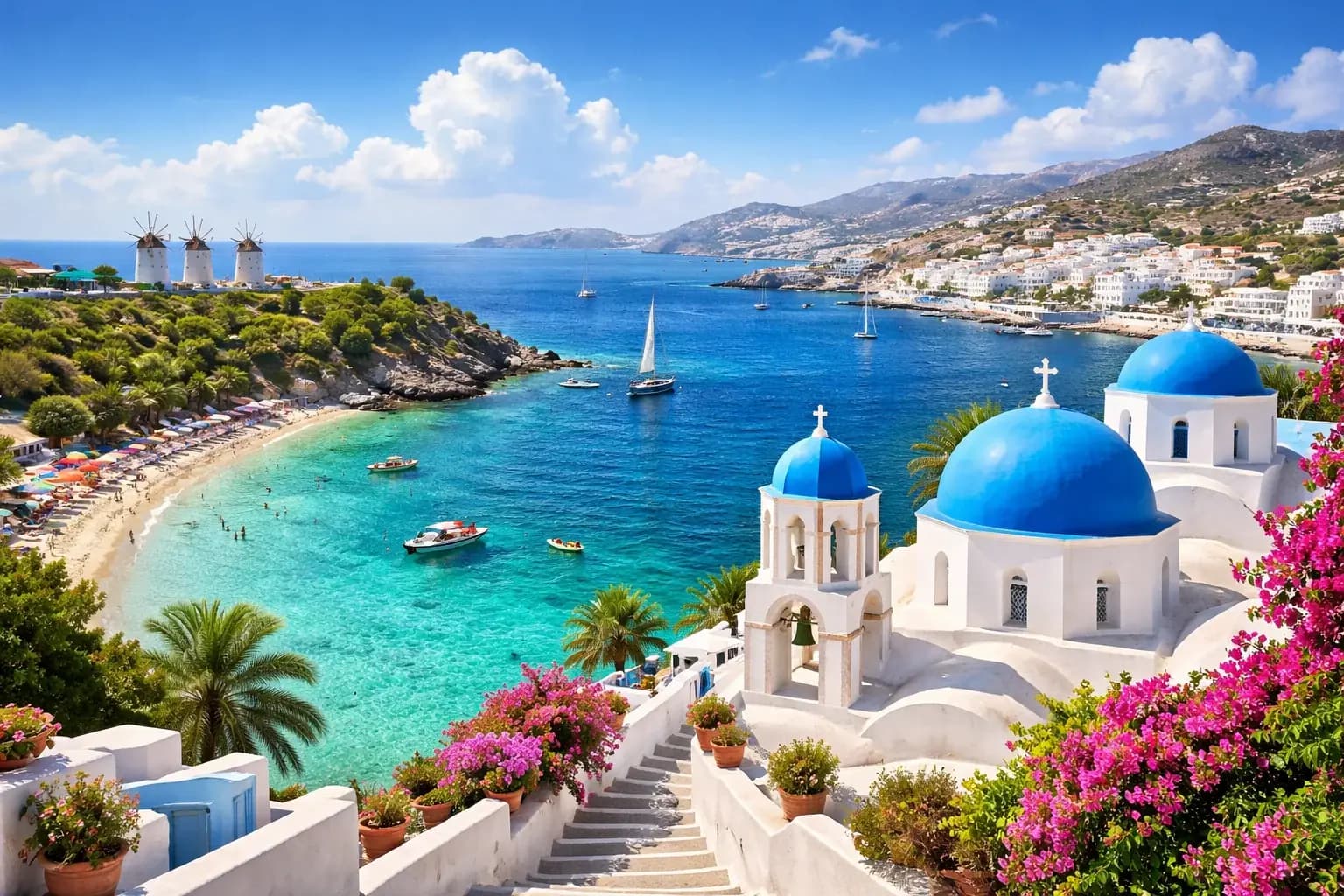
Greece is a year-round destination, but the best time to visit the Greek islands depends entirely on what kind of experience you are looking for. Do you want lively beach clubs and endless sunshine? Quiet villages and empty beaches? Or perhaps you are after the best hiking conditions and spring wildflowers? Each season offers something completely different.
This guide breaks down every period in detail so you can make an informed decision based on your priorities — weather, crowds, prices, ferry schedules, and local events.
Spring (March — May)
Spring is one of the most beautiful and underrated times to visit the Greek islands. The landscape transforms dramatically during these months.
In March, the islands begin to wake up from winter. Wildflowers cover the hillsides — bright red poppies, purple irises, and yellow daisies create a carpet of colour across the countryside. Temperatures range from 15–20°C, which is perfect for hiking and exploring archaeological sites without breaking a sweat. The air smells of jasmine and pine.
April brings warmer weather, with temperatures climbing to 18–24°C. Easter is the most important celebration in Greece, and experiencing it on an island like Corfu or Hydra is unforgettable. Corfu has a unique Easter tradition where locals throw clay pots from their balconies on Holy Saturday. Ferry schedules start expanding as the tourism season approaches.
By May, temperatures reach 22–27°C and the sea is warm enough for swimming, especially in the southern islands like Crete and Rhodes. Most hotels and restaurants open by mid-May. The crowds are still manageable compared to summer, and prices are significantly lower.
**Best for**: Hiking, photography, cultural experiences, budget travellers, families with young children.
Summer (June — August)
Summer is peak season in the Greek islands, and for good reason. The weather is reliably hot and sunny, the sea is at its warmest, and the energy across the islands is electric.
June is the sweet spot of summer. Temperatures are 28–32°C, the meltemi wind (a seasonal north wind) starts to cool the Cyclades, and the tourist crowds have not yet reached their July peak. The water temperature is around 23–25°C, ideal for swimming. This is an excellent month for sailing and island hopping.
July and August are the hottest and busiest months. Temperatures can reach 35–40°C in the Cyclades and the Ionian islands. Popular destinations like Santorini, Mykonos, and Rhodes are packed with visitors. Beaches fill up by mid-morning, and dinner reservations at popular tavernas need to be booked days in advance. On the positive side, this is when the famous Greek summer nightlife is at its most vibrant. Beach clubs, open-air cinemas, music festivals, and traditional panigiria (village festivals) are in full swing.
Ferry connections are at their most frequent during these months, with multiple daily departures connecting even the smallest islands. This makes summer ideal for island hopping.
**Best for**: Party lovers, beach enthusiasts, families with school-age children, island hoppers, nightlife seekers.
**Important tips for summer**:
Autumn (September — October)
Many seasoned travellers and locals agree: September is the absolute best month to visit the Greek islands. The weather remains warm (26–30°C), the sea has reached its maximum temperature from the summer heat (around 25–27°C), and the crowds thin out significantly after the first week.
September offers the perfect balance: summer weather without summer crowds. You can enjoy the beaches comfortably, get a table at any taverna without booking, and find accommodation prices 20–40% lower than August. The villages start to feel more authentic again as the peak-season tourism frenzy settles.
October is quieter but still pleasant, especially in the southern islands. Temperatures range from 20–25°C in early October, dropping to 15–20°C by late month. Many hotels and restaurants on smaller islands begin to close from mid-October, so check ahead. Crete, Rhodes, and some larger Cycladic islands like Naxos maintain more services through October.
**Best for**: Couples, mature travellers, photographers, anyone who prefers comfortable exploration over crowded beaches.
Winter (November — February)
Winter in the Greek islands is a completely different experience. Most tourists never see this side of Greece, and that is precisely why it appeals to a certain type of traveller.
The majority of islands go into off-season mode. Many ferry routes are reduced to just a few weekly connections. Hotels, restaurants, and shops on smaller islands close entirely. However, the larger islands — especially Crete, Rhodes, Corfu, and Evia — remain active year-round with most services available.
Winter temperatures in the islands range from 10–16°C, with January and February being the coldest and wettest months. Snow is rare on the islands but can occasionally dust the higher mountains of Crete.
This is the best time for authentic cultural experiences. You will have ancient sites almost entirely to yourself, interact with locals without the tourist-season rush, and see the islands as they truly are — working communities, not holiday destinations. Prices for accommodation can be 50–70% lower than summer rates.
**Best for**: Cultural travellers, budget travellers, writers and artists, anyone seeking solitude and authenticity.
Month-by-Month Quick Reference
Final Recommendation
For your first visit to the Greek islands, aim for **May, June, or September**. These months offer the best overall experience with reliable weather, manageable crowds, and reasonable prices. If you are planning a return trip and want to see a different side of Greece, consider October or even a winter visit to Crete. Each season reveals a completely different personality of the Greek islands, and there is no single "best" time — only the best time for you.
Explore Related Content
Continue planning your trip with these guides and listings.